
Industries
Power Generation
Boiler Remaining Life Assessment and Power Plant Integrity
Five decades on the boiler island: 400+ boiler RLA studies, 1,500+ tube failure investigations, and the ASM International reference book on boiler failures written from this same bench.
Request a Quote
In brief
TCR Engineering Services Pvt. Ltd. provides power plant testing and boiler integrity work for utilities in India and the GCC: 400+ boiler remaining-life assessments and 1,500+ boiler tube failure investigations, in-house creep testing to 1,100 °C, and IBR recognition as a Well-Known Material Testing Laboratory since 2014.
The published authority is the ASM International 2018 book Failure Investigation of Boiler Tubes and the 2021 ASM Handbook Vol. 11A chapter on failures of boilers and related equipment. In the field, in-situ replicas are read on the day of acquisition, so a creep cavitation classification is in hand before the turnaround window closes.
- IBR laboratory: Well-Known Material Testing Laboratory since 2014, Form XVI-H certificate 38, valid to 02 April 2029, for IBR Form III material certification.
- Creep bench: 6 frames to 1,100 °C at 50 kN, with durations to 100,000 hours.
- Field metallography: 12 in-situ field teams and a 100,000+ replica reference base.
- Accredited laboratory: materials testing under NABL certificate NABLT0726MH18640 at Mahape, Navi Mumbai.
Key takeaways
- Each boiler tube failure is traced to its governing mechanism, water-touched or steam-touched, and fed back into operating practice through the Knowledge-Based Audit.
- Boiler and piping RLA runs under Regulation 391A of the Indian Boiler Regulations, with creep life confirmed by accelerated creep rupture testing and the Omega method per API 579-1/ASME FFS-1 Part 10.
- 9 marquee engagements are documented on this page, among them boiler and piping RLA at Adani Power Mundra executed at 20 days per unit.
Power Generation in Numbers
400+ Boiler RLA Studies
1,500+ Boiler Tube Failures Investigated
6 Creep Frames to 1,100 °C
750+ RLA Studies, All Asset Classes
Industry Context
India's thermal fleet is being asked to run harder for longer: installed thermal capacity sits at approximately 240 GW with a substantial share above 25 years of operating age, while NTPC alone operates close to 80 GW with a further 32 GW under construction and delivered a 77.44 percent coal plant load factor in FY25, the highest in seven years.
- New build: supercritical units of the 660 MW class at a minimum of 247 kg/cm² and 565/593 °C (main steam and reheat, per the Central Electricity Authority), and ultra-supercritical units of 660 to 800 MW, raising creep-strength-enhanced ferritic steel duty across the fleet.
- Cycling: flexible operation against renewable generation widens low-cycle fatigue exposure on baseload coal plant, and life-extension decisions drive RLA, Knowledge-Based Audit and plant life extension work.
- Fuel shift: hydrogen co-firing brings hydrogen embrittlement screening to fuel-gas supply piping; biomass and waste co-firing shifts fireside corrosion towards chloride and alkali attack.
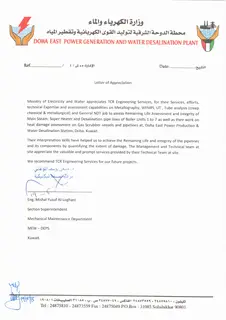
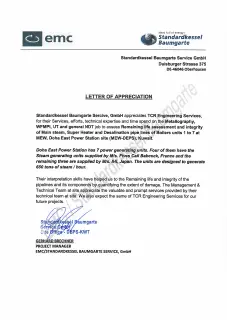
- GCC and OEMs: Saudi Electricity Company, MARAFIQ, ACWA, NOMAC and Arabian Bemco through TCR Arabia; BHEL since 2003, GE Power, Mitsubishi and Siemens for source inspection and verification testing.
Plant Sections We Inspect
TCR inspects and tests the pressure-part and rotating clusters of thermal and combined-cycle stations, with a damage-mechanism vocabulary that distinguishes water-touched from steam-touched failures, aligned to the ASM Handbook Vol. 11A chapter authored by Paresh Haribhakti and P.B. Joshi (2021).
| Cluster | Equipment |
|---|---|
| Boiler pressure parts (water-touched) | Economiser, water walls, downcomers, drum, headers (mud, water, steam) |
| Boiler pressure parts (steam-touched) | Superheater (primary, secondary, tertiary), reheater, attemperator, desuperheater, transfer piping |
| Pressure boundary | Drums, headers, BFW lines, attemperator pipework, blowdown |
| Steam turbine | HP, IP, LP rotors and diaphragms; control valves; bearings; coupling; shaft alignment |
| Generator | Stator, rotor (visual, NDT, demagnetisation per the JPL Tamnar reference) |
| Condenser and cooling | Condenser tubes, cooling-water piping, cooling-tower fill |
| Auxiliary | Mills, pulverisers, ID and FD fans, air pre-heaters, economiser tubes, ESPs |
| HRSG (CCGT) | Multi-pressure (HP/IP/LP) headers, finned-tube banks, drum, evaporator |
Damage Mechanisms We Investigate
Boiler tube leakage remains the single largest cause of forced outage in Indian thermal stations. TCR's record of 1,500+ boiler tube failure investigations maps each failure to its governing mechanism, water-touched or steam-touched, and feeds the finding back into operating practice through the Knowledge-Based Audit.
| Category | Mechanisms |
|---|---|
| Water-touched | Hydrogen damage (acid phosphate corrosion driver); acid phosphate corrosion; caustic gouging; under-deposit corrosion |
| Steam-touched | Long-term overheat creep; short-term overheat; fireside corrosion (coal-ash, oil-ash); fireside erosion |
| Boiler drum and headers | Ligament cracking; corrosion fatigue; thermal-shock cracking; SCC at downcomer attachments |
| Steam turbine | Creep on HP and IP rotors and diaphragms; LP-blade SCC and corrosion fatigue; bearing white-metal damage |
| Condenser | Stress corrosion cracking on copper alloy tubes; ammonia corrosion; flow-induced erosion |
| Common | Boiler tube leak (BTL), metallurgical degradation, creep, erosion, pitting, general corrosion |
Standards Coverage
Power-sector work at TCR is reported against the Indian Boiler Regulations, the ASME Boiler and Pressure Vessel Code, API damage-mechanism and inspection practices, and the ASTM material specifications that govern creep-strength-enhanced ferritic steels.
- Indian Boiler Regulations. Form III material certification (TCR recognition since 2014) and remaining-life assessment of boiler pressure parts under Regulation 391A of the Indian Boiler Regulations.
- Damage and failure analysis. API RP 571; ASM Handbook Vol. 11A, Failure of Boilers and Related Equipment (Haribhakti and Joshi, 2021).
- Mechanical and material. ASTM A335 P5/P9/P11/P22/P91; ASTM A213 T11/T22/T91; ASTM A234 WP91; ASTM A691; ASTM A387; creep and stress rupture per ASTM E139 and BS EN ISO 204.
- ASME BPVC. Section I (power boilers); Section II Parts A to D (materials); Section IX (welding qualification); Section XI (in-service inspection) for nuclear scope.
- Field inspection. API 510/570/653 where pressure-vessel and tank scope is in play; API RP 572/574/575; ASME PCC-2; ASME B31.1 power piping; fitness for service per API 579-1/ASME FFS-1 including Part 10 (Omega method).
How We Help, Across the Asset Life
A power station's integrity questions are dominated by the boiler, and TCR serves them across five stages of the asset life, from procurement qualification through construction baselines, on-load inspection and turnaround condition assessment to remaining-life and life-extension engineering.
- Stage One, Sourcing and Procurement: Boiler tube, plate, casting, and forging procurement is qualified through mechanical, chemical, and metallurgical testing in the NABL NABLT0726MH18640 laboratory, including creep and stress rupture testing to Bharat Heavy Electricals specifications, impact and hardness per ASTM A370, and spectrometric verification of alloy grade. TCR runs vendor factory audits, sample picking, in-production checks, and loading supervision for tubes, headers, valves, and structural steel, so that a replacement pressure part enters the station with the same evidence discipline as the original build.
- Stage Two, Construction and Commissioning: For new units, retrofits, and pressure part replacement, TCR provides baseline non-destructive testing on membrane walls, headers, and steam piping, phased array ultrasonic testing and time of flight diffraction on thick sections, radiography, welder certification and procedure qualification per ASME Boiler and Pressure Vessel Code Section IX and Indian Boiler Regulations, post-weld heat treatment with hardness verification, and positive material identification on alloy joints, delivering the baseline thickness and weld data set for the life of the unit.
- Stage Three, In-Service: On-load, TCR deploys thermography of boiler casings, ducting, and electrical systems, oxide scale thickness measurement on superheater tubes including the Chugai Technos scale checker capability (see Scale Checker), remote visual inspection, and corrosion mapping on flue gas path equipment. TCR Advanced builds risk-based inspection programmes per API RP 580 and API RP 581 for the balance of plant and sets condition-monitoring intervals so that creep-critical components in Grade 91 are tracked rather than assumed.
- Stage Four, Shutdown and Turnaround: In the overhaul window, TCR delivers boiler condition assessment (see Boiler Audit), tube thickness surveys, heat exchanger and condenser tube inspection, in-situ metallographic replication on headers, main steam lines and turbine components by twelve dedicated field teams, boiler tube sampling and residual life testing, tank and structural inspection, and turnaround inspection manpower, all sequenced to the outage plan so the inspection scope closes inside the window.
- Stage Five, Continuum: Findings convert into remaining life assessment of boilers and turbines per the two-level framework (see Remaining Life Assessment), accelerated creep rupture testing and the Omega method per ASTM E139 and API 579-1/ASME FFS-1 Part 10, fitness for service on drums, headers and piping, failure analysis of tube, blade and rotor components, flexibilisation and cycling damage studies, and plant life extension engineering, including the idle-plant restart assessments that let a mothballed unit return to the grid on evidence rather than hope.
Named Clients
TCR's power-sector clients span central and state utilities, independent power producers, captive generation, equipment OEMs and GCC utilities, anchored by BHEL approval held since 2003 and refreshed through NTPC Talcher TTPP-III in December 2025.
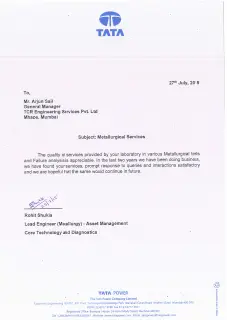
- Utilities and IPPs. NTPC (multiple stations), Adani Power, Tata Power, Torrent Power, Reliance Power, Essar Power, CGPL Mundra, Vidarbha Power, JSW Energy, Sembcorp, Maithon Power and Simhapuri Energy.
- Captive and co-generation. Tata Steel Jamshedpur (captive 405 MW), JSW Steel (multiple sites), Vedanta Aluminium Jharsuguda 4 x 600 MW, JSPL Tamnar Stage-2 4 x 600 MW.
- Equipment OEMs. BHEL (approved since 2003), GE Power, Mitsubishi, Siemens, Doosan, Power Mech Projects, Toshiba JSW Power Systems and CG Power and Industrial Solutions.
- GCC power. Saudi Electricity Company (vendor 5002205/62006), MARAFIQ (3645), ACWA, NOMAC, Arabian Bemco.
Marquee Projects
Recent power-sector engagements are dated and referenced: fleet-scale RLA at Adani Mundra and Tiroda, the NTPC Talcher NDT scope through BHEL, boiler expertise for Vedanta Athena, O&M training for UltraTech, and boiler RLA for Petrokemya in Saudi Arabia.
| Project | Service anchor | Date |
|---|---|---|
| Adani Power Mundra 4,620 MW (U#5 660 MW + U#1 and U#3 330 MW) | RLA of boiler and piping per IBR Regulation 391A during shutdown, executed at 20 days per unit | March 2025 |
| Adani Power Tiroda 5 x 660 MW | RLA of boiler and critical piping for Units 1, 3 and 4, plus RLA of turbine generator | June 2025 onward |
| NTPC Talcher TTPP-III 2 x 660 MW | RT and NDT scope through the BHEL approval refresh, via Power Mech Projects | December 2025 onward |
| Vedanta Athena 600 MW CTPP, via NTPC GE Power Services (NGSL) | Expert services visit for boiler inspection | April 2026 onward |
| UltraTech Cement (Aditya Birla Group) | Training on best O&M practices to minimise tube leakages | 26 to 27 May 2025 |
| Petrokemya, KSA | RLA of fire-tube boiler | 2023 |
| CEPL Mutiara Thermal, Tuticorin 2 x 600 MW | Failure investigation of failed boiler tubes, via Power Mech Projects | Rate contract |
| PPGCL Bara Unit 3, 660 MW | Borescopic inspection of boiler pressure parts, via Power Mech Projects | Rate contract |
| Bina and Chachai Unit 2 | In-situ metallographic replication on LTSH and desuperheater joints, via Power Mech Projects | Rate contract |
Recent boiler RLA engagements
The unit rating and the steam conditions each assessment was carried out at. The outage window is the constraint on a boiler RLA, so each assessment is planned to it and the completion date is confirmed in the quotation.
| Station | Units | Steam conditions |
|---|---|---|
| Vidarbha Power, Butibori | 2 x 300 MW | 552 °C, 201.8 bar |
| Torrent Power, Ahmedabad | 2 x 120 MW | 540 °C, 158 bar |
| Tata Power, Trombay | 2 x 500 MW subcritical | 541 °C, 177 bar |
At Tata Power Jojobera, a 67.5 MW unit, a knowledge-based audit supported a twelve-year life extension.
Boiler integrity on video
- Boiler Tube Failure Analysis Explained | Mr. Paresh Haribhakti | Behind The Steam Podcast
- Webinar on Remaining Life Assessment (RLA) of Boilers : A Compliance or an Opportunity.
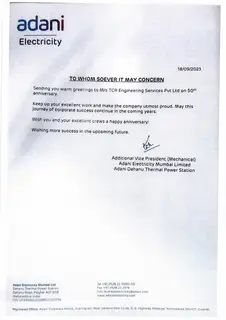
Congratulations from Adani Electricity
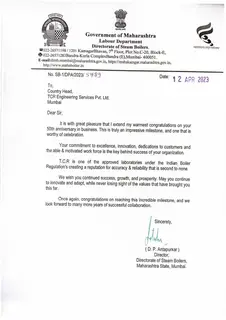
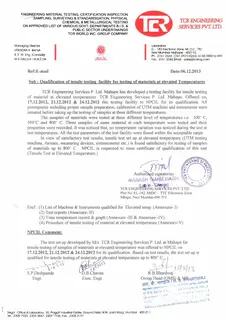
TCR Engineering completed fifty years in 2023. Adani Electricity Mumbai Limited wrote from the Adani Dahanu Thermal Power Station, over the signature of its Additional Vice President (Mechanical), to mark the milestone and the station's working association with the Navi Mumbai laboratory. The letter is published here in full.
Documents
Download the reference documents for this page. Every file is hosted on this domain and is also listed in the site document library.
Related insights
26 published insights on this site carry the Power Generation tag. The 6 most recent are below.
-
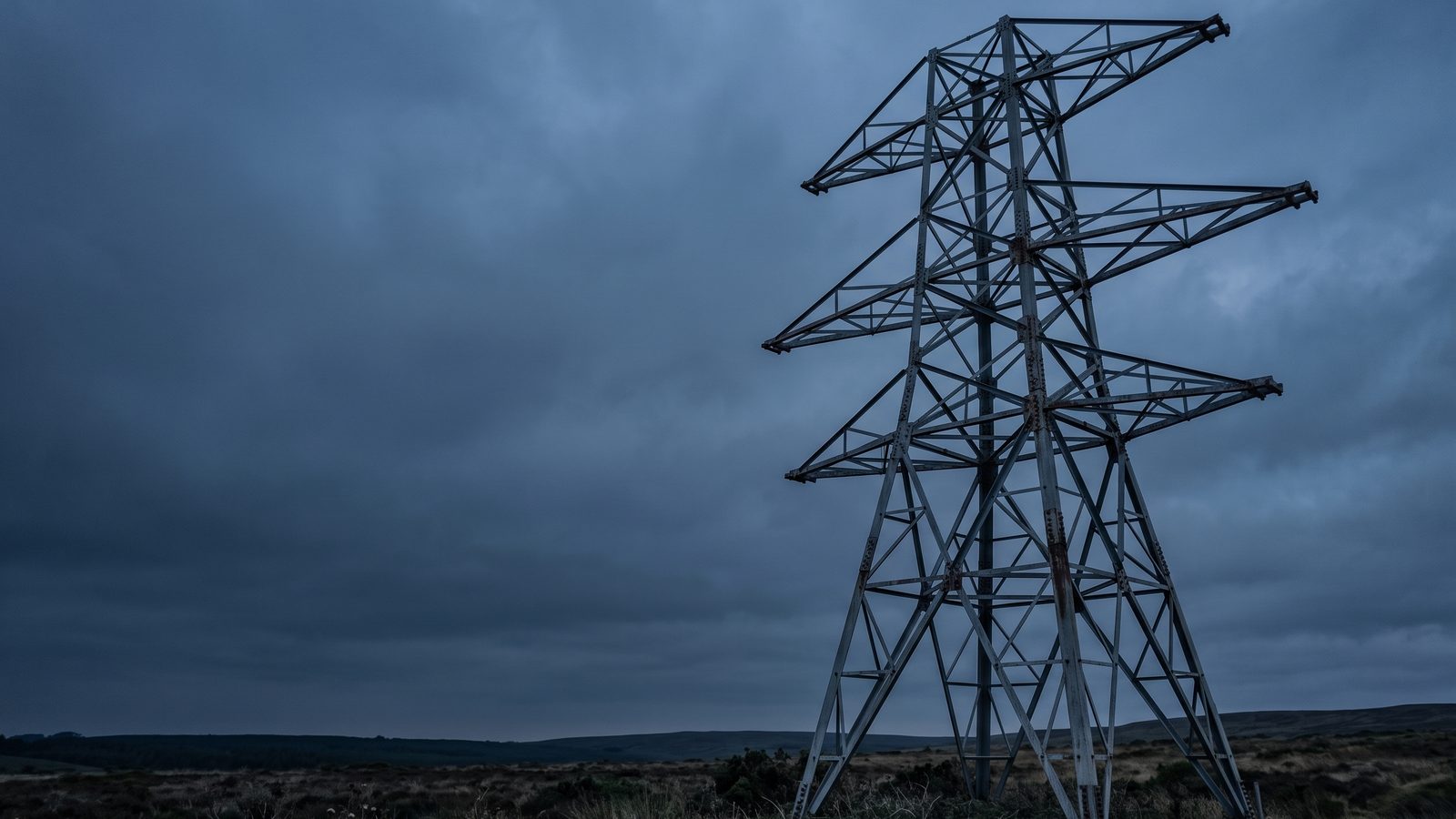
Remaining life of an ageing 220 kV transmission tower: the damage mechanisms that decide it and how they are found
An ageing 220 kV lattice tower is limited by zinc loss, stub corrosion, bolt and member damage and foundation distress. How each is found, judged and monitored.
-
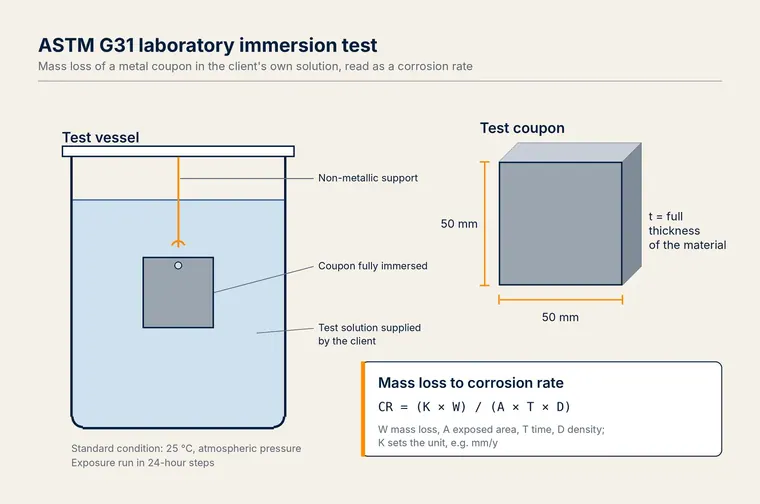
ASTM G31 immersion corrosion testing at Mahape: how a metal behaves in your own liquid
TCR Engineering's Mahape laboratory runs ASTM G31 laboratory immersion tests: a coupon of the client's metal, in the client's own solution, weighed…
-
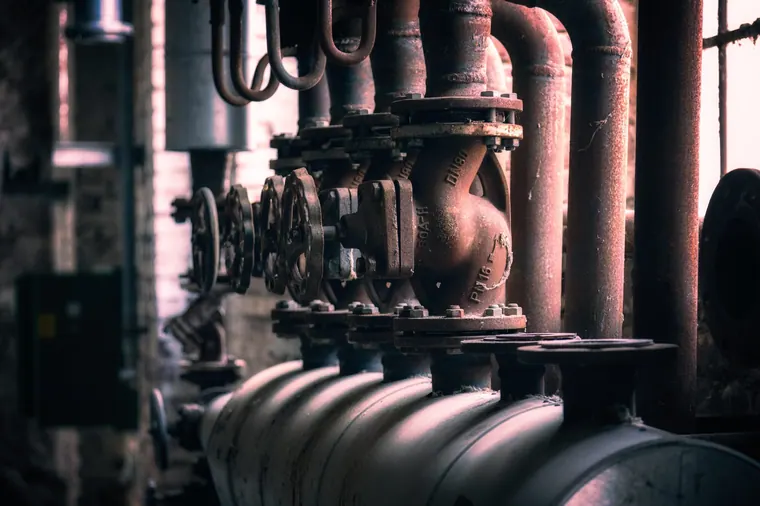
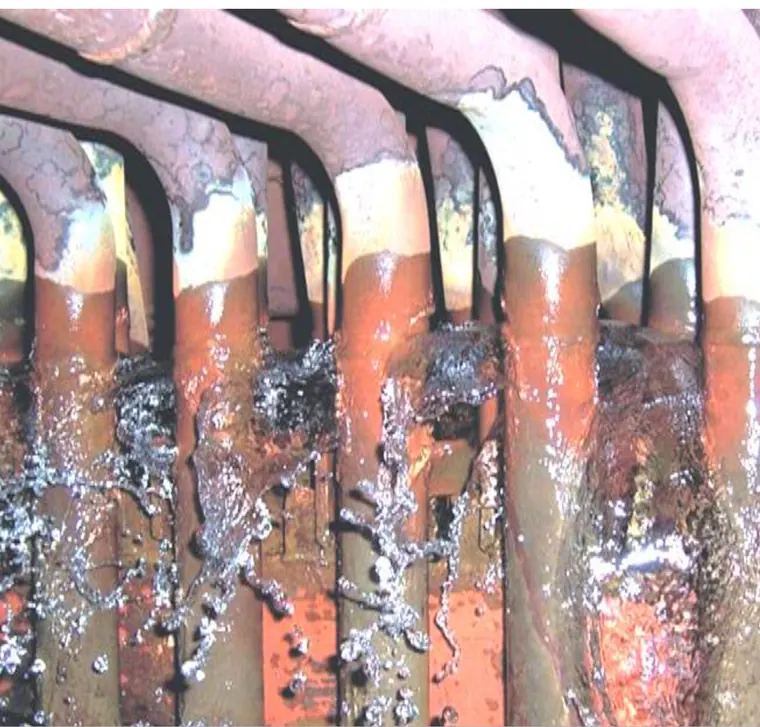
Boiler Tube Failure Analysis
Boiler tube failure analysis reveals the metallurgical evidence behind costly power plant outages and provides proven solutions to prevent recurrence.
-
Boiler Tube Failure Analysis: A Complete Investigation Guide for Power Plants
A complete guide to boiler tube failure investigation: the waterside, fireside, temperature and mechanical damage mechanisms, and how each is proved.
-
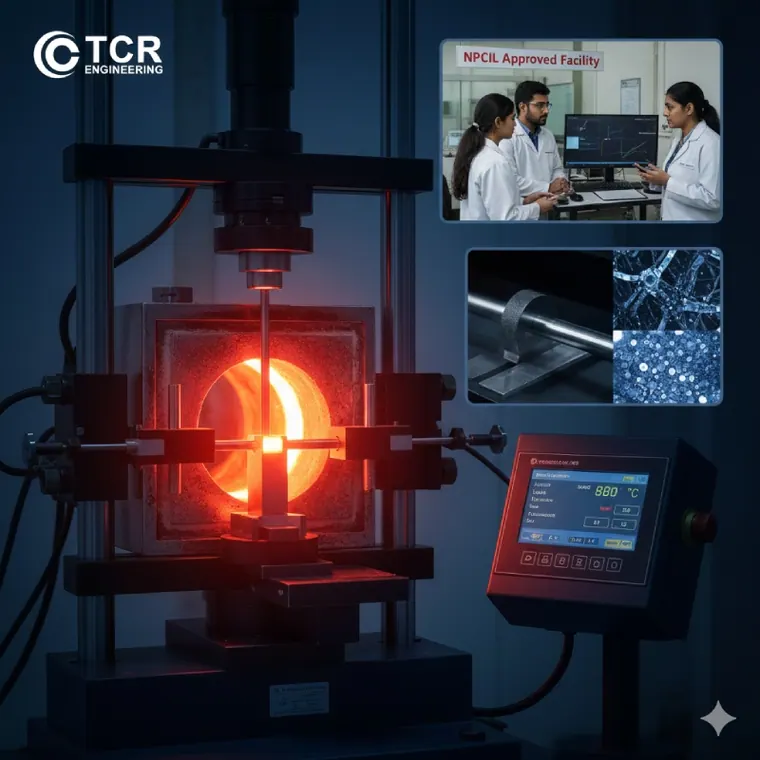
Why Nuclear Power Demands Testing at 800°C: TCR Engineering's NPCIL Approval for Elevated Temperature Testing
TCR Engineering approved by NPCIL for elevated temperature tensile testing up to 800°C. Nuclear-grade materials testing at Mahape laboratory.
-
Unlocking the True Value of Your Power Plant with TCR's Life Extension Studies - The India and Saudi Arabia Playbook
Power plant life extension studies by TCR Engineering for thermal and CCGT units in India and Saudi Arabia: remaining life assessment and NABL…
Frequently asked questions
Is TCR Engineering approved under the Indian Boiler Regulations (IBR)?
Yes. TCR Engineering has been an IBR Well-Known Material Testing Laboratory since 2014, holding Form XVI-H certificate 38 (Serial MTL/15/019), issued 19 April 2024 and valid to 02 April 2029. Within the TCR group, remnant life assessment recognition is held by TCR Advanced Engineering, Vadodara.
How is a boiler remaining life assessment planned around an outage?
The scope is set against the unit size, the steam conditions and the components in question, and the site work is planned inside the outage window, with the completion date confirmed in the quotation. As a reference point, the RLA of Adani Power Mundra's 4,620 MW boiler and piping fleet under IBR Regulation 391A was executed at 20 days per unit (March 2025).
Can TCR run long-duration creep tests for boiler and piping alloys?
Yes. Six creep frames operate to 1,100 °C at 50 kN with durations to 100,000 hours, including creep rupture of SUPER 304H (UNS S30432) per BHEL specification, IBR requirements, ASTM E139 and BS EN ISO 204.
What is TCR's boiler tube failure experience?
1,500+ boiler tube failure investigations, consolidated into the Knowledge-Based Audit practice and published through ASM International: the 2018 book Failure Investigation of Boiler Tubes and the 2021 ASM Handbook Vol. 11A chapter.
Can TCR interpret in-situ replicas during the outage itself?
Yes. The field team reads a creep cavitation classification on the day of replica acquisition rather than waiting for laboratory turnaround, protecting the turnaround window. Interpretation rests on a 100,000+ replica reference base.
What does BTL mean in a power plant?
BTL stands for boiler tube leakage: a tube in the boiler pressure parts fails and the unit is forced off the grid until it is repaired. TCR has investigated more than 1,500 boiler tube failures, tracing each leak to its water-touched or steam-touched damage mechanism and feeding the finding into the Knowledge-Based Audit.
Does TCR work on combined-cycle plants and HRSGs?
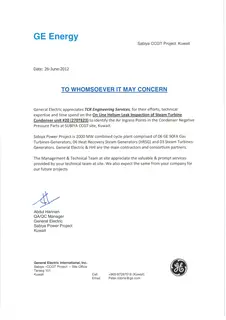
Yes. TCR inspects heat recovery steam generators in combined-cycle stations, covering multi-pressure headers, finned-tube banks, drums and evaporators, alongside the steam turbine and condenser. At the Sabiya combined cycle project in Kuwait, General Electric recorded TCR's on-line helium leak inspection of a steam turbine condenser, which located air ingress points in its negative-pressure parts.