
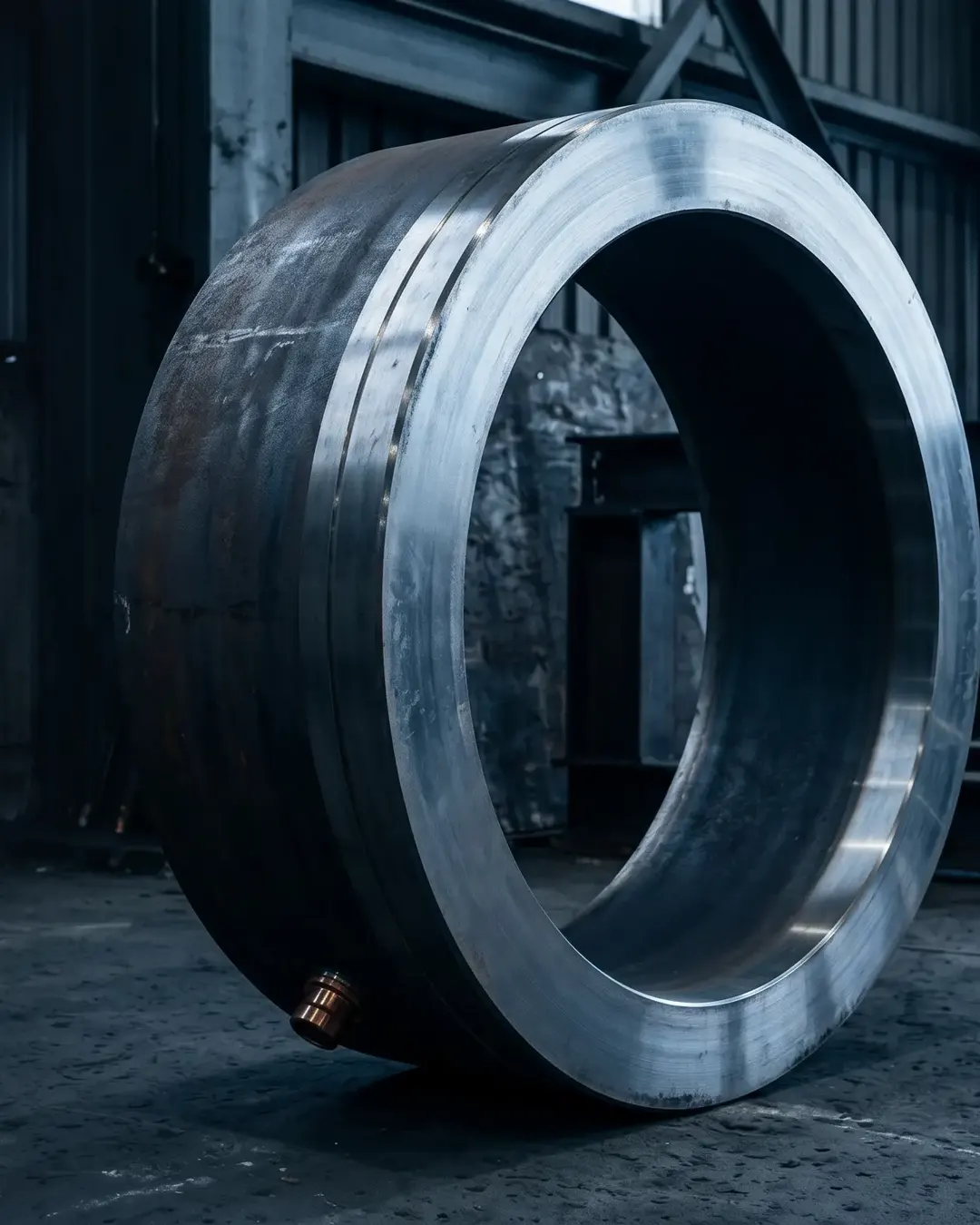
Services · Asset Integrity and Engineering Consulting
Remaining Life Assessment (RLA)
A thirteen-step turbine workflow runs from visual and dimensional checks through in-situ metallography, natural-frequency testing, and creep-fatigue evaluation. Accelerated creep rupture testing under the Omega Method reads remaining creep life from the actual in-service sample.
Request a Quote
In brief
TCR Engineering Services Pvt. Ltd., NABL ISO/IEC 17025:2017 accredited in Navi Mumbai, delivers Remaining Life Assessment across boilers, turbines, ammonia tanks and process plant. The group counts 750+ RLA studies, including 400+ boiler RLA assignments worked to IBR guidance with in-situ metallography, NDT, accelerated creep rupture testing and the Omega Method.
RLA is the established workhorse of the Asset Integrity practice. Group cumulative count: 750+ RLA studies across all asset classes, including 400+ Boiler RLA assignments and 6 Ammonia Tank RLA sites covering 10 tanks (CFCL Kota, DFPCL Taloja, Paradeep Phosphates 3 tanks, IFFCO Kandla, IFFCO Kalol 2 tanks, RCF Trombay 2 double-wall double-integrity).
The 13-Step Turbine RLA Workflow
- Visual
- Dimensional
- DPT
- MPT/WFMPI/Coil-MPI
- Demagnetisation
- UT
- In-situ metallography
- Hardness
- Diaphragm deposit analysis
- Natural frequency test
- Turbine blade inspection
- White metal bearing inspection
- Creep and fatigue life evaluation
Boiler RLA, the Six-Pillar Capability Stack
- IBR Well-Known Material Testing Laboratory status (Form XVI-H certificate 38), with remnant life assessment recognition within the group held by TCR Advanced Engineering, Vadodara.
- 400+ RLA assignments.
- Skilled and qualified manpower (the named senior bench plus 12 in-situ replica field teams).
- Wide range of NDT equipment (12+ videoscopes, 11+ thickness gauges, 10+ MPI sets, 9+ UT flaw detectors, 8+ hardness testers, 5+ PAUT/TOFD systems, 3 ECT systems, 2 oxide scale gauges).
- In-house facility for sample testing including SEM and creep testing.
- Multiple inspection teams.
Damage Mechanisms (Boiler)
Boiler Tube Leak, metallurgical degradation, creep, erosion, pitting, general corrosion, HTHA, fatigue.
- Boiler tube leak
- Metallurgical degradation
- Creep
- Erosion
- Pitting
- General corrosion
- High-temperature hydrogen attack (HTHA)
- Fatigue
ACRT (Accelerated Creep Rupture Testing) and Omega Method
The Omega Method predicts remaining creep life from an actual in-service sample. TCR Engineering runs the accelerated creep rupture tests in its creep and stress rupture laboratory in Navi Mumbai, on 6 creep frames operating to 1,100 °C.
Theoretical Life Assessment (Desk-Based RLA Sub-Service)
A desk-based variant of RLA delivered without site visit, NDT, FFS, stress analysis, CFD, or FEA. Methodology: data collection on operating history, GA drawings, and process parameters; literature survey by a multi-disciplinary team of metallurgical, corrosion, and design experts; theoretical life calculation against the design intent and the materials of construction for shells, dished-ends, and nozzles.
- What it excludes: delivered without a site visit, NDT, fitness-for-service, stress analysis, CFD or FEA.
- Data collection: operating history, general-arrangement drawings and process parameters.
- Literature survey: by a multi-disciplinary team of metallurgical, corrosion and design experts.
- Calculation: theoretical life against the design basis.
- Anchor reference: Gujarat Fluorochemicals Limited (GFL), Ranjitnagar plant (Taluka Ghoghamba, Panchmahals, Gujarat), awarded 4 June 2025, 124 items of equipment in scope.
Idle-Plant Restart References
Notore Chemical Industries Plc (Nigeria), Baiji Refinery (Iraq), Godrej Industries, Matix Fertilisers, Nagarjuna Fertilizers, Heavy Water Projects.
- Notore Chemical Industries Plc, Nigeria
- Baiji Refinery, Iraq
- Godrej Industries
- Matix Fertilisers
- Nagarjuna Fertilizers
- Heavy Water Projects
The Two-Level RLA Assessment Framework
Every remaining-life study is scoped to one of two levels of depth, and the level is chosen against the criticality of the component and the data available.
- Level II: collected history, nominal or measured dimensions, an inspection-grade condition survey, operational or measured temperature and pressure, simple stress calculation, and minimum material properties, with no destructive sampling.
- Level III: measured dimensions throughout, a detailed condition survey, measured operating data, refined stress analysis, and actual material properties from samples removed and tested.
- How the level is chosen: against the criticality of the component and the data available.
Either way, the approach is deliberately pragmatic. As much data as possible is gathered on the component history first, often through structured discussion with the plant’s own operating and maintenance people and outside experts, and those opinions are then weighed against the testing and study that follows.
When a Remaining-Life Study Is Triggered
Operators commission RLA against four families of criteria, and the trigger also sets the depth of the study.
- History-based: thirty to forty years elapsed, prior-failure statistics pointing to impending failure, repair frequency making operation uneconomical, or calculation indicating life exhaustion.
- Performance-based: severe loss of efficiency, a large crack showing as leakage, severe vibration or other malfunction, or a catastrophic burst.
- Inspection-based: dimensional change leading to distortion and altered clearances, or inspection showing microscopic damage, crack initiation, or a large crack approaching critical size.
- Destructive-evaluation-based: metallography or mechanical testing on a removed sample showing life exhaustion.
- The trigger sets the level: a routine age-based review can be Level II; crack initiation or sample-confirmed degradation moves it to Level III.
The Boiler Component Approach
On a package or utility boiler each component is worked to a tailored technique set rather than a blanket scan. The list sets out which techniques each component group receives.
- Drum and headers: visual, ultrasonic, magnetic-particle and liquid-penetrant inspection, with dimensional and hardness measurement.
- Water walls, economiser and superheaters: visual inspection, in-situ metallography, destructive sample testing where access allows, and dimensional measurement.
- Hottest circuits, additionally: deposit analysis, in-situ oxide-scale thickness measurement and accelerated creep rupture testing.
- Representative engagements: Adani Power Mundra, one engagement covering the boiler and piping of the 4,620 MW station (four 330 MW sub-critical and five 660 MW supercritical units) under IBR Regulation 391A at 20 days per unit; PIC Kuwait, 120 critical items across an ammonia and urea plant, delivered through NBTC; Petrokemya, a fire-tube boiler; GNFC TDI-II, reformer tubes; QAFCO, with in-situ metallography on pressure parts.
The water walls include the furnace and second-pass tubes, and the superheaters include the primary and secondary stages; all are read by in-situ metallography and the other techniques listed. Ducts and expansion joints carry visual, liquid-penetrant, and dimensional checks, and special tests cover hanger inspection, alignment, fibroscopy, and finite-element analysis where the geometry warrants it. The reading from all of these resolves into one estimate of remaining safe life with documented evidence of any damage and a recommendation on repair, inspection interval, and life-extension strategy, worked to IBR and ASME guidance.
What is a residual life assessment of a boiler under IBR?
A boiler residual life assessment, also called remnant life assessment or boiler RLA, estimates how long the drums, headers, tubes and steam piping can keep operating safely, and what must be repaired or replaced first. TCR Engineering Services Pvt. Ltd., an IBR Well-Known Material Testing Laboratory since 2014, has delivered 400+ boiler RLA studies in India to IBR guidance.
- IBR recognition: Form XVI-H certificate 38, valid to 2 April 2029.
- Reference engagement: Adani Power Mundra, RLA of the 4,620 MW boiler and piping fleet under IBR Regulation 391A in March 2025.
- Evidence behind the estimate: in-situ metallography on pressure parts, oxide-scale thickness and hardness on site, and accelerated creep rupture testing on removed samples.
- Where tubes have already failed: boiler tube failure analysis, drawing on 1,500+ documented tube failure investigations, fixes the mechanism before the life is estimated.
- Utility and captive plants: the boiler audit adds internal oxide scale measurement and EMAT thickness surveys.
Documents
Download the reference documents for this page. Every file is hosted on this domain and is also listed in the site document library.
Related insights
4 published insights on this site bear directly on Remaining Life Assessment. They are below; the full index carries all 92 Asset Integrity insights.
-
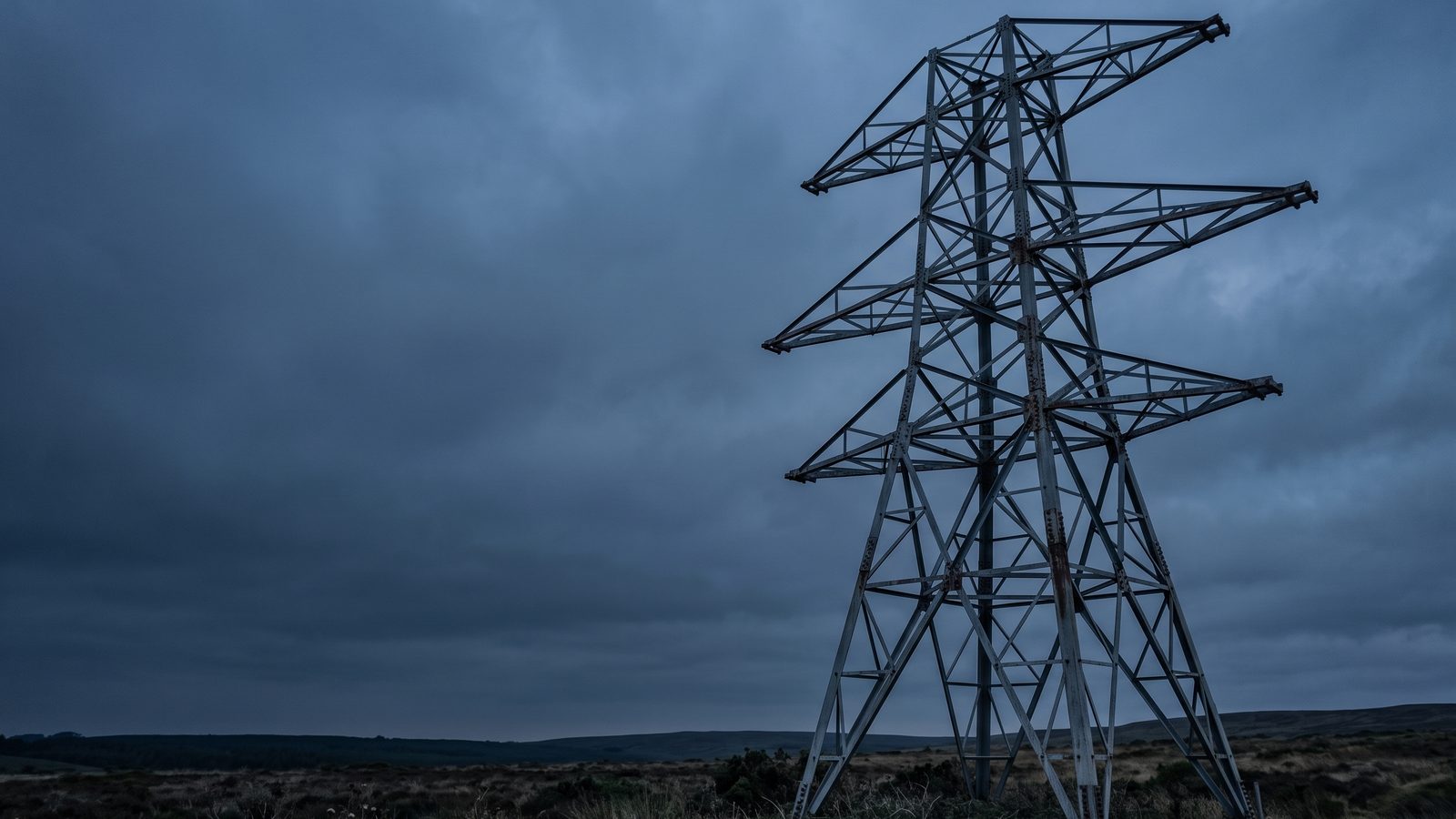
Remaining life of an ageing 220 kV transmission tower: the damage mechanisms that decide it and how they are found
An ageing 220 kV lattice tower is limited by zinc loss, stub corrosion, bolt and member damage and foundation distress. How each is found, judged and monitored.
-
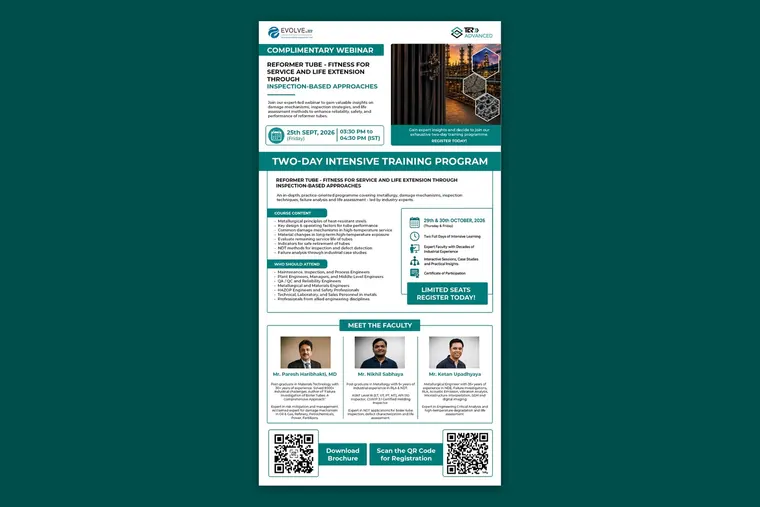
Reformer tube fitness for service: Evolve by TCR opens a complimentary webinar on 25 September 2026
Watch the complete recording of the 25 September 2026 webinar, and see the two-day intensive programme in Vadodara on 29 and 30 October. Both address…
-
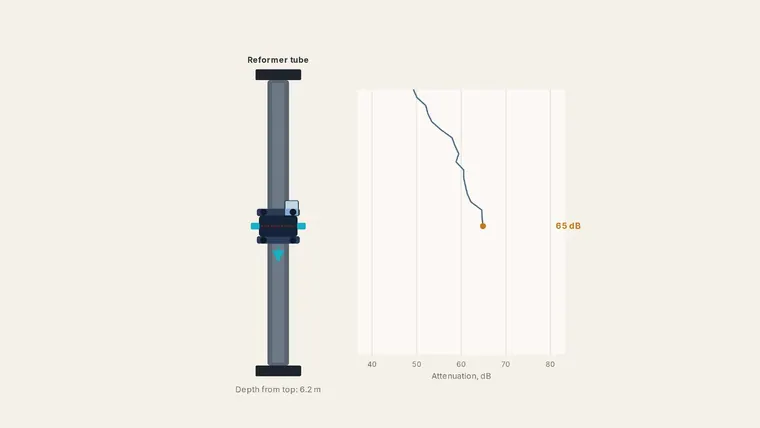
ARTiS comes to Japan: answering when a reformer tube comes out, not whether it is damaged
TCR Engineering and TCR Advanced are taking ARTiS, the automated reformer tube inspection system, into Japan with Chugai Technos Corporation of…
-
TCR’s strong experience in conducting Remaining Life Assessments
Noteworthy RLA projects undertaken by TCR
Frequently asked questions
What is a Remaining Life Assessment?
An RLA establishes how much safe operating life remains in a component and what should be repaired, monitored or replaced. Findings from NDT, in-situ metallography, dimensional survey and, where warranted, destructive testing resolve into one estimate of remaining safe life with a recommendation on repair, inspection interval and life-extension strategy.
What depth of assessment applies?
Every study is scoped to one of two levels. A Level II assessment works from collected history, nominal or measured dimensions, an inspection-grade condition survey and simple stress calculation, with no destructive sampling. A Level III assessment adds measured dimensions throughout, refined stress analysis and actual material properties from samples removed and tested.
When should an operator commission an RLA?
Triggers fall into four families: history-based, such as thirty to forty years elapsed or rising repair frequency; performance-based, such as efficiency loss, leakage or severe vibration; inspection-based, such as distortion or crack initiation; and destructive-evaluation-based, where metallography or mechanical testing on a removed sample shows life exhaustion.
Can an RLA be delivered without a site visit?
Yes. Theoretical Life Assessment is a desk-based variant delivered without site visit, NDT, FFS, stress analysis, CFD or FEA. It works from operating history, general-arrangement drawings and process parameters, with a multi-disciplinary team calculating theoretical life against the design intent for shells, dished-ends and nozzles.
How is a boiler RLA executed?
Each component is worked to a tailored technique set: drums and headers carry visual, ultrasonic, magnetic-particle and liquid-penetrant inspection with hardness measurement, while water walls, economisers and superheaters add in-situ metallography, oxide-scale measurement, deposit analysis and accelerated creep rupture testing, worked to IBR and ASME guidance.
What is RLA testing?
RLA testing is the set of site inspections and laboratory tests that feed a remaining life assessment: NDT, in-situ metallography, hardness, dimensional and oxide-scale measurement on site, and accelerated creep rupture testing on removed samples. TCR Engineering Services Pvt. Ltd. combines them from Navi Mumbai, with 750+ RLA studies across all asset classes.
Does TCR carry out boiler RLA under the Indian Boiler Regulations?
Yes. TCR Engineering Services Pvt. Ltd. has been an IBR Well-Known Material Testing Laboratory since 2014, under Form XVI-H certificate 38 valid to 2 April 2029, and has delivered 400+ boiler RLA studies in India, including the Adani Power Mundra 4,620 MW boiler and piping fleet assessed under IBR Regulation 391A in March 2025.