
Services · Asset Integrity and Engineering Consulting
Root Cause Failure Analysis
HMEL Bathinda holds TCR on a three-year failure-investigation rate contract covering the whole Bathinda refinery and petrochemical complex to June 2028. The method runs to API RP 571, ASM Handbook Volume 11A, and WRC 488, 489, and 490.
Request a Quote
In brief
TCR Engineering Services Pvt. Ltd., a NABL ISO/IEC 17025:2017 accredited laboratory in Navi Mumbai, conducts root cause failure analysis of metallic and non-metallic components, drawing on a group archive of 9,000+ documented failure investigations and reporting to a standard fit for litigation, insurance and operator action.
How does TCR approach a failure investigation?
The work is accepted across oil and gas, refining, petrochemicals, fertilisers, power, general engineering, defence, aviation, and insurance, and it covers both static and rotating equipment.
The findings are written to stand up where it matters: not only for the plant’s own reliability decisions but for litigation and insurance investigations, which is why the method is evidence-led and the report is defensible. The forensic approach is to read the available physical evidence, run the tests that the case requires, and build the most probable failure scenario from what the evidence supports, then to set it out in plain terms so that engineers, executives, regulators, or counsel can all follow the reasoning.
The practice draws on more than 9,000 failure investigations, covering manufacturing and metallurgical failures in ASME boilers, pressure vessels, gas turbine engine components, oil and gas transmission pipelines, food processing equipment, heat exchangers, medical supplies, refineries, petrochemical plants, aircraft/aerospace, offshore structures, industrial machinery, weldments and ships.
The team’s particular strength is high-temperature and high-pressure failures. Its experience spans materials, failure analysis, metallurgy, welding, quality assurance and forensic engineering. The analysis is conducted by engineers holding advanced degrees in metallurgy, mechanical, civil, chemical, and electrical engineering.
TCR Engineering agrees an investigation plan with the client first. The background of the failure and its general features are studied carefully before any testing begins. The cause is then established by analytical and mechanical procedures that often include simulated service testing, and the combined analysis and testing locate the problem and support the recommendations.
In the course of the various steps listed below, preliminary conclusions are often formulated. If the probable fundamental cause of the metallurgical failure becomes evident early on in the examination, the rest of the investigation focuses on confirming the probable cause and eliminating other possibilities. The metallurgical failure analyst compiles the results of preliminary conclusions, carefully considers all aspects of failure including visual examination of a fracture surface, the inspection of a single metallographic specimen and the history of similar failures.
A failure investigation establishes where the failure started, the damage mechanism that grew it, referenced to API RP 571, the service, material and design conditions that contributed, and the corrective actions that prevent a repeat. Non-destructive examination always comes before destructive sectioning, so the evidence survives for any later review.
What the failure investigation report contains
The investigation team produces detailed written reports to ensure clients fully understand the implications and can independently examine the conclusions:
- Description of the Failed Component
- Service Condition at the Time of Failure
- Prior Service History
- Manufacturing and Processing History of Component
- Mechanical and Metallurgical Study of Failure
- Metallurgical Evaluation of Quality
- Summary of Failure Causing Mechanism
- Recommendations for Prevention of Similar Failures
- Latest Inspection Solutions
Workflow: visual, NDT, replication, hardness, mechanical and chemical, fractography (SEM and EDS), microstructural analysis, FEA where loading is in question, damage-mechanism attribution, and a written report fit for litigation, insurance, or operator action.
Standards. API RP 571 (damage mechanisms in the refining industry), ASM Handbook Volume 11A, WRC 488, WRC 489, and WRC 490.
Representative engagement. HMEL Bathinda failure-investigation rate contract, a three-year retainer covering the full Bathinda refinery and petrochemical complex (June 2025 to June 2028).
Metallurgical failure analysis of metallic components
For metallic components the investigation uses scanning electron microscopy and energy-dispersive X-ray spectroscopy, fractography, and advanced metallography including colour metallography, alongside material characterisation, mechanical-property evaluation, and a review of service history and design parameters, with finite-element analysis where the loading is in question.
- Instruments: scanning electron microscopy with energy-dispersive X-ray spectroscopy, fractography, and advanced metallography including colour metallography.
- Alongside: material characterisation, mechanical-property evaluation, and a review of service history and design parameters.
- Where loading is in question: finite-element analysis.
- Failures resolved: cracking, corrosion, wear, and brittle and fatigue failures.
- Closes with: a tailored corrective-action plan and, where warranted, recommendations on material upgrade or process change.
Non-Metallic Component Failure Analysis
The practice also covers non-metallic components: polymers, composites, ceramics, rubber, and FRP and GRP systems, which typically degrade through ultraviolet exposure, chemical attack, thermal ageing, or design error. These are investigated through a combination of mechanical testing, spectroscopy, microscopy, and thermal analysis, with the same root-cause discipline applied to the metallic work.
- Materials: polymers, composites, ceramics, rubber, and FRP and GRP systems.
- Typical degradation: ultraviolet exposure, chemical attack, thermal ageing, or design error.
- Methods: mechanical testing, spectroscopy, microscopy and thermal analysis.
- Discipline: the same root-cause method applied to the metallic work.
The Damage-Mechanism Range
The archive spans the full range of in-service degradation: creep and creep-fatigue, mechanical and thermal fatigue, general and localised corrosion, pitting, erosion-corrosion, microbiologically influenced corrosion, selective leaching, stress-corrosion and sulphide-stress cracking, polythionic-acid stress-corrosion cracking, hydrogen embrittlement and hydrogen damage, high-temperature hydrogen attack, and welding-related defects.
- Time-dependent: creep and creep-fatigue, mechanical and thermal fatigue.
- Corrosion: general and localised, pitting, erosion-corrosion, microbiologically influenced corrosion, and selective leaching.
- Environmental cracking: stress-corrosion and sulphide-stress cracking, and polythionic-acid stress-corrosion cracking.
- Hydrogen: embrittlement, hydrogen damage, and high-temperature hydrogen attack.
- Fabrication: welding-related defects.
The breadth of the named-mechanism vocabulary is what lets an investigator place a new failure quickly against the population of similar cases in the database.
The Investigation Bench: Nine Stages, Four SEMs
The group's dedicated failure investigation bench is TCR Advanced Engineering at Makarpura, Vadodara. Every investigation opens with a core team of senior specialists who fix the approach and the order of testing before anything is cut, so the evidence is read before sectioning destroys it, and the Technical Authority signs every final report.
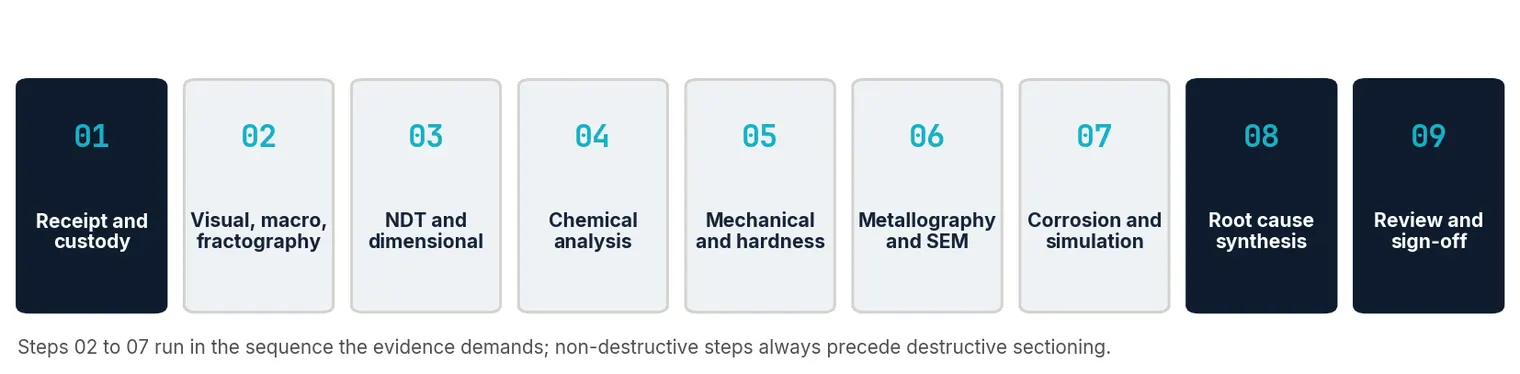
| Stage | Performed by | Reviewed or approved by | Record |
|---|---|---|---|
| 01 Receipt and custody | Laboratory team | Laboratory Manager | Sample receipt record, photographs, custody log |
| 02 Visual, macro, fractography | Investigation Lead and metallography | Investigation Lead | Macro images, fracture-surface map |
| 03 NDT and dimensional | NDT technicians | Technical Manager, NDT and RLA | NDT report, thickness and dimensional data |
| 04 Chemical analysis | Chemists | Technical Manager, Testing; Quality Manager | Test report with method and uncertainty |
| 05 Mechanical and hardness | Mechanical test engineers | Technical Manager, Testing | Test report with method and uncertainty |
| 06 Metallography and SEM/EDS | Metallographers and SEM operators | Investigation Lead (optical); SEM and EDS In-charge | Micrographs, SEM images, EDS spectra |
| 07 Corrosion and simulation | Corrosion test engineers | Technical Manager, Testing | Test report |
| 08 Root-cause synthesis | Investigation Lead | Technical Authority | Draft report, damage mechanism referenced to API RP 571 |
| 09 Review and sign-off | Technical Authority | Quality check by the Quality Manager | Signed final report |
Scanning electron microscopy is the instrument a failure investigation queues for, because fractography, inclusion and deposit analysis and corrosion-product chemistry all need it. The Vadodara bench runs four SEMs in-house, so no time-critical fracture surface waits on an outside facility.
| SEM | Make and model | In service since | Principal use |
|---|---|---|---|
| Floor model | Pemtron SEMART SS-100 | 2012 | Fractography of fatigue, ductile, brittle and intergranular fracture; EDS |
| Table top | JEOL JCM-6000 | 2022 | Rapid fracture-mode screening; inclusions and deposits |
| Table top | Thermo Fisher Phenom XL G2 | 2024 | Large specimens; corrosion products and scale |
| Floor model | JEOL JSM-IT-210L | 2026 | High-resolution fractography and microstructure |
- Technical Authority: Paresh Haribhakti, Managing Director and Chief Metallurgist of TCR Advanced, co-author of the ASM International book on boiler tube failure investigation and contributor to ASM Handbook Volume 11A.
- Head of the failure investigation line: Ketan Upadhyaya, Reliability Engineering, 35 years in NDE, acoustic emission, SEM and failure investigation.
- Investigation Lead: Pooja Mehta, Senior Manager, Failure Investigation, who has led more than 4,000 failure investigations.
- SEM and EDS: Prof. M.N. Patel, former Associate Professor of Metallurgical and Materials Engineering, MS University of Baroda, 40 years in electron microscopy and failure analysis, reviews every fractographic and EDS finding.
- The report states the component history, sampling and specimen locations, each test with its method and, where relevant, its measurement uncertainty, annotated images, the damage mechanism referenced to API RP 571, the root cause and the corrective actions. Retained samples and fracture surfaces are kept for three months after the report.
- The full organisation, the laboratory register and the accreditations of the Vadodara bench are on the TCR Advanced page.
Failure Analysis by Component
The mechanism that breaks a shaft is not the mechanism that splits a boiler tube, and neither is the mechanism that cracks a weld or a bolt. Each component class has its own damage set, its own diagnostic sequence and its own acceptance standards, and each has its own page.
- Shafts and rotating components: rotating-bending and torsional fatigue, fretting at shrink fits, corrosion fatigue and overload, read from the fracture surface before anything is cut.
- Boiler and heater tubes: the twenty-two mechanism taxonomy, from short-term overheating and creep to hydrogen damage, caustic gouging and dissimilar metal weld failure, against 1,500+ documented tube failure investigations.
- Welds and heat-affected zones: hydrogen cracking, solidification cracking, lamellar tearing, reheat cracking and Type IV creep damage, separated by macro section, hardness traverse and fractography.
- Fasteners and bolting: hydrogen embrittlement, stress corrosion cracking, fatigue from lost preload and overload, against the published acceptance criteria of ASTM F606/F606M and ISO 898-1.
Which laboratory in India can investigate a metallurgical failure?
TCR Engineering Services Pvt. Ltd. investigates metallurgical failures from its laboratory at Mahape, Navi Mumbai, accredited to NABL ISO/IEC 17025:2017 under certificate NABLT0726MH18640, with the group's dedicated investigation bench at TCR Advanced, Vadodara. The record behind it is 9,000+ documented failure investigations for plants in India and the GCC.
- Check the scope yourself: 1,483 NABL scope items, valid 3 March 2026 to 2 March 2030, listed line by line on Quality, Accreditations and Approvals.
- Tests behind a finding: metallurgical evaluation, chemical analysis and mechanical testing, each reported with its method.
- Boiler and heater tubes: 1,500+ of the investigations, with their own page on boiler tube failure analysis.
- Reports used abroad: NABL is an ILAC MRA signatory, so accredited test reports are accepted in 90+ economies.
How does root cause failure analysis differ from FMEA?
Root cause failure analysis starts from a component that has already failed and uses the physical evidence to prove the mechanism and its cause. FMEA starts from a design or process and ranks how it could fail before it has. TCR Engineering Services Pvt. Ltd., a NABL accredited laboratory in Navi Mumbai, performs the first and feeds the second.
| Root cause failure analysis | FMEA | |
|---|---|---|
| Starting point | A failed component and its service history | A design, process or system before it fails |
| Question answered | Why did this part fail, and how is a repeat prevented? | How could this fail, and which failure modes matter most? |
| Evidence | Fracture surface, microstructure, chemistry, mechanical properties and operating records | Design data, engineering judgement and failure history |
| Output | Damage mechanism referenced to API RP 571, root cause and corrective actions | Ranked failure modes and the controls planned against them |
| Where TCR fits | Performs the investigation and signs the report | Supplies the failure evidence that sets realistic failure modes |
Related services and industries
- Asset Integrity Services and Engineering Consulting
- Shaft and Rotating Component Failure Analysis
- Boiler and Heater Tube Failure Analysis
- Weld and Heat-Affected Zone Failure Analysis
- Fastener and Bolting Failure Analysis
- Knowledge-Based Audit
- Fitness-for-Service
- AiOM Asset Integrity Platform
- In-Situ Metallography
- Power Generation
- Refining and Petrochemicals
- Aerospace
- Automotive
- Insurance and Referee
The failure analysis podcast
Documents
Download the reference documents for this page. Every file is hosted on this domain and is also listed in the site document library.
Related insights
7 published insights on this site bear directly on Root Cause Failure Analysis. The 6 most recent are below; the full index carries all 92 Asset Integrity insights.
-
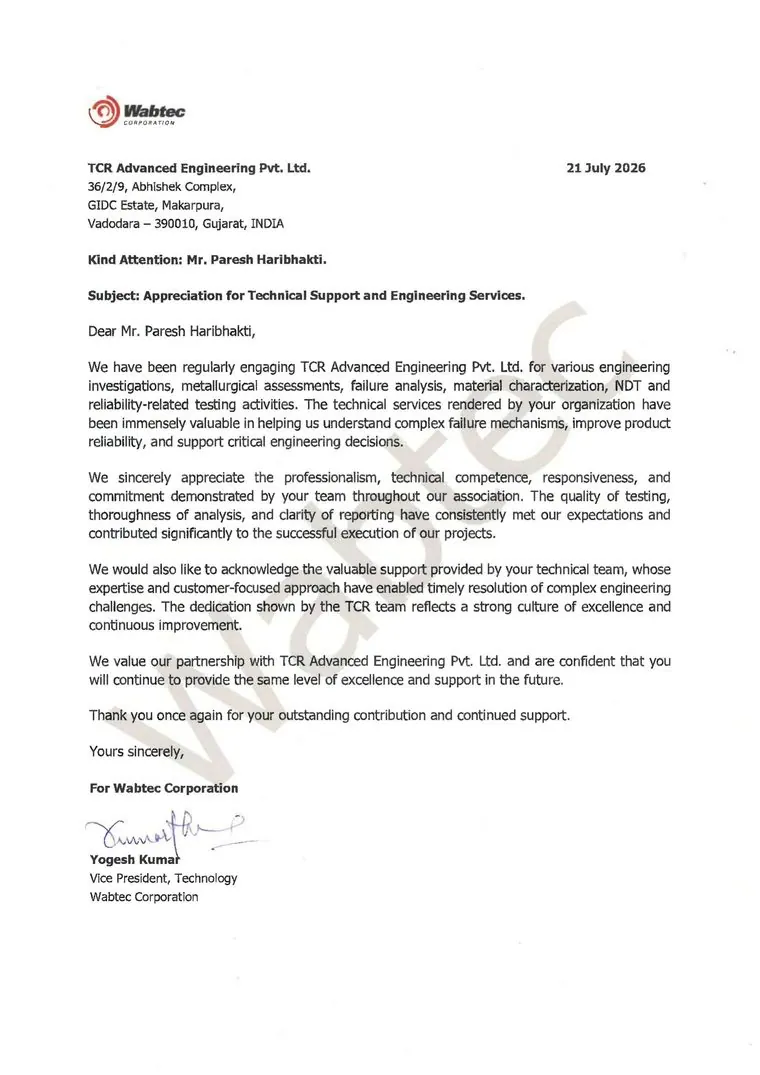
Wabtec Corporation Writes to TCR Advanced: Failure Analysis, Material Characterisation and Reliability Testing
Wabtec Corporation has written to TCR Advanced Engineering to record its appreciation for engineering investigations, metallurgical assessments,…
-
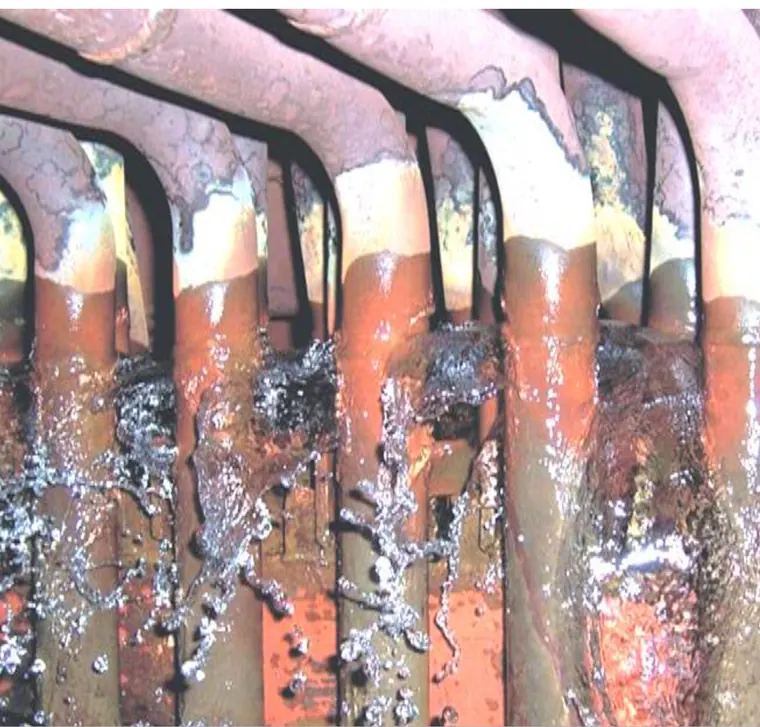
Boiler Tube Failure Analysis
Boiler tube failure analysis reveals the metallurgical evidence behind costly power plant outages and provides proven solutions to prevent recurrence.
-
Boiler Tube Failure Analysis: A Complete Investigation Guide for Power Plants
A complete guide to boiler tube failure investigation: the waterside, fireside, temperature and mechanical damage mechanisms, and how each is proved.
-
Why Failure Analysis Metallurgical Laboratory India Services Prevent Million-Dollar Disasters
Failure analysis metallurgical laboratory India prevents million-dollar disasters. TCR Engineering's 50+ years expertise identifies root causes.
-
Hindalco Commends TCR for Failure Analysis Expertise
TCR Advanced delivers expert metallurgical analysis for Hindalco cranes, ensuring safety, efficiency, and reliability in critical operation
-
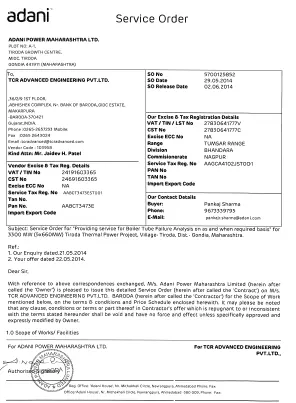
Failure Analysis project from Adani Power Plant
Boiler tube failure at the 5x660 MW Tiroda Thermal Power Plant in Gondia

Frequently asked questions
What does a TCR failure investigation cover?
The workflow runs from visual examination, NDT and replication through hardness, mechanical and chemical testing, fractography by SEM and EDS, and microstructural analysis, with finite element analysis where loading is in question. Each investigation closes with damage-mechanism attribution and a written report fit for litigation, insurance or operator action.
Does TCR analyse non-metallic failures?
Yes. The practice covers polymers, composites, ceramics, rubber and FRP and GRP systems, which typically degrade through ultraviolet exposure, chemical attack, thermal ageing or design error. These are investigated through mechanical testing, spectroscopy, microscopy and thermal analysis, with the same root-cause discipline applied to metallic components.
Which references guide the damage-mechanism attribution?
Investigations reference API RP 571 for damage mechanisms in the refining industry, ASM Handbook Volume 11A, and the WRC 488, 489 and 490 bulletins. The archive of 9,000+ documented investigations lets the team place a new failure against the population of similar cases recorded in the database.
Can the report be used in litigation or insurance claims?
Yes. The forensic approach is evidence-led: the team reads the physical evidence, runs the tests the case requires, and builds the most probable failure scenario from what the evidence supports. Findings are set out in plain terms so engineers, executives, regulators or counsel can follow the reasoning independently.
How does root cause failure analysis differ from FMEA?
Root cause failure analysis works backwards from a part that has failed, proving the mechanism and cause from physical evidence. FMEA works forwards from a design or process, ranking how it could fail before any failure occurs. TCR performs root cause failure analysis in Navi Mumbai, and its 9,000+ documented investigations give FMEA teams real failure modes to rank.
Is TCR's failure analysis laboratory accredited?
The tests behind an investigation, including chemical analysis, mechanical testing and metallurgical evaluation, are performed by TCR Engineering Services Pvt. Ltd. in Navi Mumbai under NABL ISO/IEC 17025:2017 certificate NABLT0726MH18640. The root cause conclusion is an engineering judgement built on those accredited results, and the report keeps the two clearly apart.
What should be sent with a failed component?
Send the failed part without cleaning or reassembling it, an unfailed companion part if one exists, and its history: material specification, drawings, operating conditions at the time of failure, service life and any repairs. TCR Engineering Services Pvt. Ltd. confirms the sample requirement in the quotation before the investigation plan is agreed.