
Services · Asset Integrity and Engineering Consulting
Engineering Design Review
Senior consultants review the design before it becomes a fabrication problem: materials selection, welding engineering, heat treatment, and stress analysis, with computer-aided engineering that extends to finite-element modelling, structural analysis, reverse engineering, and rapid prototyping.
Request a Quote
In brief
TCR Engineering Services Pvt. Ltd., a NABL ISO/IEC 17025:2017 accredited laboratory in Navi Mumbai, India, carries out engineering design review of pressure vessels, piping and storage tanks against ASME Section VIII Div. 1 and Div. 2, ASME B31.1, ASME B31.3, API 650 and API 620, supported by pipe stress analysis on CAESAR II and finite element analysis.
Overview
TCR’s engineering and metallurgical consulting team solves manufacturing and product quality problems. TCR's senior consultants are available to support and advise on corrosion and materials selection queries. The team also provides advisory service on welding engineering and heat treatment problems.
The consulting covers a product from its initial design to final production.
TCR also undertakes research projects in the areas of Computer-Aided Designing (CAD) including Engineering Design, Legacy Data Conversion, Detailing Plant & Process Layout, CAM and Computer-Aided Engineering (CAE) including Finite Element Modelling.
Areas of research assistance include:
- Determining the Right Material for a Product
- Undertaking Corrosion Engineering, Corrosion Testing and Corrosion Investigations
- Conducting Metallurgical Failure Analysis and Welding Evaluations
- Investigating the Effects of Environmental Conditions
- Preparing Material and Process Specifications for In-House Quality Control
- Comparing Vendor or Competitor Products
- Identifying Equivalents Between Local and Foreign Specifications
- Assisting in Solving Product Quality Problems
- Assisting in Cost-Benefit Analysis after Failure Analysis
- Reverse Engineering and Rapid Prototyping
TCR Engineering provides design and analysis services such as Computer Aided Designing (CAD) Engineering Design, Legacy Data Conversion, Detailing Plant & Process Layout, CAM, Computer Aided Engineering (CAE) including Finite Element Modelling, Structural Analysis and Noise, Vibration, Harshness (NVH) analysis, and Project Management Services.
The team combines experience in design, product development and engineering software.
What does an engineering design review check?
An engineering design review by TCR Engineering, Navi Mumbai, checks a pressure vessel, piping system or storage tank against the code it will be built to, before fabrication starts: ASME Section VIII for vessels, ASME B31.1 and ASME B31.3 for piping, and API 650 and API 620 for tanks, with stress analysis behind the calculations.
- Pressure vessels: ASME Section VIII Division 1 and Division 2, with finite element analysis for pressure-vessel and structural review (Ansys or Abaqus, through a partner).
- Power and process piping: ASME B31.1 and ASME B31.3, with pipe stress analysis on CAESAR II.
- Storage tanks: API 650 for welded tanks for oil storage and API 620 for low-pressure tanks.
- Materials, welding and heat treatment: senior consultants advise on corrosion and materials selection, welding engineering and heat treatment as part of the review.
- Equipment already in service: damage found in operation is assessed by fitness-for-service to API 579-1/ASME FFS-1, the code for in-service equipment.
Related capabilities, each on its own page
Three capabilities that sit beside design review are described on their own pages: partner-delivered 3D laser scanning, indigenisation and localisation support, and repair weld solutions for critical components.
- 3D Laser Scanning and Digital Documentation: Capture the plant as it stands before a revamp is designed against drawings that no longer match it.
- Indigenisation and Localisation Support: Source the component at home against the imported part's own metallurgy, not just its drawing.
- Solutions for Critical Weld Problems: Repair the critical component instead of waiting for a replacement.
Computer Aided Designing (CAD)
Designing
- Initial Concept
- 3D Modelling
- 3D Surfacing
- Concept Layout
- Product Definition
Legacy Data Conversion
- Drafting Conversion from 2D to 3D
- Data Extraction
- Data Validation
- Parametric Models
- Castings
- Plastic Parts
- Sheet Metal Parts
Detailing
- Part Drawings
- Assembly Layouts
- Manufacturing Drawing
- GD & T
- Process Sheets
- Tool Drawings
- Product Drawing
- Part Lists
Plant & Process Layout
- Structural
- Mechanical
- Hydraulics
- Pneumatic
Computer Aided Engineering (CAE)
Finite Element Modelling
- 2D Mesh
- Hybrid Mesh
- Hexa Mesh
- Tetra Mesh
Structural Analysis
- Linear & Non-linear
- Static & Dynamic
- Contact Stress
- Moldflow Analysis
- Fatigue Analysis
- Failure Analysis
- Impact and Crash Analysis
- Steady State & Transient
- Thermal Analysis
Noise, Vibration, Harshness (NVH)
- Sound Transmission
- Sound Radiation
- Sound Quality Study
- Vibration
- Structure Borne Noise
- Air Borne Noise
Training, Reverse Engineering and Prototyping
Corporate Training
- CAD Fundamentals
- CAE Fundamentals
- Software Applications for CAD & CAE
Reverse Engineering
- CMM
- Micro Profile Tester
- Roundness
- Roughness tester
- Profile Projector
- CAD Modelling & Surfacing
Prototyping
- Rapid prototyping
- CNC Machining
- Jigs and Fixtures
Two representative finite-element engagements:
- Sulzer Chemtech Middle East, Bahrain, January 2026: finite-element simulation of bulged reactors.
- Aditya Birla Hindalco Dahej, December 2024: crane finite-element stress analysis.
Related services and industries
Documents
Download the reference documents for this page. Every file is hosted on this domain and is also listed in the site document library.
Related insights
2 published insights on this site bear directly on Engineering Design Review. They are below; the full index carries all 92 Asset Integrity insights.
-
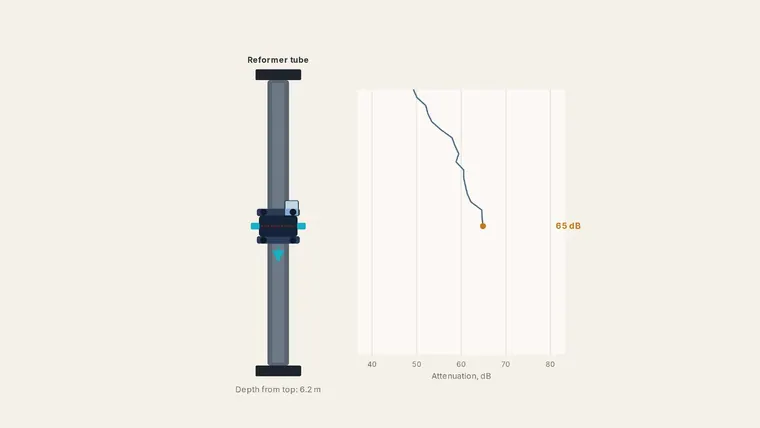
ARTiS comes to Japan: answering when a reformer tube comes out, not whether it is damaged
TCR Engineering and TCR Advanced are taking ARTiS, the automated reformer tube inspection system, into Japan with Chugai Technos Corporation of…
-
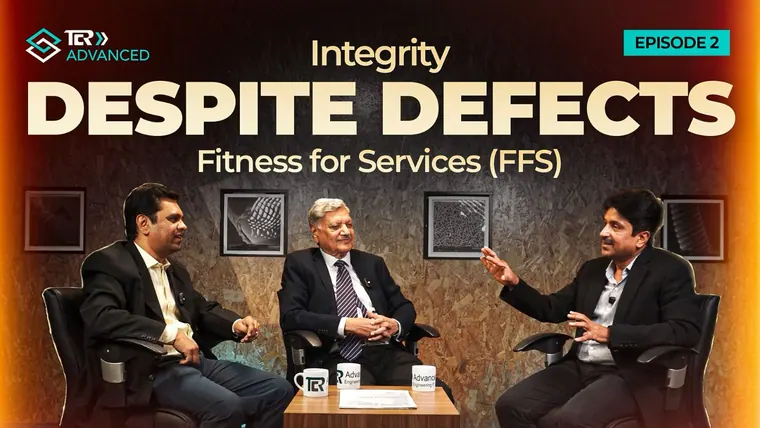
Integrity Despite Defects Podcast on FFS
Explore TCR's expert podcast on Fitness for Service (API 579/ASME FFS-1 and BS 7910): insights, methods & case studies. Watch now!
Frequently asked questions
Which codes does TCR review designs against?
Design reviews run against ASME Section VIII Division 1 and Division 2 for pressure vessels, ASME B31.1 for power piping, ASME B31.3 for process piping, API 650 for welded oil storage tanks, and API 620 for low-pressure tanks, with pipe stress analysis on CAESAR II and finite element analysis through Ansys and Abaqus via a partner.
What CAE analysis capabilities are available?
The team performs finite element modelling with 2D, hybrid, hexa and tetra meshing, and structural analysis spanning linear and non-linear, static and dynamic, contact stress, fatigue, thermal, impact and crash cases, alongside noise, vibration and harshness studies covering sound transmission, sound radiation and structure-borne and air-borne noise.
Does TCR support materials selection during design?
Yes. Senior consultants advise on corrosion and materials selection, welding engineering and heat treatment, preparation of material and process specifications for in-house quality control, identification of equivalents between local and foreign specifications, and comparison of vendor or competitor products, from initial product design through final production.
Who carries out engineering design review at TCR, and where?
Engineering design review is carried out by TCR Engineering's engineering and metallurgical consulting team in Navi Mumbai, India, with senior consultants covering materials selection, welding engineering and heat treatment. Pipe stress analysis runs on CAESAR II, and finite element analysis for pressure-vessel and structural review uses Ansys or Abaqus through a partner.