

Services · Asset Integrity and Engineering Consulting · A digital tool for plant life extension
AiOM: Asset Integrity Optimisation and Management Software
The digital platform that converts decades of metallurgical evidence into fewer unplanned shutdowns, deferred capital replacement and defensible run decisions, built to API, ASME, BS and ISO practice.
Request a Quote
In brief
AiOM stands for Asset Integrity Optimisation and Management: asset integrity management software built in-house by TCR Advanced Engineering in Vadodara, India. It turns inspection findings, corrosion data and metallurgical evidence into risk-ranked run, repair or retire decisions per API 580/581, API 579-1/ASME FFS-1 and API RP 584, backed by NABL ISO/IEC 17025:2017 accredited laboratories.
Sweating the assets buys short-term gains and long-term risk
Ageing plants, limited capital and shorter turnarounds push equipment beyond its original design basis. Maintenance cost falls for a while; then reliability drops, unexpected failures rise, and the safety, environmental and reputational effects compound. AiOM replaces run-to-failure with computer-aided, risk-based asset integrity management across people, process and data.
Reactive: run to failure
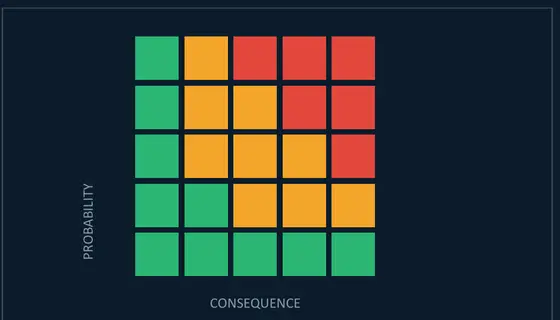
Fix it when it breaks. High safety factors, low maintenance spend, and a high cost when failure strikes. On the unmanaged register, every cell of the risk matrix drifts towards red.
Proactive: the AiOM way
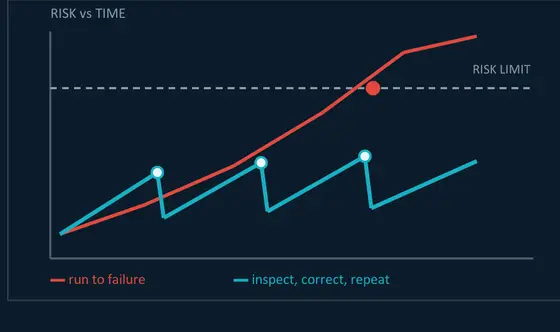
Inspect, correct, repeat. Each inspection pulls the risk curve back below the limit before it is crossed, and every reading feeds the next interval decision.
Damage mechanisms most often missed
- Corrosion under insulation
- Temper embrittlement
- Hydrogen-related damage
- Liquid metal embrittlement
- Small-bore piping failures
- Localised corrosion from process impurities
- Design deficiency
- Metallurgical degradation
- Welding anomalies
Every mechanism on this list is detectable years before it fails. AiOM is how you look.
TCR Group in numbers
Mechanical integrity failure is a leading cause of major onshore oil, gas and petrochemical losses (Jarvis and Goddard, IChemE Hazards 27, 2017). Practice figures: TCR Group, 2026.
Failures announce themselves
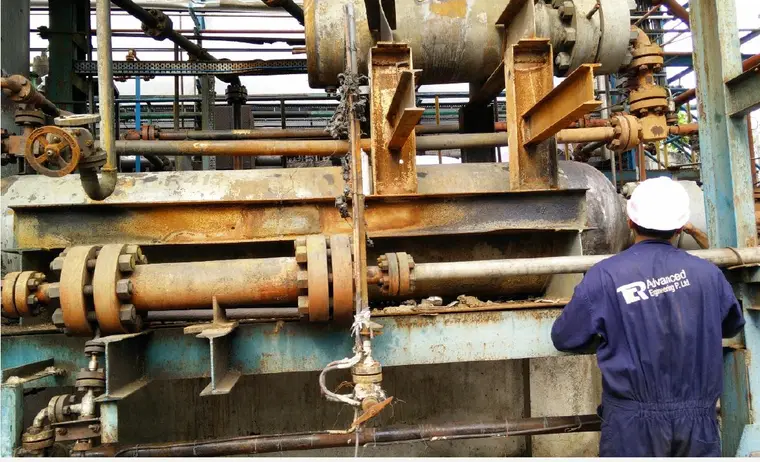
Exhibits from the TCR Group's archive of 9,000+ documented failure investigations and from field practice make one point: every failure here began as microstructure. Creep voids, a weld anomaly, corrosion under an intact-looking jacket, all were detectable years before the event.
Loss of containment is never the first event. It is the last event in a chain that began as an unread damage mechanism, and the chain is legible to anyone equipped to read it.
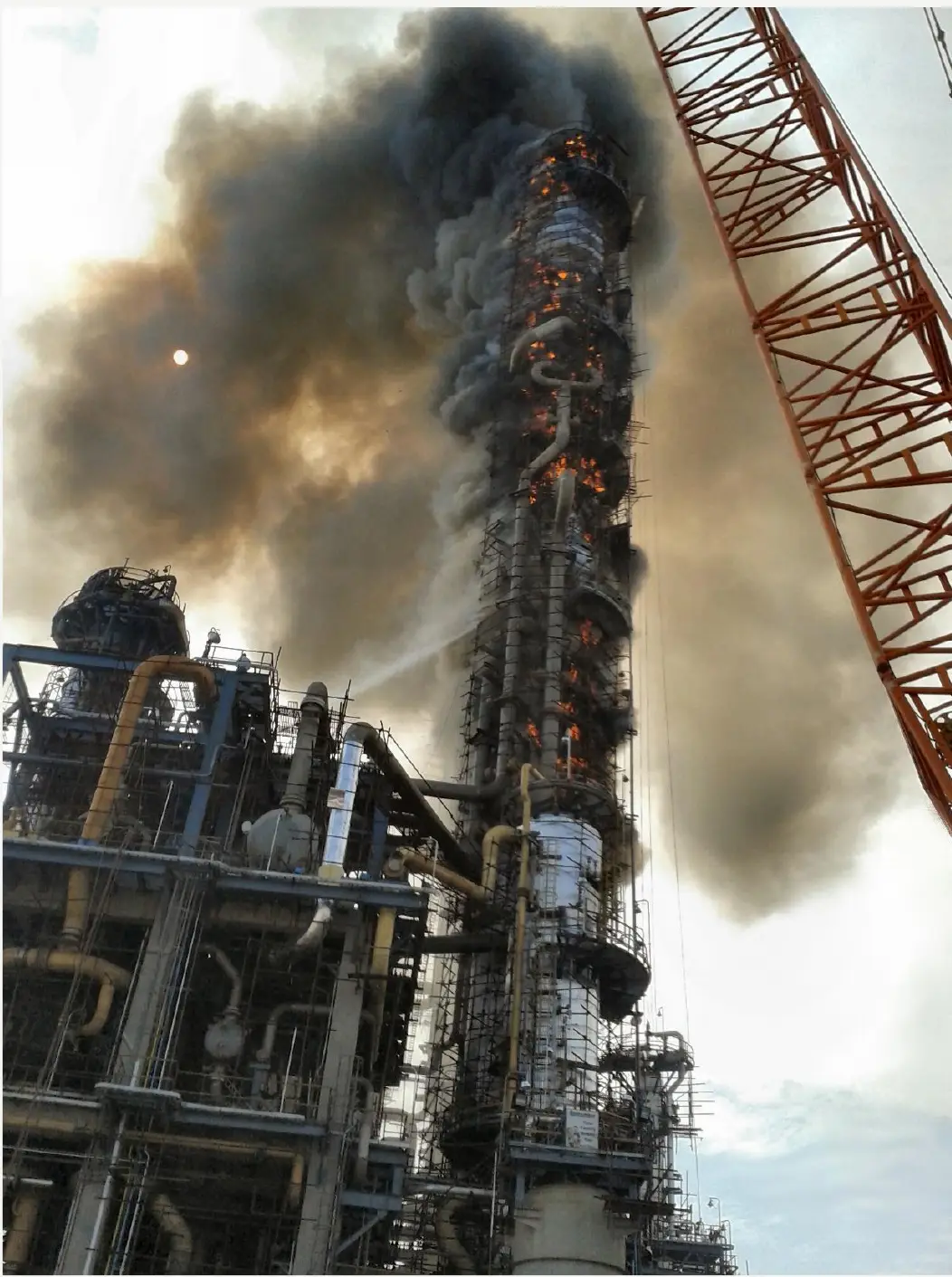
The small-bore connection is the classic case: too minor for the inspection plan, severe enough to shut the unit down. A risk-ranked register per API 580/581 is what puts it back on the plan.
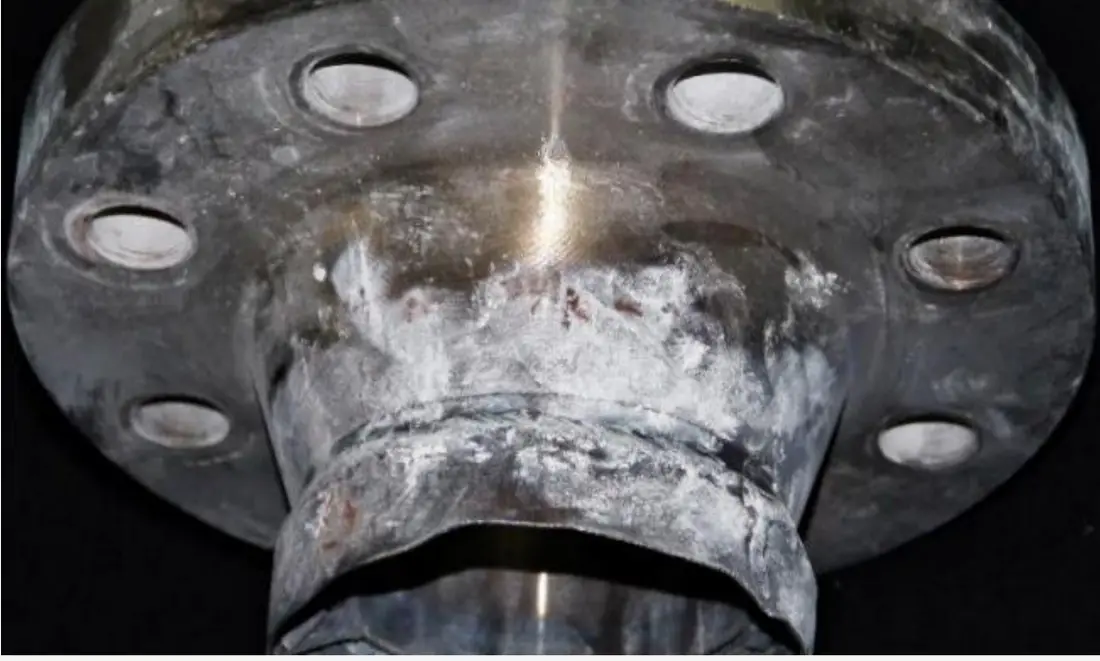
In-situ metallographic replication and targeted NDT read that microstructure on the running plant. The difference between an exhibit and a non-event is whether somebody looked in time, and AiOM is the system that makes sure somebody looks.
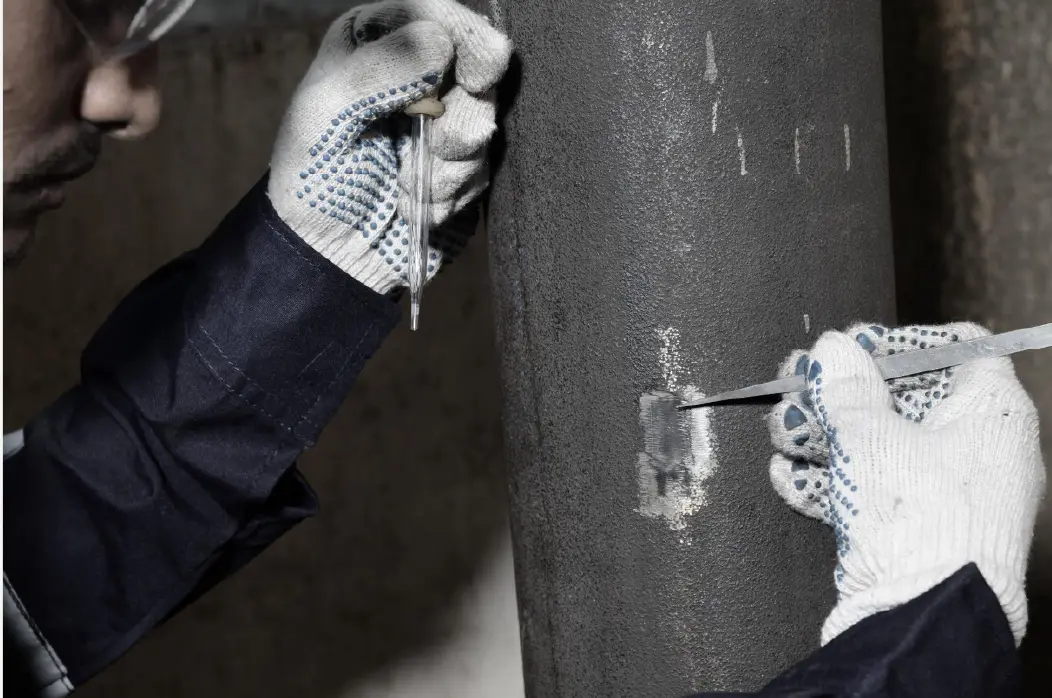
One platform, the standard tools of asset integrity
AiOM brings together the asset-risk tools developed by API, ASME and SAE, applied by TCR Advanced's metallurgical engineers and kept current as inspection data flows in.
API 580 / 581
Risk-Based Inspection
Ranks assets by probability and consequence of failure so inspection resources focus where risk is highest.
API 579-1 / ASME FFS-1
Fitness For Service
Determines whether an asset can keep running safely, sometimes beyond its original design life.
SAE JA-1011 / 1012
Reliability Centred Maintenance
Analyses every credible failure scenario, its cause and remedy, so operators are ready before it happens.
API 584
Integrity Operating Windows
Flags when critical process parameters drift outside defined limits, before degradation accelerates.
API 970
Corrosion Control Documents
Centralises degradation and corrosion data across inspection, maintenance, design and operations.
Change control
Management of Change
Ensures plant modifications are risk-assessed and approved before they reach the field.
- BS 7910
- ISO 55000
- ISO 31000
- Root cause analysis
- QA plans
Seen live in the platform
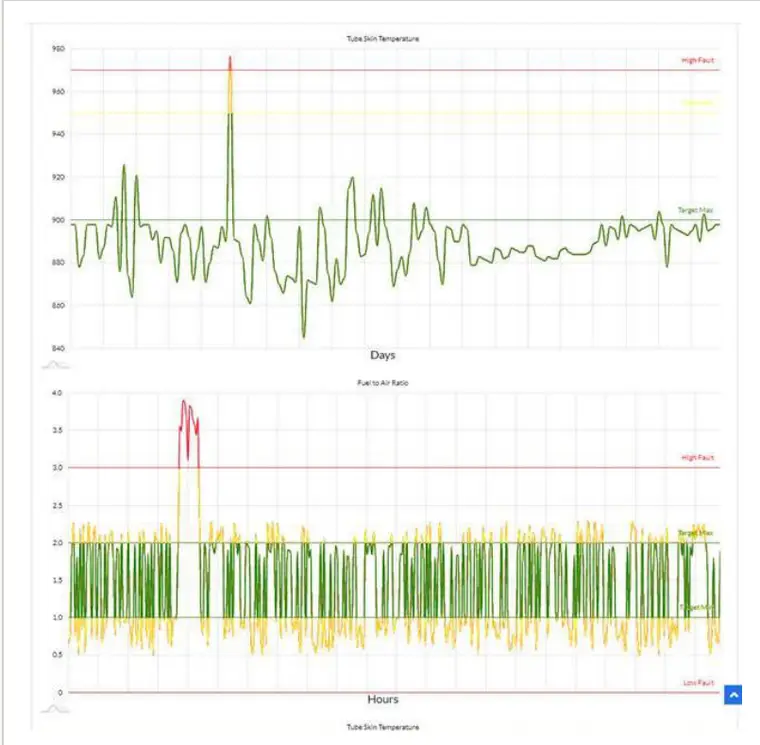
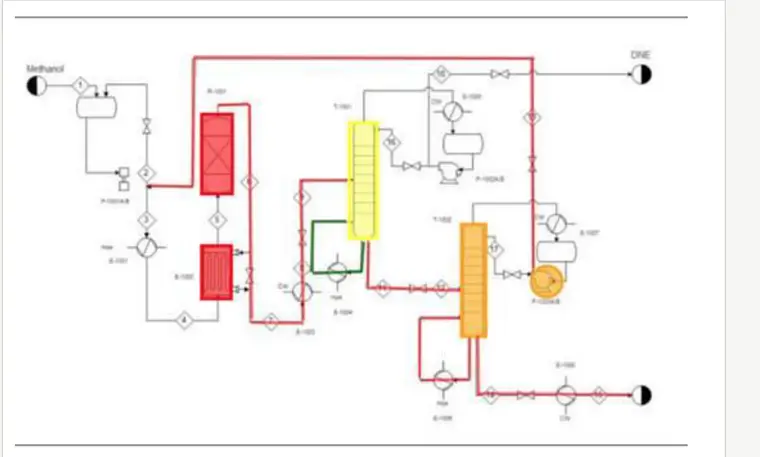
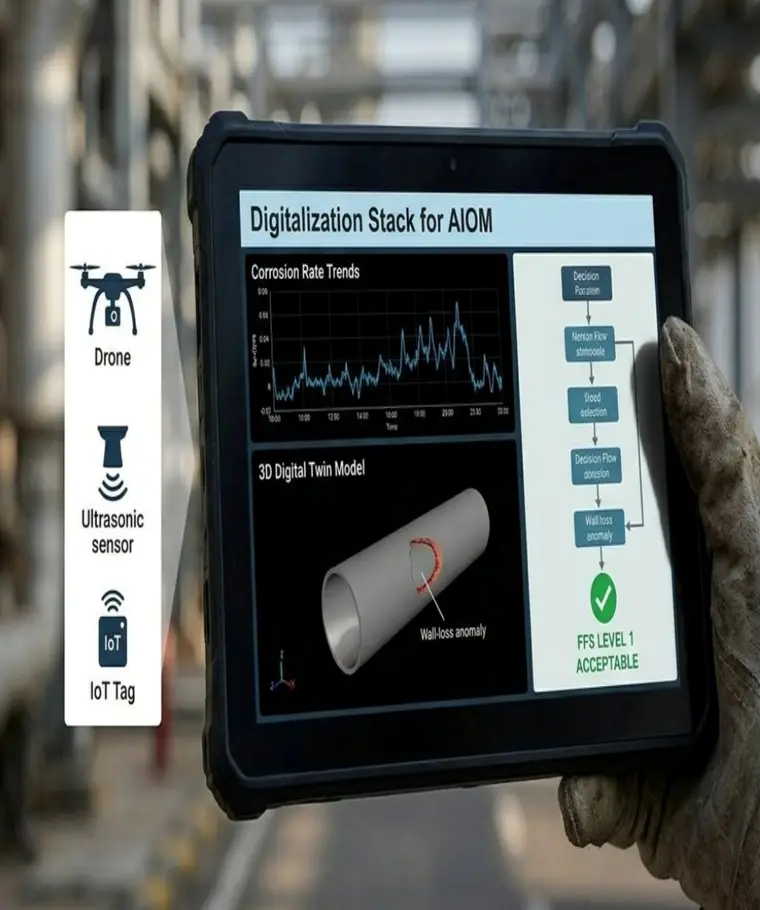
The 12-Module Catalogue
Twelve integrated software modules ship in the product, from a centralised asset database and risk-based inspection per API 580/581 to Fitness-for-Service assessment, root cause analysis and work-order tracking. They sit on a six-pillar architecture: Asset Master, Asset Strategy, Asset Maintenance, Asset Integrity and Reliability, Asset Optimisation, and Asset Analytics. The twelve modules and the six pillars describe the same platform at two levels.
-
Centralised Asset Database
A single-source asset database structures and standardises data, enabling quick and easy configuration. Its asset classification system makes equipment data simple to add and update.
-
Integrated Maintenance, Materials, and Spares Management
AiOM's maintenance management module brings asset maintenance into one view, including cost analysis and risk assessment for high-failure-rate equipment. Integration with spares and materials management ensures quick decision-making, facilitating timely interventions.
-
Enhanced Maintenance Strategies
The software incorporates predefined maintenance strategies to improve safety, asset availability, and reliability while optimising costs. Each strategy aligns with regulatory standards and best practices to minimise risks and streamline plant operations.
-
Asset Optimisation Tools
AiOM's Fitness-for-Service (FFS) tools support the continuous assessment of critical assets, monitoring efficiency, and health to detect potential failures early. Real-time insights enable proactive, rather than reactive, asset management.
-
Advanced Analytics and Dashboard Visualisation
Customisable dashboards provide at-a-glance data visualisations for reliability trends, downtime analysis, and cost tracking. Asset managers see problem areas at a glance and act on the trend.
-
Risk-Based Methodologies for Optimised Resource Allocation
AiOM uses API 580/581 RBI methodologies for asset risk management, allowing for a strategic approach to inspection scheduling. This helps balance inspection intervals and maintenance priorities, minimising plant shutdowns and ensuring compliance with safety standards.
-
Material Search and Root Cause Analysis (RCA) Tools
AiOM includes a material search engine that helps engineers access critical material information quickly. The RCA tool provides a structured method for analysing failures, identifying root causes, and implementing effective mitigation to reduce repeat failures.
-
Turnaround and Shutdown Planning
The platform facilitates turnaround planning by flagging maintenance notifications tied to shutdowns, enabling strategic planning for maintenance events. This functionality aids in efficient resource allocation and minimises unplanned outages.
-
Quality Assurance and Inspection Plans
AiOM's quality assurance module supports the creation and maintenance of standard QA plans and inspection schedules. Equipment is checked against those plans, which keeps asset quality consistent across the plant.
-
Accelerated Learning and Troubleshooting Tools
Asset engineers get a database of failure case studies and an AI-assisted troubleshooting guide, so an equipment problem starts from a documented precedent rather than a blank page.
-
Engineer's Toolbox for Design Calculations
The Engineer's Toolbox provides essential tools for on-the-fly engineering and design calculations. With tools for corrosion loops and Integrity Operating Windows (IOW) based on API 584, engineers can monitor the health of piping circuits and other critical equipment.
-
Work Order Management and Action Tracking
AiOM includes a work order management system for structured issue tracking, prioritisation, and resource planning. Asset histories, recommendations, and action statuses are documented and traceable, so every action has an owner through to closure.
Anchor Sub-Modules
- Integrity Operating Windows
- The IOW module is anchored in API RP 584 (1st Edition 2014, 2nd Edition December 2021). Ammonia plant trains, refining hydroprocessing units, and fertiliser ammonia synthesis loops are configured against critical, standard, and informational IOW limits.
- Intelligent Plant
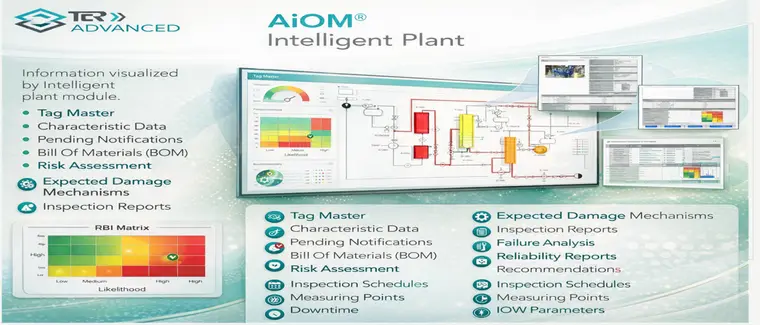
- The P&ID-driven graphical interface that links any tag on a piping and instrumentation diagram to its inspection history, RBI risk score, current IOW status, and next-due action.
- Asset Troubleshooting Guide
- The AI-assisted knowledge-retention engine built on TensorFlow and Keras. Captures the institutional memory of the senior bench in retrievable form so the next reformer-tube inspection at QAFCO does not start from a blank page.
- Damage Mechanism Library
- Approximately 70 mechanisms aligned to API RP 571 (refining), WRC 489 (refining), WRC 488 (pulp and paper), WRC 490 (fossil power), and the ASM Handbook Volume 11A (its chapter on failures of boilers and related equipment).
Standards Stack
AiOM implements the codes an operator's inspector, insurer and regulator already audit against, so a platform record and an audit answer are the same document.
- Risk-based inspection: API 580 and API 581.
- Integrity Operating Windows: API RP 584.
- Fitness for service: API 579-1/ASME FFS-1 and BS 7910.
- Reliability centred maintenance: SAE JA-1011 and JA-1012.
- Corrosion control documents: API 970.
- In-service inspection: API 510 pressure vessels, API 570 piping, API 653 tanks.
- Damage mechanisms: API 571 and ASM Handbook Volume 11A.
- Construction codes: API 5L line pipe, ASME Section I power boilers, ASME Section VIII pressure vessels.
From reactive to predictive, with the data to prove it
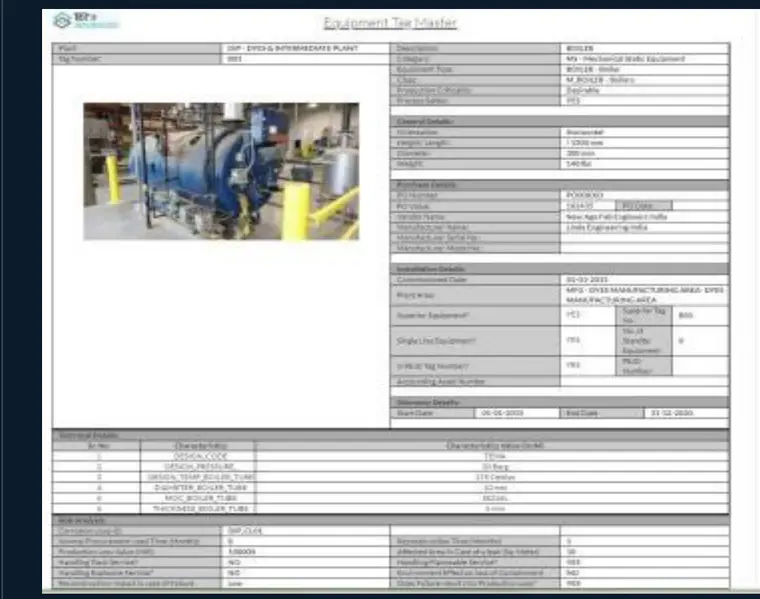
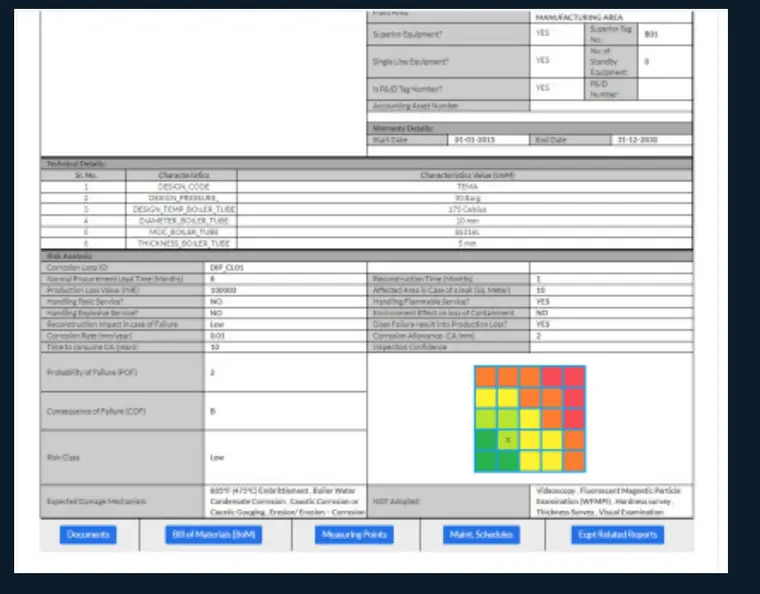
One record per asset carries the plant from register to decision: characteristic data, risk assessment, damage mechanisms, inspection reports and schedules, failure analysis, reliability reports, downtime and IOW parameters, all against a single tag.
01
Reduces maintenance cost
Focused, condition-based maintenance instead of blanket schedules.
02
Reduces unplanned shutdowns
Fewer forced outages, and lower cost when a shutdown is unavoidable.
03
Increases reliability and safety
Damage mechanisms are identified and tracked before they become incidents.
04
Extends asset life span
FFS-backed decisions defer premature replacement of capital equipment.
The questions it answers
- Which assets carry most of the risk?
- What can safely wait for the next turnaround?
- Which deferral will the regulator and the insurer accept?
One record per asset, from register to decision
MIQA: Mechanical Integrity and Quality Assurance, built in
MIQA is the element of Process Safety Management, defined in OSHA 29 CFR 1910.119(j) and the CCPS guidelines, that keeps hazardous-service equipment fit for duty. In India the same duty arrives through the Factories Act, the MSIHC Rules, IBR and OISD. AiOM carries MIQA as a living programme; TCR Advanced also delivers it as a standalone service, sized for small and medium chemical and petrochemical plants.
- Register and SCE identification: every pressure vessel, tank, piping system, relief device, ESD system, control and pump catalogued; safety-critical equipment identified.
- Inspection and testing to RAGAGEP: intervals and techniques per API 510, 570, 653, 576 and IBR, with documented results and performance standards.
- Procurement and installation QA: new equipment, fabrication and repairs verified against specification: certificates, welder qualification, PMI per API RP 578.
- Maintenance discipline: schedules set to manufacturer guidance and operating experience, tightened wherever hazardous service demands it.
- Spares and deviation control: spare parts verified fit for the service before they reach the shelf; deferrals documented, risk-assessed and approved.
- Competence and training: requirements defined, and every person maintaining, inspecting or repairing covered equipment trained for that work.
AiOM-CCP, the Cross-Country Pipelines Application
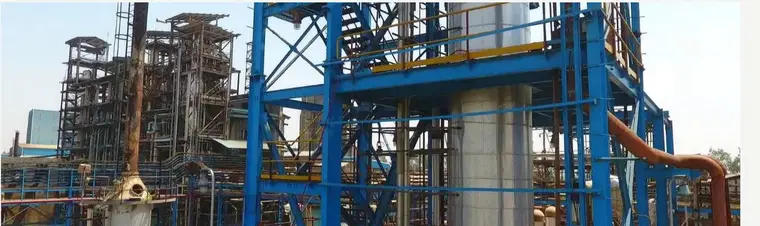
AiOM-CCP extends the six-pillar platform to pipelines beyond facility boundaries: 10 km to 1,000 km, buried or above-ground, carrying crude petroleum, refined products, natural gas, water, chemicals, or sewage.
| Module | Capability |
|---|---|
| Defect catalogue | Pipeline-specific damage mechanisms (external corrosion, internal corrosion under deposit, third-party damage, geohazard, stress corrosion cracking) |
| In-Line Inspection ingestion | MFL primary; UT and EMAT data ingestion roadmapped |
| Cathodic Protection module | Pipe-to-Soil Potential tracking against the negative 0.85 V to negative 1.20 V band, referenced to Cu/CuSO4 |
| Coating surveys | CIPL, Pearson, CAT, DCVG, conductance, casing-and-carrier short; 5-year frequency framework |
| Quantitative Risk Assessment | Design-stage with fatality frequency curve, then once-in-5-years through design lifespan |
- Documented case study
- Anonymised undersea pipeline, API 5L X46N, 21 km by 355 mm by 15.9 mm, ID-side CO2/H2S corrosion.
- Standards embedded
- API 584, API 5L, API 580/581.
- Roadmap standards
- API 1160, ASME B31.4 / B31.8S, NACE SP0102 / 0204 / 0206, DNV-RP-F101, External Corrosion Direct Assessment / Internal Corrosion Direct Assessment / Stress Corrosion Cracking Direct Assessment, Inertial Measurement Unit geometry, EMAT-ILI, High Consequence Area / Moderate Consequence Area / Class Location, composite Type B sleeve repair.
AiOM-CCP is the digital backbone of the Tier 2 (Operator Condition Assessment) and Tier 3 (Engineering Analysis) pipeline service tracks.
Impartial implementation, led by metallurgical experts
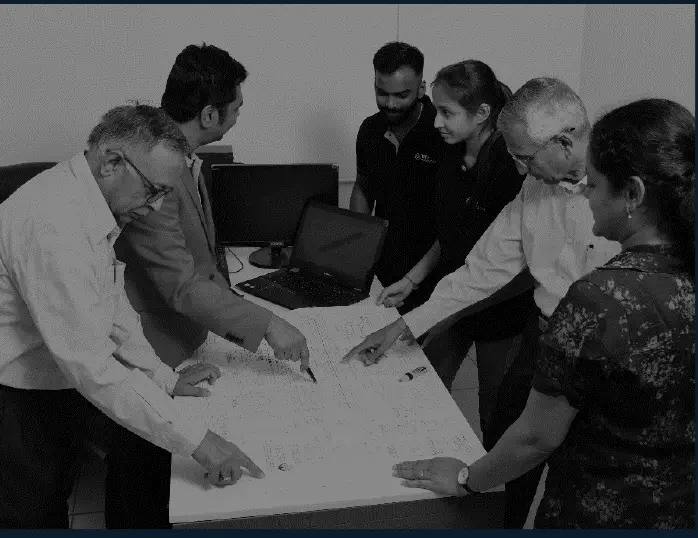
Every AiOM engagement runs as a team study: experienced metallurgical engineers working alongside plant engineers to identify damage mechanisms early and act on them. TCR Advanced sells no repair, no coating and no replacement hardware, so the recommendation has nothing behind it but the evidence.
- Tag and characterise every critical asset.
- Assess risk: probability and consequence of failure.
- Map damage mechanisms, expected and potential.
- Monitor, report and recommend through the AiOM platform.
The board-level case
An asset integrity programme answers to the board in three currencies: capital deferred on signed engineering evidence, risk demonstrated rather than asserted, and institutional memory that survives the org chart.
Capital
Deferred, defensibly
A Fitness for Service position per API 579-1 that keeps a healthy vessel running is signed engineering evidence, and typically costs a small fraction of the replacement it defers.
Risk
Shown, not asserted
One live, risk-ranked register per API 580/581 answers the factory inspector, the insurance surveyor and the customer PSM audit from the same set of records.
Memory
Survives the org chart
Inspection history, damage mechanisms and engineering decisions stay on the platform when people move on. The plant stops re-learning its own failures.
An asset integrity programme is not an expense line. It is the difference between explaining a decision and explaining an accident.
AiOM 2026: A Digital Tool for Plant Life Extension
Anchor Commercial Reference
AiOM is delivered with consulting, not sold as a standalone software licence. The anchor commercial reference is Chambal Fertilisers.
- Client and plant: Chambal Fertilisers, G-1 plant, Ammonia-I Plant Areas 02 and 05.
- Scope: risk-based inspection per API 580/581 with AiOM software implementation.
- Awarded: 11 December 2025.
- Equipment under scope: 51, covering pressure vessels, towers, heat exchangers and connecting piping.
- Licences: 12 users.
Related services and industries
AiOM on video
Documents
Download the reference documents for this page. Every file is hosted on this domain and is also listed in the site document library.
The depth behind the dashboard
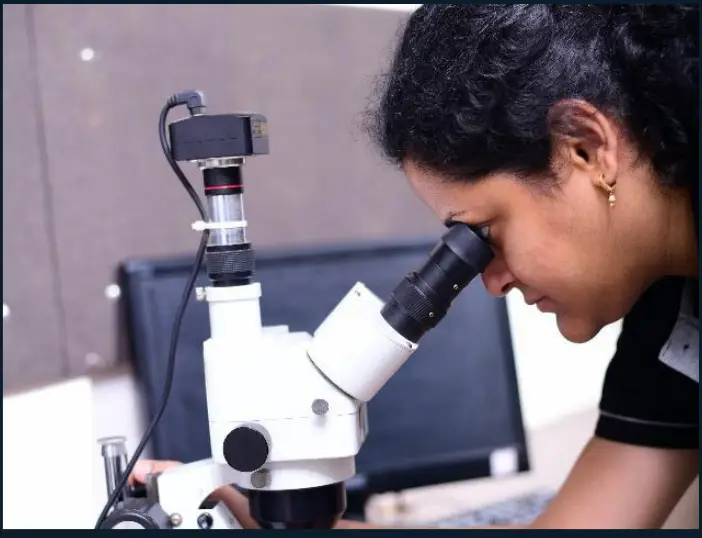
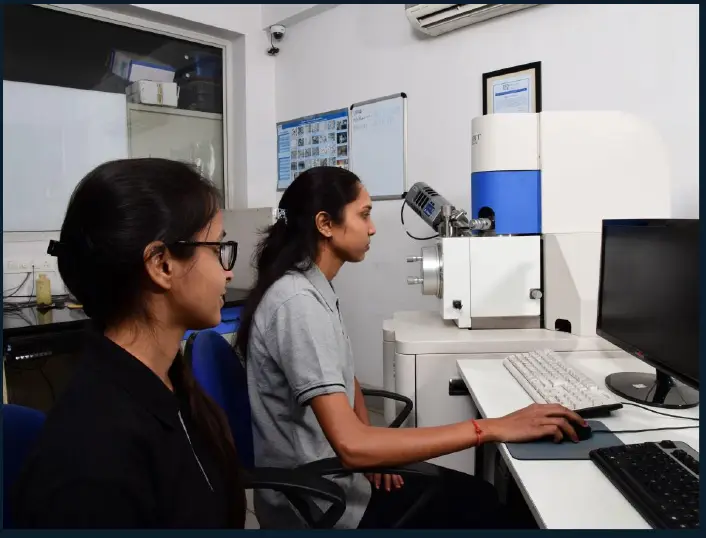
The platform's predictions stand on laboratory depth: a microstructure archive of 100,000+ records, SEM and EDS in-house at Vadodara, and field teams who work as one bench with the plant's own engineers.
Related insights
1 published insight on this site bears directly on AiOM Platform. It is below; the full index carries all 92 Asset Integrity insights.
-
Asset Integrity Management Oil and Gas Industry: Strategic Value Creation Through Engineering Excellence and Digital Innovation
Asset integrity management oil and gas: AiOM® platform with 9000+ failure investigations. Strategic value creation for energy leaders.
Frequently asked questions
What is AiOM?
AiOM, Asset Integrity Optimisation and Management, is the asset integrity management software developed indigenously by TCR Advanced Engineering. It spans an asset's life from design to retirement, with twelve modules covering asset data, RBI per API 580/581, Integrity Operating Windows per API RP 584, FFS tools, root cause analysis, turnaround planning and work orders, delivered with consulting.
Which standards does AiOM implement?
The platform embeds API 580 and API 581 for risk-based inspection, API RP 584 for Integrity Operating Windows, API 579-1/ASME FFS-1 and BS 7910 for fitness for service, SAE JA-1011/1012 for reliability centred maintenance, API 970 for corrosion control documents, API 510, API 570 and API 653 for inspection planning, API 571 for damage mechanisms, and ASME Sections I and VIII.
What is MIQA and how does AiOM support it?
MIQA, Mechanical Integrity and Quality Assurance, is the element of Process Safety Management defined in OSHA 29 CFR 1910.119(j) and the CCPS guidelines that keeps hazardous-service equipment fit for duty; in India the same duty arrives through the Factories Act, the MSIHC Rules, IBR and OISD. AiOM carries MIQA as a living programme, and TCR Advanced also delivers it as a standalone service sized for small and medium chemical and petrochemical plants.
How does AiOM defer capital replacement?
A Fitness for Service position per API 579-1/ASME FFS-1 that keeps a healthy vessel running is signed engineering evidence, and typically costs a small fraction of the replacement it defers. AiOM holds the inspection history, corrosion rates and FFS records that make the run decision defensible to the factory inspector, the insurance surveyor and the board.
What is AiOM-CCP?
AiOM-CCP extends the platform to cross-country pipelines from 10 km to 1,000 km, buried or above ground, carrying crude, refined products, natural gas, water, chemicals or sewage. Modules cover pipeline defect catalogues, in-line inspection data ingestion, cathodic protection monitoring, coating surveys and quantitative risk assessment.
How large is the damage mechanism library?
Approximately 70 mechanisms, aligned to API RP 571 for refining, WRC 489 for refining, WRC 488 for pulp and paper, WRC 490 for fossil power, and ASM Handbook Volume 11A (its boilers and related equipment chapter). Ammonia trains, hydroprocessing units and synthesis loops are configured against IOW limits.
What does AiOM stand for?
AiOM stands for Asset Integrity Optimisation and Management. It is the asset integrity management software developed in-house by TCR Advanced Engineering in Vadodara, India, carrying risk-based inspection per API 580/581, fitness for service per API 579-1/ASME FFS-1 and Integrity Operating Windows per API RP 584, and it is delivered with consulting.
Is AiOM sold as standalone asset integrity management software?
No. AiOM is delivered with consulting: TCR Advanced's metallurgical engineers work with the plant's own engineers to characterise the critical assets and their damage mechanisms, and the platform then carries the records, the risk ranking and the actions. The anchor commercial reference is risk-based inspection with AiOM at Chambal Fertilisers.