
Industries
Automotive
Component Fatigue and EV Materials Qualification
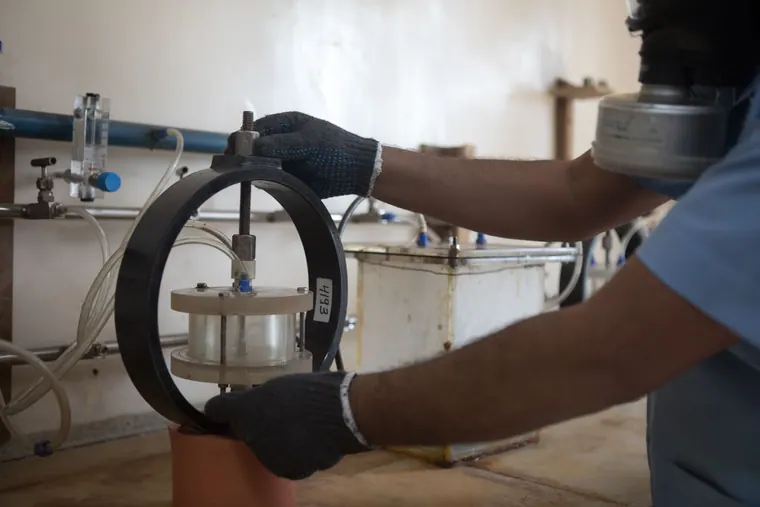
Royal Enfield qualified its motorcycle frames on the low-cycle fatigue bench per ASTM E606, and Ola, Ather and TVS Motor send EV battery mica thermal barriers to the same laboratory in Navi Mumbai.
Request a QuoteIn brief
TCR qualifies automotive materials and components on its Navi Mumbai bench: engine bolts, suspension fasteners, body bolts and wheel studs, alongside crankshafts, connecting rods, gears, springs, chassis structures and EV battery hardware, tested for tensile properties to ASTM E8/E8M-22 and for high-cycle and low-cycle fatigue to ASTM E466 and ASTM E606.
Key takeaways
- 5 equipment groups, from engine and powertrain to EV battery hardware, are covered in the damage mechanisms table below.
- Fatigue work runs to ASTM E466 for high-cycle and ASTM E606 for low-cycle fatigue, the method on which Royal Enfield qualified its motorcycle frames; the full standards matrix is below.
- 6 marquee engagements are documented on this page, among them Royal Enfield frame fatigue qualification and EV battery mica thermal-barrier testing for Ola Electric, Ather Energy and TVS Motor.
Overview
Indian vehicle makers, among them Tata Motors, Mahindra, Maruti Suzuki, Hyundai, Royal Enfield, Bajaj, TVS and Ashok Leyland, and EV entrants Ola Electric and Ather Energy, have used TCR to qualify their materials and components.
- Components qualified: crankshafts, connecting rods, gears, springs, chassis, fasteners and EV battery hardware.
- Failures investigated: field and durability failures through high- and low-cycle fatigue, gear pitting and spalling, hydrogen embrittlement of fasteners, stress corrosion cracking of advanced high-strength steel, coating delamination, and battery thermal-runaway and mica-barrier performance.
- Bench: a classical wet-chemistry bench for compositional certification.
Industry Context
Automotive competes on reliability economics. Platform localisation, warranty exposure, and the electric-vehicle transition have each raised the cost of a material or component failure, and IATF-driven quality systems push that assurance burden down the supply chain to every forging, casting, fastener, and spring supplier.
- Sector scale: third-largest globally by passenger-vehicle production, and a top-five producer of commercial vehicles, two-wheelers and three-wheelers.
- Policy and transition: electric-vehicle adoption under the PM E-DRIVE scheme (launched October 2024 as the successor to FAME-II, which closed on 31 March 2024), the PLI scheme on advanced chemistry cell manufacturing and the ARAI homologation framework, with a rapid two-wheeler EV ramp-up; BS-VI emission compliance and its stricter successor; and export supply under the Make in India and PLI auto-component schemes.
- OEM pool: Tata Motors, Mahindra and Mahindra, Maruti Suzuki, Hyundai Motor India, Hero MotoCorp, Bajaj Auto, Royal Enfield, TVS Motor, Ashok Leyland, Volvo Eicher, Force Motors, Mahindra Trucks and Buses, Daimler India and JBM Auto.
- Tier 1 and Tier 2 pool: Bharat Forge, Anand Group, Sansera Engineering, Bosch India, Continental India, Schaeffler India, Mother Sumi, JBM Auto and Endurance Technologies, the Tier 2 component fabricators behind them, and the automotive-adjacent component programmes at HAL Bangalore.
- EV entrants: Ola Electric, Ather Energy, TVS Motor, Bajaj Auto, Hero MotoCorp, Tata Motors and Mahindra.
- New EV and hydrogen scope: qualification of battery-cell housings, mica thermal-insulation barriers (added in 2026), motor stator and rotor magnetic materials and BMS housings, and fatigue testing of battery-pack structural mounts; gigafactory-grade quality assurance under the advanced chemistry cell PLI scheme; and hydrogen embrittlement and pressure-vessel scope from the fuel-cell vehicle pilots of Tata Motors, Toyota and Hyundai and their hydrogen fuelling stations.
- Materials and compliance: lightweight aluminium and AHSS bodies bring new corrosion and fatigue testing, and recyclability and end-of-life-vehicle rules bring RoHS-type material-content verification.
The testing behind that assurance is TCR’s catalogue: tensile, impact and hardness qualification, component and fastener testing, fatigue programmes on springs and safety-critical parts, chemical analysis and PMI for alloy conformance, RoHS compliance testing, and failure analysis when a field return needs a defensible metallurgical answer. Lightweighting and EV structures add composite, battery-enclosure and dissimilar-joint questions that the laboratory already handles for aerospace and rail clients.
Equipment We Inspect
| Cluster | Equipment / Material |
|---|---|
| Fastener | Engine bolt, suspension fastener, body bolt, wheel stud |
Damage Mechanisms We Investigate
| Equipment | Mechanisms |
|---|---|
| Engine and powertrain | High-cycle fatigue (HCF) on crankshafts and connecting rods per ASTM E466; thermal fatigue on cylinder heads; piston-ring scuffing; valve-spring fatigue; turbocharger blade creep |
| Transmission | Gear-tooth pitting and spalling; shaft fatigue per ASTM E466; shaft-end key-slot crack; bearing fatigue |
| Fastener | Hydrogen embrittlement per ASTM F519 and API 20E (ASTM F1624 incremental step-load is planned for 2026-27); fastener fatigue; thread stripping |
| Body and chassis | Stress corrosion cracking on AHSS; weld toe cracking; coating delamination; galvanic corrosion at dissimilar-metal joints |
| EV battery | Thermal-runaway propagation (mica thermal-insulation barrier qualification); battery-cell can corrosion; module-mounting fatigue; busbar joint resistance creep |
Standards Coverage Matrix
- Mechanical and Material
- ASTM E8/E8M-22; ASTM E466 (HCF); ASTM E606 (LCF); ASTM E647 (FCGR); ASTM E399 (KIc); ASTM E1820 (JIc); IS 1786 (TMT bars); IS 1367 (fasteners); IS 3757 (HSFG); SAE J series (automotive specifications); JIS automotive specifications; ISO automotive specifications.
- Fastener and Finished-Part Testing
- ASTM F606 (proof load testing of fasteners); IS 1367; ISO 898; ASTM F1624 (incremental step-load; planned for 2026-27); ASTM F519 (mechanical hydrogen embrittlement); API 20E (alloy and carbon steel bolting).
- Corrosion
- ASTM B117 (salt spray); ASTM G85 (modified salt-spray); ASTM B368 (CASS); ASTM G47 / G44 (stress corrosion cracking of aluminium alloys); ASTM F2129 (electrochemical corrosion of medical-device implant materials).
- Coating
- ASTM D3359 (cross-cut adhesion); ASTM D4541 (pull-off adhesion); ASTM D7091 (coating thickness); ISO 2808; ISO 12944.
- Polymer and Composite
- ASTM D638 (tensile of plastics); ASTM D790 (flexural); ASTM D695 (compression); ASTM D256 (Izod impact); ASTM D2240 (Shore hardness); ISO 527, 178, 179, 180.
- RoHS
- IEC 62321 series; EU Directive 2011/65/EU.
- EV-Specific
- IEC 60079 (electrical apparatus for explosive gas atmospheres; ATEX/PESO cross-reference); IEC 62133 (secondary cells and batteries containing alkaline or other non-acid electrolytes; safety requirements); UN 38.3 (transport of lithium batteries); IS 16893 (sealed nickel-cadmium); IS 16270 (Li-ion); ASTM C177 (thermal conductivity guarded hot plate; mica thermal-insulation testing for EV battery).
- Welding
- ASME Section IX 2023; AWS D1.1 2025 (structural); AWS D1.3 (sheet steel); IS 4353 (welding sub-arc); IS 7318 (welder qualification).
Service Applications Across the TCR Continuum
Automotive buys testing by component lifecycle, so the Continuum adapts to the way vehicle programmes actually buy testing: supplier and material qualification, process validation, production surveillance, field-return investigation, and failure analysis with durability engineering.
The recurring problems are raw material and heat treatment consistency across a deep supplier pyramid, fastener and spring quality, weld integrity in chassis and body structures, and the fatigue duty that governs suspension, transmission, and steering components. The launch gate is automotive’s turnaround: a production part approval process deadline moves for no laboratory. TCR Engineering serves all five adapted stages for original equipment manufacturers and their tier suppliers.
- Stage One, Supplier and Material Qualification (Sourcing and Procurement)
- Incoming steel, aluminium, castings, and forgings are verified through mechanical testing per ASTM and IS methods, chemical analysis by optical emission spectrometry, microstructure, grain size, and inclusion rating, hardenability testing, and fastener testing per ISO 898, with supplier audits and sample picking that give the vehicle programme confidence in its material pedigree.
- Stage Two, Process Validation (Construction Equivalent)
- Manufacturing processes are validated before launch: heat treatment verification including case depth and decarburisation measurement, weld macro and micro examination on body and chassis joints, coating and plating evaluation including salt spray per ASTM B117, and component testing of springs, seat belts, and safety-critical items against programme specifications.
- Stage Three, Production Surveillance (In-Service Equivalent)
- Through series production, TCR provides batch conformance testing, periodic requalification, production part approval process support testing, and RoHS compliance testing for export programmes, giving purchasing and quality functions an independent laboratory signature on continuing conformance across the supplier base.
- Stage Four, Field-Return Investigation (Shutdown Equivalent)
- When warranty and field returns arrive, TCR runs structured teardown and examination: fractography, metallurgical evaluation, hardness and case depth verification, and comparison against the qualified baseline, separating material, process, and application causes quickly enough to protect a running production line.
- Stage Five, Failure Analysis and Durability Engineering (Continuum)
- The engineering stage delivers root cause failure analysis of engine, transmission, suspension, and steering components, fatigue testing per ASTM E466 and ASTM E606 and fracture toughness programmes for lightweight and high-strength materials, and the materials development support, including electric vehicle battery enclosure and lightweight-structure questions, that feeds the next platform.
Named Clients
TCR serves the Indian automotive chain across five groups: vehicle OEMs, Tier 1 and Tier 2 suppliers, electric-vehicle manufacturers, component fabrication and forging houses, and international buyers taking source inspection and verification out of India. Each group and its named organisations follow.
- India OEM
- Tata Motors (Pune, Sanand, Pantnagar, Lucknow, Jamshedpur), Mahindra and Mahindra (Chakan, Nashik, Igatpuri, Haridwar), Maruti Suzuki (Gurgaon, Manesar, Gujarat), Hyundai Motor India (Sriperumbudur), Royal Enfield (Oragadam, Vallam Vadagal), Hero MotoCorp, Bajaj Auto (Chakan, Akurdi, Aurangabad, Pantnagar), TVS Motor (Hosur, Mysuru, Nalagarh), Ashok Leyland (Ennore, Hosur, Pantnagar, Bhandara), Volvo Eicher (Pithampur), Force Motors, Daimler India Commercial Vehicles, JBM Auto.
- India Tier 1 and Tier 2
- Bharat Forge (Pune), Anand Group (Mando, Gabriel, Henkel-Anand), Sansera Engineering, Bosch India, Continental India, Schaeffler India, Endurance Technologies, Mother Sumi, JBM Auto, Subros, Sundram Fasteners, Lumax, Spark Minda.
- India EV
- Ola Electric (Krishnagiri Gigafactory), Ather Energy, and the electric two-wheeler lines of TVS Motor, Bajaj Auto and Hero MotoCorp.
- Component-Fabrication and Forging
- SQuAD Forging (stress corrosion cracking of aerospace aluminium to ASTM G47 and G44); Bharat Forge defence forging division.
- International (Source Inspection and Verification)
- International OEMs taking source inspection and verification of their Indian suppliers.
Representative India automotive clients include Schaeffler India, Endurance Technologies, and Sundram Fasteners, with work across mechanical testing, metallography and failure analysis.
Marquee Projects
| Project | Service Anchor | Year |
|---|---|---|
| Royal Enfield motorcycle low-cycle fatigue per ASTM E606 | Frame and structural fatigue qualification | 2025 to 2026 |
| SQuAD Forging | Aerospace SCC ASTM G47/G44 on 7xxx and 2xxx aluminium | 2025 to 2026 |
| Tata Motors, Mahindra and Mahindra, Maruti Suzuki, Hyundai Motor India | OEM materials testing, NDT, source inspection | Continuous |
| Bharat Forge | Forging-grade material testing, hardness verification, microstructural evaluation | Continuous |
| Bosch India, Continental India, Schaeffler India | Tier 1 component qualification | Continuous |
| Ola Electric, Ather Energy, TVS Motor | EV battery thermal-insulation mica testing; component qualification | Continuous |
Related insights
5 published insights on this site carry the Automotive tag. The 5 most recent are below.
-
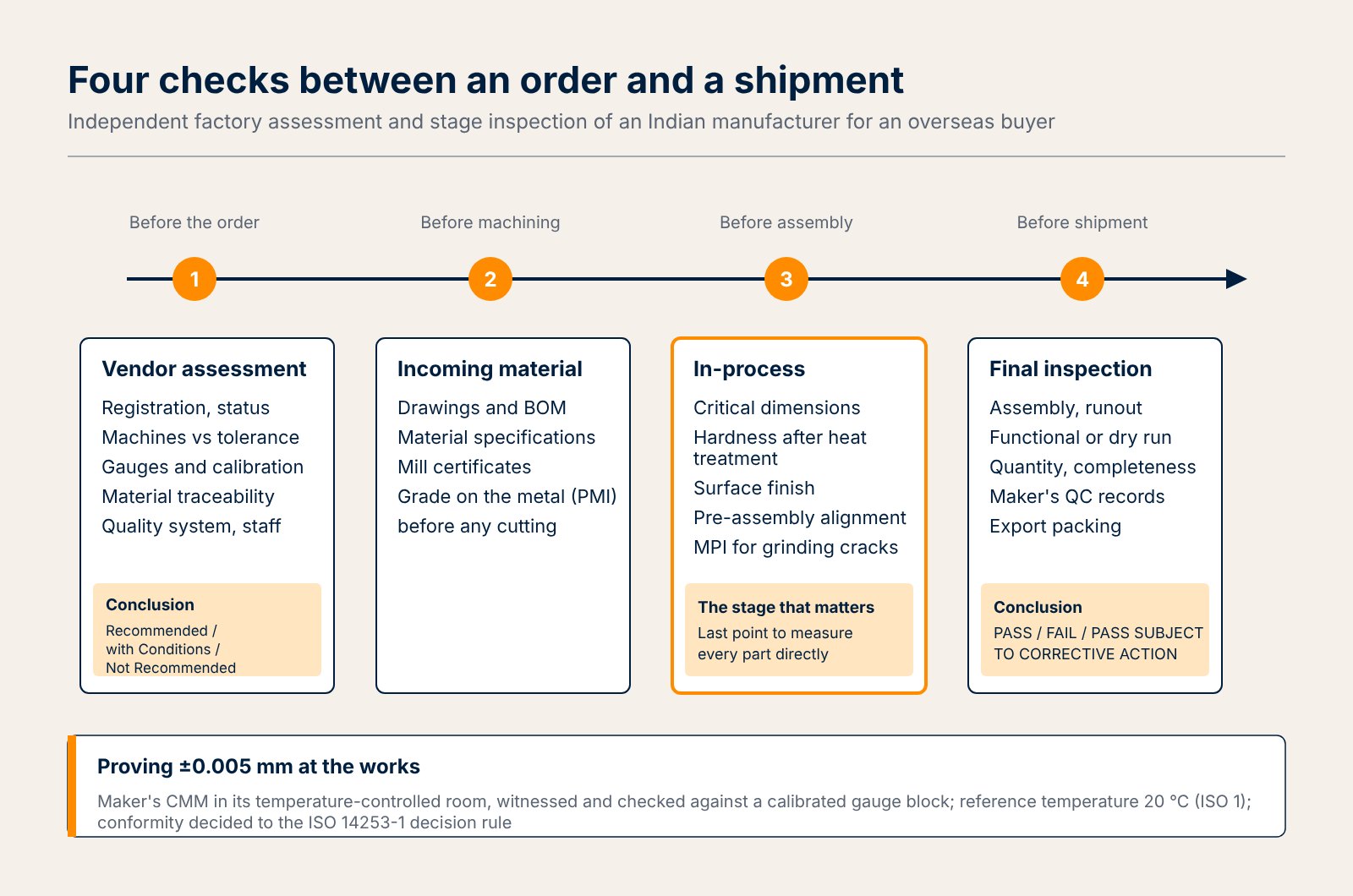
Factory assessment and audit of Indian manufacturers for international buyers: what to check, when, and with what
An international buyer placing an order with an Indian manufacturer needs four independent checks: a factory assessment before the order, incoming…
-
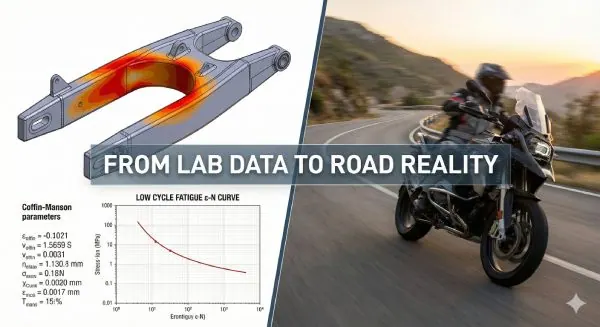
How Advanced Fatigue Testing Helps Motorcycle Manufacturers Build Safer, More Reliable Bikes
Strain controlled fatigue testing per ASTM E606 reveals how motorcycle alloys perform under cyclic loads. TCR ensures durability and safety.
-
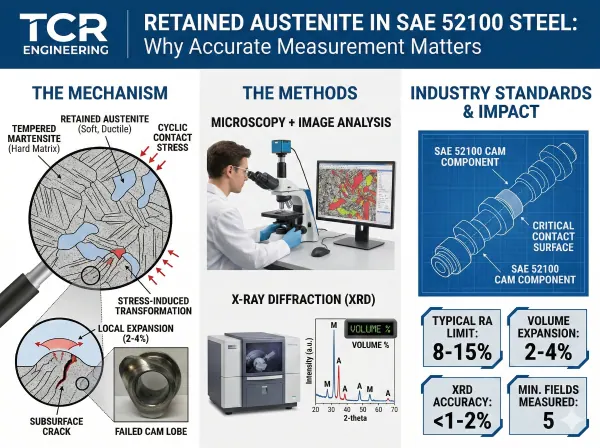
Retained Austenite in SAE 52100 Steel: Why Accurate Measurement Matters for CAM Performance
Accurate retained austenite measurement in SAE 52100 CAM components is critical for Q&T quality control. Learn which method suits your application.
-
CNG Cylinder Safety: SSCC Testing by TCR as per ISO 11439
TCR ensures CNG cylinder safety with SSCC testing as per ISO 11439 Method A. Discover its role in stress corrosion prevention and compliance.
-
Testing of Radiator Fins for G.I. Coating in India
Mass of Coating test by stripping method as per IS 2633 standards
Frequently asked questions
Which automotive OEMs test materials and components with TCR?
Indian vehicle makers that have used TCR include Tata Motors, Mahindra and Mahindra, Maruti Suzuki, Hyundai, Royal Enfield, Bajaj, TVS and Ashok Leyland, plus EV entrants Ola Electric and Ather Energy, alongside Tier-1 suppliers such as Bharat Forge, Bosch India, Continental India and Schaeffler India.
Can TCR run fatigue programmes on vehicle frames and components?
Yes. Royal Enfield qualified its motorcycle frames on TCR's low-cycle fatigue bench per ASTM E606, and the laboratory runs high-cycle fatigue per ASTM E466, fatigue crack growth rate per ASTM E647 and fracture toughness per ASTM E399 and E1820 for suspension, transmission and steering components.
Does TCR test EV battery materials?
Yes. TCR tests mica thermal-insulation barriers for EV battery thermal-runaway protection per ASTM C177 and ISO 8302, along with battery-pack structural-mounting fatigue per ASTM E466 and E606 and battery-cell housing qualification, serving Ola Electric, Ather Energy and TVS Motor.
What fastener and hydrogen embrittlement testing does TCR offer for automotive parts?
Fasteners are tested per ASTM F606, IS 1367 and ISO 898, with mechanical hydrogen embrittlement per ASTM F519 and API 20E for bolting; incremental step-load testing per ASTM F1624 is planned for 2026-27. Salt-spray and corrosion programmes run per ASTM B117, G85 and B368, with coating adhesion per ASTM D3359 and D4541.
Can TCR support RoHS and export compliance testing?
Yes. RoHS compliance testing runs per the IEC 62321 series and EU Directive 2011/65/EU for export programmes, and the laboratory supports production part approval process testing, batch conformance and periodic requalification across the supplier base under NABL ISO/IEC 17025 accreditation.