
Services · Robotic and AI-Assisted Inspection
ROV Underwater Inspection (Planys Alliance)
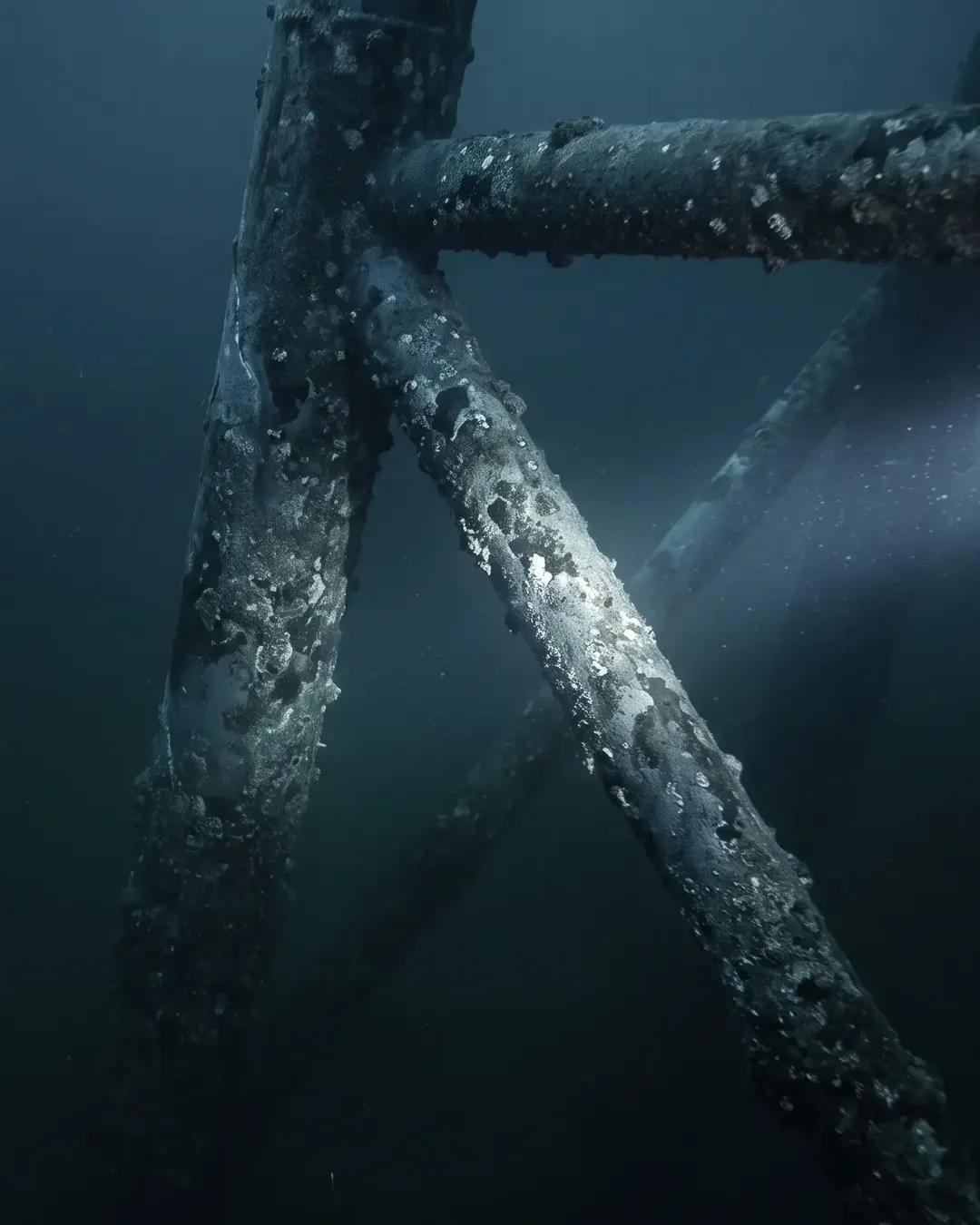
The vehicle enters through a 20 inch manhole, weighs about 35 kg, and carries a gimballed ultrasonic probe reading 3 mm to 250 mm at 2.25 MHz to a resolution of 0.05 mm. The tank stays full and in service.
Request a Quote
In brief
TCR provides ROV underwater inspection through its alliance with Planys Technologies, a partner-delivered capability: a submersible ROV records high-definition video, ultrasonic wall thickness and SONAR silt data in water tanks, sumps, intakes, reservoirs, bridge piers and jetty piles in service. It sits at TCR Arabia, the Saudi joint venture, and is deployed across India and the GCC.
Specifications, Use Cases and Delivery Advantages
The ROV is a portable submersible vehicle, deployed through the Planys alliance, that enters a tank through a manhole of 20 inch or greater and inspects it full and in service. It is one of the partner-delivered platforms in TCR's robotic and AI-assisted inspection pillar; the table carries its specification and the list its use cases.
| Specification | Value |
|---|---|
| Manhole entry | 20 inch or greater |
| Weight | Approximately 35 kg (portable) |
| Power | AC 230V 50/60Hz at 6 kW |
| Cameras | High-Definition with powerful lights for live streaming visual inspection |
| Ultrasonic Thickness | Probe with gimbal, 3 to 250 mm range, 2.25 MHz, resolution 0.05 mm |
| Coating-tolerant UT | Thickness measurement over various coatings |
| Silt assessment | SONAR |
| Position and depth | Accurate position and depth sensors |
| Digital reporting | Geotagging of data with defects, localised defect videos, data enhancement, central data repository, year-on-year comparison, prediction and trend analysis, RBI integration |
Use cases: Desalinated water tanks; potable water tanks; fire-water and hydrant tanks; de-mineralised water tanks; storage tanks; sumps; intake and outfall structures and pipelines; channels and reservoirs. Bridge pier and abutment inspection. Intake structure and forebay inspection at thermal power plants. Jetty pile inspection at marine terminals. Above-ground water-storage tank underwater inspection without shutdown.
- Water tanks: desalinated, potable, fire-water and hydrant, de-mineralised, and storage tanks, plus sumps.
- Water infrastructure: intake and outfall structures and pipelines, channels and reservoirs.
- Civil: bridge pier and abutment inspection, and jetty pile inspection at marine terminals.
- Power: intake structure and forebay inspection at thermal power plants.
- Safety: no confined-space personnel exposure.
- Operations: no shutdown, turnaround can be delayed, with live result monitoring and a digital reporting dashboard.
Against the conventional workflow, in which the tank is emptied and inspected by hand, the ROV is safer: no one enters a confined space.
Results are monitored live, no shutdown is required, the plant turnaround can be deferred to save cost, and findings are reported on a digital dashboard.
More in Robotic Inspection
No published insight on this site bears directly on ROV Underwater yet. The 3 most recent Robotic Inspection articles are below instead, and the full index carries all 5.
-
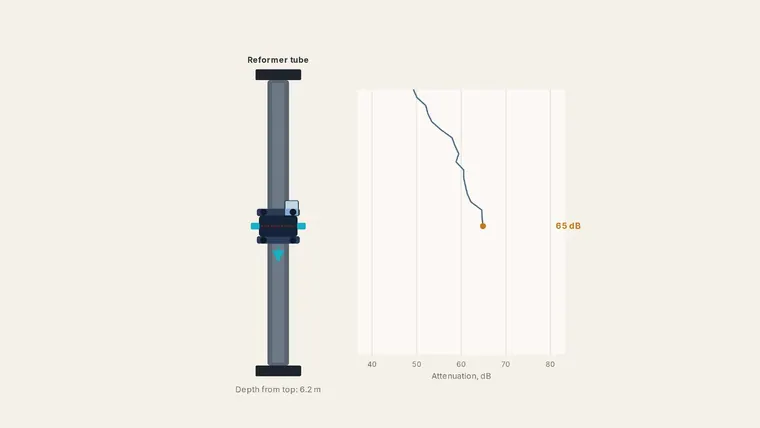
ARTiS comes to Japan: answering when a reformer tube comes out, not whether it is damaged
TCR Engineering and TCR Advanced are taking ARTiS, the automated reformer tube inspection system, into Japan with Chugai Technos Corporation of…
-
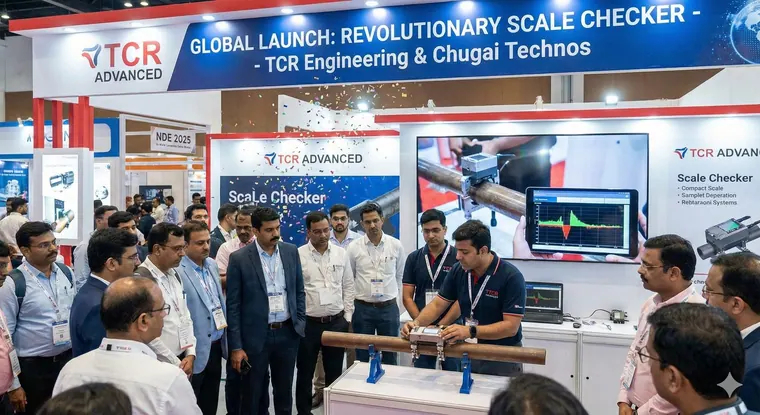
TCR Engineering Launches Scale Checker for Pipe Blockage Diagnostics in Partnership with Chugai Technos (Japan) at NDE 2025 Mumbai
TCR Engineering and Chugai Technos launched the Scale Checker at NDE 2025, Mumbai: a dual-mode Cs-137 gauge that measures internal scale in tubes and pipelines.
-
TCR's Inspection Strategies for Aboveground Storage Tanks
Tank integrity with advanced NDT solutions like AE, MFL, PAUT & robotic inspections, ensuring safety, compliance, and longevity

Frequently asked questions
Which assets can the submersible ROV inspect?
The ROV inspects desalinated, potable, fire-water and de-mineralised water tanks, storage tanks, sumps, intake and outfall structures and pipelines, channels and reservoirs. It also covers bridge piers and abutments, intake structures and forebays at thermal power plants, and jetty piles at marine terminals, across India and the GCC.
Does the tank have to be emptied or taken offline?
No. The ROV enters through a manhole of 20 inch or greater and inspects the asset in service, so no shutdown, draining or confined-space personnel entry is required. This is safer than the conventional emptied-and-manually-inspected workflow and saves cost by allowing the turnaround to be delayed.
What does an ROV underwater inspection report cover?
The report carries high-definition video of the submerged surfaces, ultrasonic wall thickness from 3 to 250 mm at 2.25 MHz with 0.05 mm resolution, including over coatings, SONAR silt assessment, and the position and depth of each finding. It is digital: geotagged defects, localised defect videos, year-on-year comparison, trend analysis and RBI integration.
Who delivers the ROV service?
TCR delivers the capability through its alliance with Planys Technologies, deployed across India and the GCC through TCR Arabia. In March 2026 the group began an AI-assisted robotic underwater inspection programme covering 400+ bridges for BMC, alongside tank, reservoir and marine structure work for industrial clients.