
Services · Non-Destructive Testing
Post-Weld Heat Treatment (PWHT)
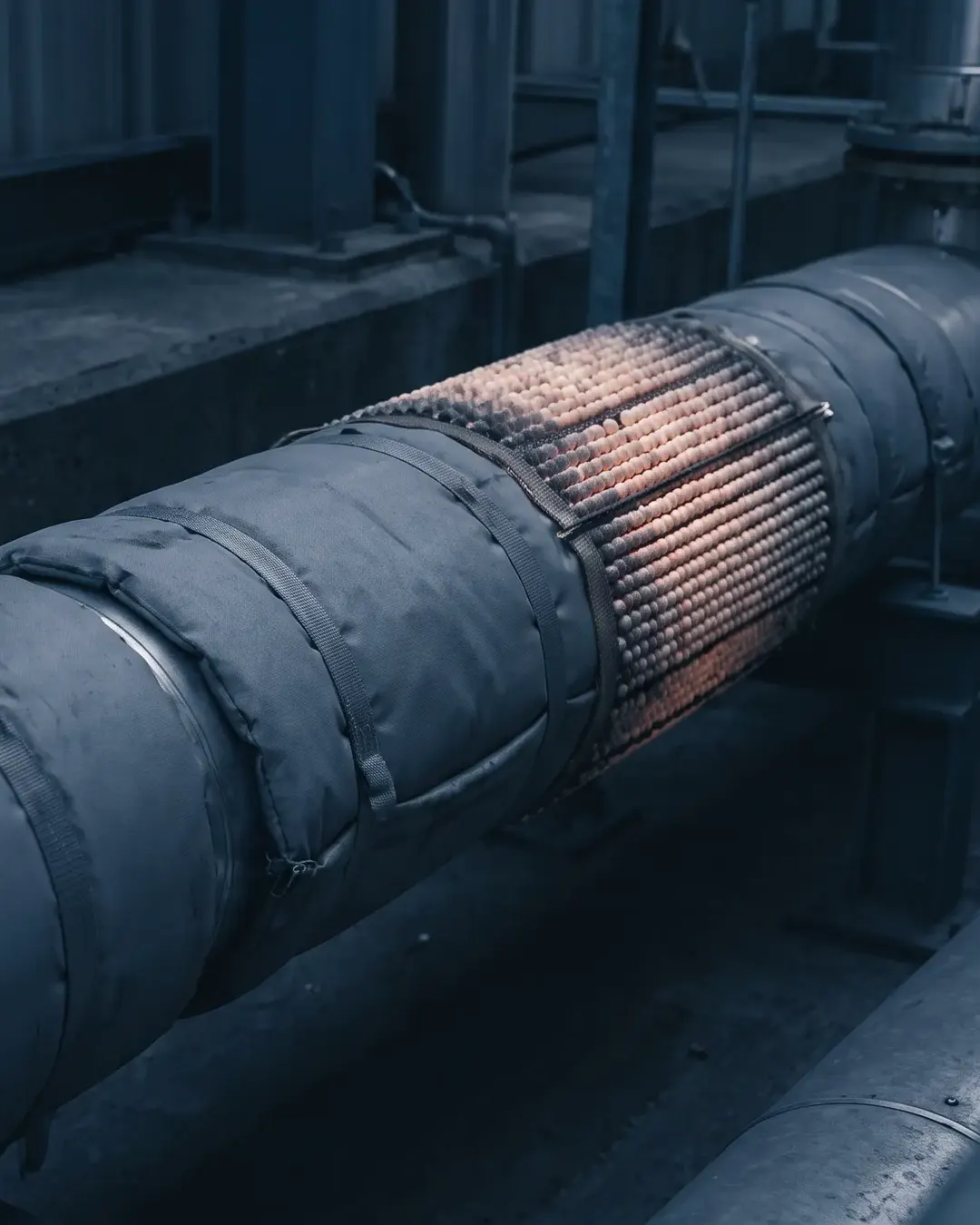
High-velocity gas burners scrub hot gas against the component wall so no cold spot survives the cycle. The division has fired spheres, bullets and closing weld seams on site, including Jindal Steel Angul and the HURL project.
Request a Quote
In brief
TCR Engineering Services Pvt. Ltd. provides PWHT services across India: post-weld heat treatment of piping, pressure vessels, spheres and boiler headers by electric resistance, induction coil, furnace and oil firing, at refineries, petrochemical plants, fabrication shops and EPC projects. Every cycle is chart-recorded to the governing code. PWHT is thermal processing, distinct from laboratory heat treatment verification testing.
Overview
TCR Engineering has expanded its services range with a dedicated division that offers both gas and electric post weld heat treatment services including:
- Electric resistance localised PWHT of butt welds for piping projects
- Temporary / permanent furnace heat treatment and normalising.
- Internal high velocity gas firings of spherical and bullet tanks and other large storage tanks / vessels.
- Localised PWHT of vessel closing weld seams.
TCR Engineering undertook PWHT services for Essar Construction at the BF Shell Project at Jindal Steel in Angul, Odisha and at the HURL site as well. Bases across India support crew mobilisation and the repair and maintenance of its machines. Crews work under supervision built on TCR’s 53 years of quality assurance for Indian industry.
Preheating Services
TCR undertakes preheating of weldment to eliminate weld defects and improve weld quality by avoiding cracking in the heat affected zone (HAZ) or at the weldment.
Furnace Heat Treatment (Static / Temporary / Gas / Electrical)
At TCR's laboratory, high-velocity gas-fired burners create a ‘scrubbing action’ of hot gases against the walls of the component, eliminating cold spots.
Electric Resistance Localised Post Weld Heat Treatment
Carefully controlled localised post weld heat treatment by electric resistance, by TCR's expert heat treaters, tempers the metal and reduces tensile stresses, minimising the risk of brittle fracture, stress corrosion cracking and metal fatigue.
Post Weld Heat Treatment (PWHT)
TCR Engineering Services offers a diverse range of Heat Treatment Services including pre-heating, post-heating; stress relieving (SR), intermediate SR, normalising, solution annealing, water quenching, tempering, step cooling and drying of the refractory material.
The experienced technicians at TCR are capable of performing heat treatment on weld joints, piping, regenerators, stripper columns, pressure vessels, boiler headers, modules, deck pipelines and structure, and boiler heater tubes. The team is also capable of carrying out post-weld heat treatment of carbon steel piping welds (pipe-work, headers, flange joints, valves and branches) by means of the electrical resistance method, in the form of ceramic heater pads. It can design, fabricate, calibrate and run a customised electrical furnace for clients.
Post Weld Heat Treatment Services (PWHT) is performed after welding/machining, to improve the metallurgical and mechanical properties of the weldment or machined surface. TCR offers post-weld heat treatment by using electricity as the source of heating for stress relieving of weld joints. All TCR’s heat treatment services are designed to minimise downtime, improve structural integrity and enhance effective plant life. Additionally, depending on the mobility of the required equipment, many of TCR’s heating processes can be applied on-site or at client’s facility.
Stress Relieving
For steel fabrication, the most common procedure used is Stress Relieving where machining and/or welding induces stress in parts. The bigger and more complex the part, the higher the stress. Stress Relieving is done by uniformly heating the fabricated equipment, a vessel or a part of the vessel to a sufficiently high temperature, but below the lower transformation temperature range. It is then held at temperature for a time set by the material thickness, and cooled uniformly.
TCR has specialised fully automatic programmable equipment capable of controlling Heating rate, Holding time and cooling rate as well as carrying out a wide range of heat treatment processes like post-weld heat treatment of PQR test coupons and various components. TCR has at its disposal, well-equipped tools including electrical furnace with 220- and 80-Volts panel, latest 12-point recorder with digital display, coil and pad-type heating element, oil firing systems, operated by experienced technicians. The Heat treatment equipment is supplied with a chart recorder to record up to 8 thermocouples simultaneously to meet the critical requirements of heat treatment.
Oil Firing on Pressure Vessels
TCR Engineering's oil-firing crew stress-relieves pressure vessels using diesel as the heat source. The heat treatment specialists from TCR have all the necessary experience and equipment to develop a custom configuration as per specific processes. Our heating processes include low-Range, Mid-Range & High-Range Temperature Heating.
TCR's high-velocity burners enable excellent temperature distribution and uniformity at all times because of the intense scrubbing action. They are also able to construct temporary furnaces at client sites where internal firing is not a practical or cost-effective option.
The heat treatment operation is effected by firing the furnace, using one or more gas/oil high-velocity burners with a nominal rating of 1,500,000 kcal/hr (6,000,000 Btu/hr) per burner. Each burner is connected by an armoured flexible hosing to Combustion Air Fan (s), with a maximum output of 2,800 Nm³ per hour via a 150mm diameter outlet, at a pressure of 700mm W.G. The burner is fitted with a (25/20) stainless steel outlet nozzle designed to clear the furnace wall adjacent to the intended opening(s), in such a way that it eliminates the possibility of any direct impingement on components.
Reference engagements:
- HURL Sindri: PWHT by the electrical resistance coil method.
- JSOL Blast Furnace 2: PWHT engagement.
- Tata Projects JSOL Coke Oven Battery 5 and 6: PWHT engagement.
Equipment: In-house controlled-rate furnaces. Field equipment for on-site PWHT: induction-coil systems, ceramic-pad resistance heating, oil-firing systems for large pressure-vessel local stress relief. Calibrated thermocouple placement and chart recording.
Standards: ASME PCC-2: Repair of Pressure Equipment and Piping (2022 ed.); AWS D10.10 for thermocouple placement; API 582 for welding guidelines that govern PWHT requirements; ASME B31.3 Process Piping (2024 ed.); ASME B31.4 / B31.8 Pipeline Transportation Systems (2022 eds.); ASME BPVC Section IX.
When is post-weld heat treatment required by code?
Post-weld heat treatment is required when the construction code or the owner's specification says so, and the code decides it on three things: the material group, the thickness at the weld and the service. TCR Engineering runs the PWHT cycle that the code or the approved welding procedure sets, and records it on chart for the inspector.
- Material: the code's material grouping (the ASME P-Number); chromium-molybdenum low-alloy steels need PWHT at thicknesses where carbon steel is exempt.
- Thickness: the nominal thickness at the weld, against the exemption limit the code sets for that material group.
- Code: ASME B31.3 for process piping, ASME BPVC Section VIII for pressure vessels, ASME BPVC Section I for boilers, and ASME B31.4 and B31.8 for pipelines.
- Service: owner specifications for sour, caustic or amine service can call for PWHT that the code alone would not.
- Repairs: a repair weld is heat treated where the original construction code and ASME PCC-2 require it.
- Where PWHT cannot be done: an offshore specification can accept CTOD testing with a fracture mechanics assessment in place of PWHT, subject to the owner's approval.
- After the cycle: hardness and microstructure are checked where the specification calls for it, and the weld is examined by TCR's non-destructive testing practice where the code requires examination after PWHT.
Related insights
1 published insight on this site bears directly on Post-Weld Heat Treatment. It is below; the full index carries all 80 Non-Destructive Testing insights.
-
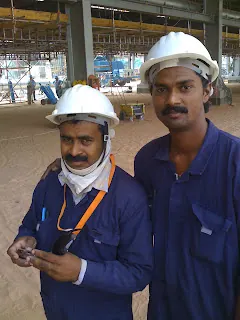
PWHT Services by TCR Arabia in Saudi, KSA
Electric Resistance based PWHT services to multiple companies in Kingdom of Saudi Arabia.
Read all 80 Non-Destructive Testing insights →All insights →
Frequently asked questions
Which heat treatment methods does TCR offer on-site?
TCR delivers electric resistance localised PWHT using ceramic heater pads and coils, induction-coil systems, temporary and permanent furnace heat treatment, internal high-velocity gas firing of spherical and bullet tanks, and oil firing for large pressure vessel stress relief, with calibrated thermocouple placement and chart recording of up to eight thermocouples simultaneously.
Which codes govern TCR's PWHT work?
PWHT is executed to ASME PCC-2 for repair of pressure equipment and piping, AWS D10.10 for thermocouple placement, API 582 welding guidelines, ASME B31.3 for process piping, ASME B31.4 and B31.8 for pipeline transportation systems, and ASME BPVC Section IX for welding and heat treatment qualification.
What components can be heat treated?
Weld joints, piping, headers, flange joints, valves and branches, pressure vessels, regenerators, stripper columns, boiler headers and heater tubes, modules, deck pipelines and structures. Processes include preheating, post-heating, stress relieving, intermediate stress relief, normalising, solution annealing, water quenching, tempering, step cooling and refractory drying.
Has TCR delivered PWHT on major projects?
Yes. Reference engagements include PWHT for Essar Construction at the blast furnace shell project at Jindal Steel, Angul, HURL Sindri by the electrical resistance coil method, JSOL Blast Furnace 2, and Tata Projects JSOL Coke Oven Battery 5 and 6, delivered by pan-India crews with supervisory oversight.
Does every weld need post-weld heat treatment?
No. The construction code exempts many carbon steel welds below a set thickness, while low-alloy chromium-molybdenum steels, thick sections and welds in sour, caustic or amine service usually need it. The code, the owner's specification and the approved welding procedure decide, and TCR runs and chart-records the cycle they set.