
Services · Materials Testing
Oil Analysis and Ferrography Laboratory
Wear-particle distribution and concentration, trended across successive samples, tell an operator what a gearbox or turbine bearing is doing well before it stops. The value sits in the trend, not the single sample.
Request a Quote
In brief
TCR Engineering Services Pvt. Ltd., Navi Mumbai, India, runs an oil analysis laboratory for lube-oil condition monitoring of rotating equipment: particle count, viscosity, water content by Karl Fischer, Total Base Number and Total Acid Number (TBN/TAN), wear-metal analysis, and analytical and direct-reading ferrography, for gearboxes, hydraulic systems, turbine lubrication systems and compressors. These tests are reported outside the NABL scope.
What does oil analysis and ferrography tell you about a machine?
Ferrography, run in TCR's materials testing laboratory, is a series of laboratory tests that tracks the condition of used lubricant drawn from equipment over time. The trend in wear-particle distribution and concentration shows the condition of the equipment.
It lets an operator plan maintenance before a breakdown rather than after it.
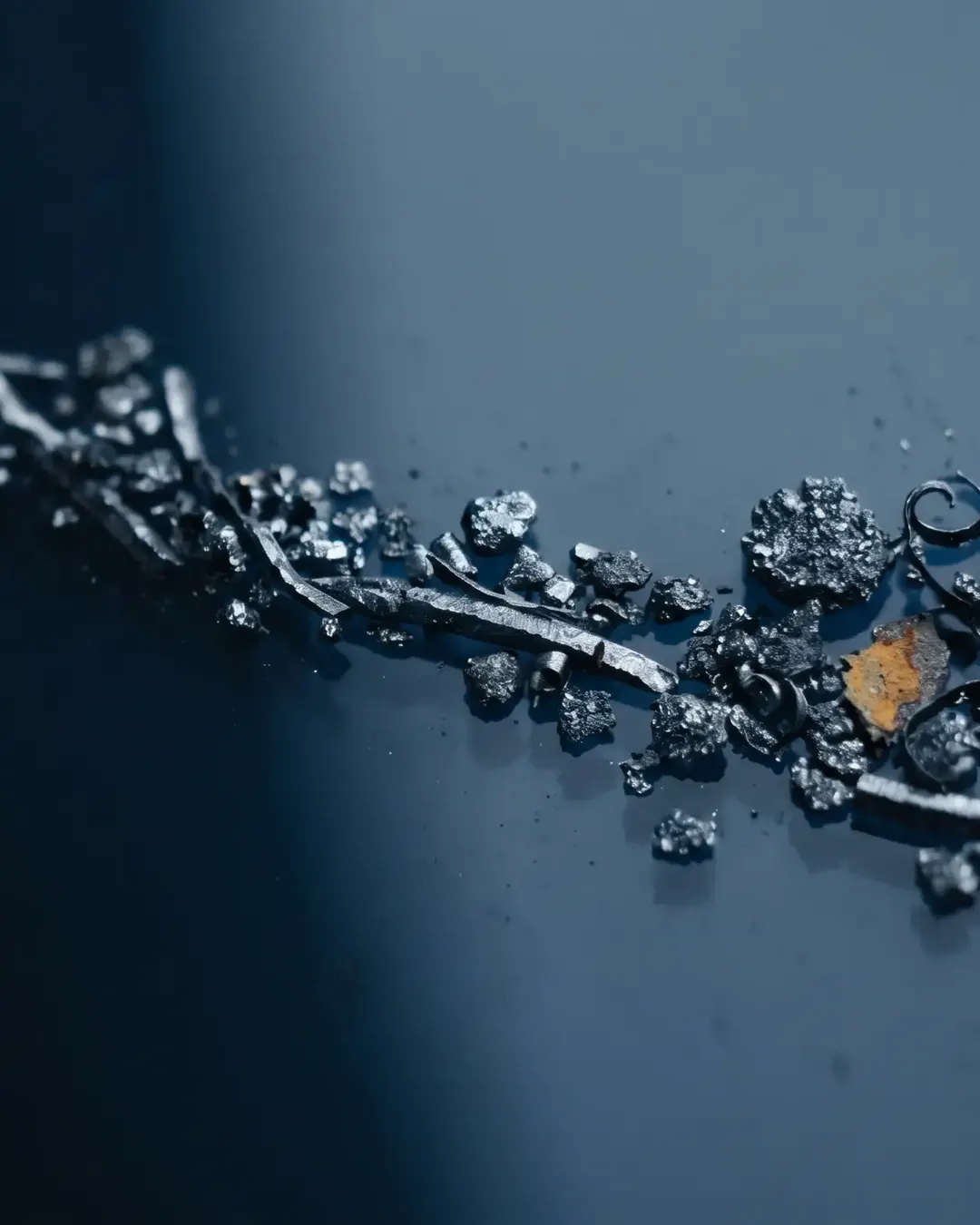
The wear process generates six basic types of metallic wear particle: normal rubbing wear, cutting wear particles, spherical particles, severe sliding particles, bearing wear particles (fatigue spall and laminar particles) and gear wear particles (pitch line fatigue, and scuffing or scoring particles). Sand and dirt in the system, which cause wear, are identified too.
- Less unscheduled downtime from wear of rotating components such as bearings and gears
- Effective maintenance scheduling
- Improved equipment reliability and safety
- Lower maintenance costs
- Longer oil change-out intervals, which indirectly benefits environmental cleanliness
- Lower machine power consumption over time
Which oil analysis tests does the laboratory run?
TCR's oil analysis reads two things from one sample: the condition of the lubricant, from viscosity, water content, TBN and TAN, and the condition of the machine, from particle count, wear metals and ferrography. Trended across successive samples from gearboxes, hydraulic systems, turbines and compressors, the two together show whether the oil needs changing or the component needs inspection.
| Test | What it tells the operator |
|---|---|
| Viscosity | Whether the lubricant has degraded, been diluted or been mixed with the wrong oil |
| Water content (Karl Fischer) | Water ingress into the lubricant |
| Total Base Number and Total Acid Number (TBN/TAN) | Additive depletion and acid build-up as the oil oxidises |
| Particle count | The load of contaminant and wear particles in the oil |
| Wear-metal analysis | Which metals are wearing, and so which component |
| Direct-reading ferrography | The concentration of large and small ferrous wear particles, trended sample to sample |
| Analytical ferrography | The type of wear particle: rubbing, cutting, spherical, severe sliding, bearing and gear wear, and sand and dirt |
Documents
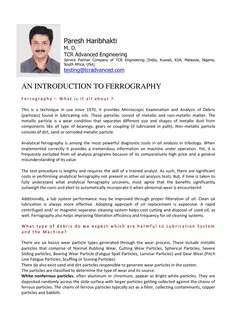
Download the reference documents for this page. Every file is hosted on this domain and is also listed in the site document library.
Related insights
1 published insight on this site bears directly on Oil Analysis and Ferrography. It is below; the full index carries all 166 Materials Testing insights.
-
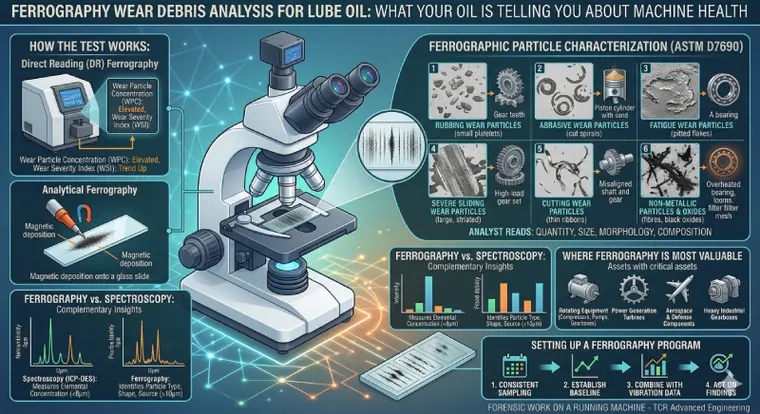
Ferrography Wear Debris Analysis for Lube Oil
Your lube oil carries detailed evidence of what is happening inside your rotating equipment. Ferrography wear debris analysis reads that evidence…
Frequently asked questions
What is ferrography and what does it tell you about a machine?
Ferrography is a series of laboratory tests on used lubricant drawn from equipment over time. The trend of wear particle distribution and concentration presents the condition of the component, so maintenance teams can act before a bearing or gear failure forces unscheduled downtime.
Which oil analysis parameters does TCR test?
The programme covers particle count, viscosity, water content by Karl Fischer titration, Total Base Number and Total Acid Number, wear-metal analysis, and both analytical and direct-reading ferrography. Together these separate lubricant degradation from active machine wear and support decisions on oil change-out intervals and maintenance scheduling.
Which equipment benefits from lube-oil condition monitoring?
The service is used across gearboxes, hydraulic systems, turbine lubrication systems, and compressors. Any rotating equipment whose bearings and gears wear progressively is a candidate, because trending wear particles gives early warning, improves reliability and safety, and reduces maintenance cost and machine power consumption over time.
What types of wear particles does ferrography identify?
Six basic wear particle types are generated through the wear process: normal rubbing wear, cutting wear, spherical particles, severe sliding particles, bearing wear particles such as fatigue spall and laminar particles, and gear wear particles including pitch line fatigue and scuffing or scoring. Sand and dirt contamination is also identified.
Is oil analysis at TCR NABL accredited?
No. Oil analysis and ferrography are not among the tests on TCR Engineering's NABL certificate NABLT0726MH18640, so the results are issued in a report outside the accredited scope. The parameters to be tested, from viscosity and water content to TBN, TAN, wear metals and ferrography, are agreed in the quotation.