
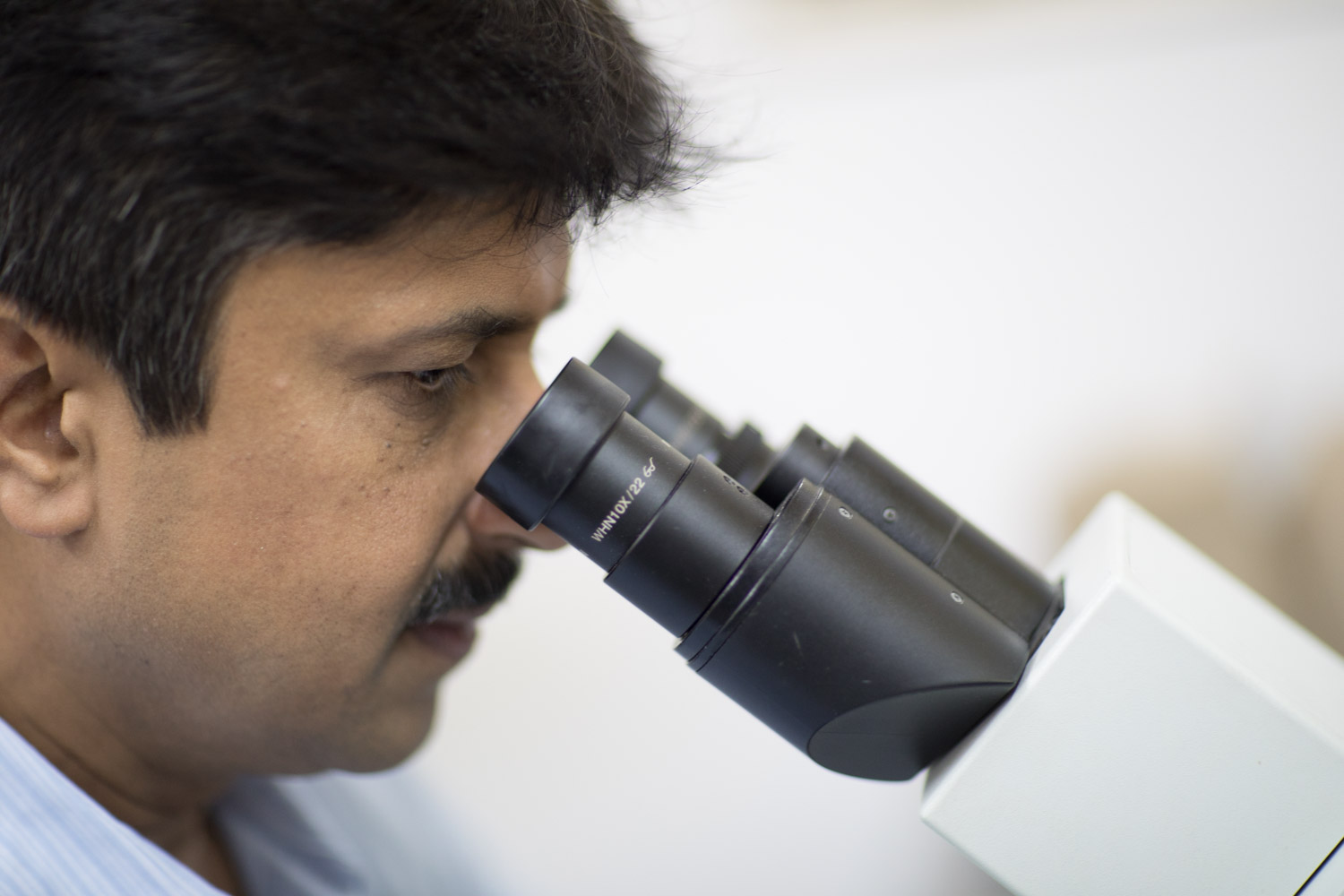
Failure analysis in a metallurgical laboratory establishes why a component failed, from its fracture surface, microstructure, chemistry and mechanical properties. TCR Engineering, Navi Mumbai, carries out failure investigations under NABL certificate NABLT0726MH18640 for the tests within its scope, and the group's archive holds 9,000+ documented failure investigations across refining, power, automotive and aerospace work.
- Evidence: visual and stereo examination, SEM with EDS, metallography, chemical analysis, hardness and mechanical tests
- Reports: written to stand behind insurance claims, warranty disputes and litigation
- Credentials: NABL certificate NABLT0726MH18640 and NADCAP AC7101 Materials Testing, PRI certificate 29415245997
- Laboratory: Mahape, Navi Mumbai, with the registered office at Lower Parel, Mumbai
Finding a reliable failure analysis laboratory in India that actually identifies root causes can spare companies repeated failures. Let us explore why systematic failure analysis isn't optional anymore - it is survival.
What Makes Professional Failure Analysis Different from Guesswork?
Many companies think they know why something failed, and the evidence often says otherwise.
Professional failure analysis follows systematic methodology:
What a Forensic Investigation Examines
- Background information collection - Service history and operating conditions
- Visual examination - As-failed condition documentation
- Low magnification analysis - Stereomicroscope examination for critical areas
- Dimensional measurements - Verification against design specifications
- High magnification SEM analysis - Fracture surface characterisation
- Failure mode determination - Origin and initiation site identification
- Cross-section microstructure analysis - Manufacturing condition investigation
- Chemical and mechanical testing - Material property verification
Advanced Analytical Capabilities
- Scanning Electron Microscopy (SEM) - Fracture surface analysis
- Metallographic examination - Microstructure evaluation
- Chemical composition analysis - Alloy verification and impurity detection
- Mechanical property testing - Strength, hardness, toughness evaluation
- Non-destructive testing - Magnetic particle, dye penetrant testing
Engineering Standards That Guide Professional Analysis
ASTM E1823 - Standard Terminology for Fatigue and Fracture Testing
Critical for:
- Standardised failure mode classification
- Consistent terminology usage
- International communication
- Technical report preparation
ASTM E399 - Fracture Toughness Testing
Essential for:
- Critical stress intensity factor determination
- Material selection validation
- Design adequacy assessment
- Safety factor verification
ASTM E647 - Fatigue Crack Growth Testing
Required for:
- Crack propagation rate analysis
- Remaining life calculations
- Inspection interval determination
- Design optimisation
ISO 12737 - Fracture Toughness Testing
International standard for:
- Global project compliance
- Export market requirements
- Multi-national quality systems
- Certification programmes
NACE Standards - Corrosion Analysis
Specialised for:
- NACE SP0775 - Preparation, installation, analysis of corrosion coupons
- NACE TM0177 - Laboratory testing of metals for sulphide stress cracking
- NACE TM0316 - Four-point bend testing for stress corrosion cracking
API Standards - Oil & Gas Applications
- API 579 - Fitness-for-service assessment procedures
- API RP 571 - Damage mechanisms in refining industry
- API RP 580 - Risk-based inspection methodology
TCR Engineering Services: Failure Analysis Since 1973
TCR Engineering Services was founded in Mumbai in 1973. It is a NABL ISO 17025 accredited laboratory. Their failure analysis work spans every major industry.
Track record highlights:
- 6,500+ global clients
- Advanced analytical capabilities - SEM, EDS, XRD, advanced metallography
- Comprehensive reporting - Expert witness testimony, litigation support
- Multi-industry experience - Aerospace, automotive, oil & gas, power generation
Specialised Failure Analysis Services
Mechanical Failure Analysis:
- Fatigue failure investigation - Crack initiation and propagation analysis
- Overload failure assessment - Stress concentration identification
- Brittle fracture evaluation - Temperature and loading condition analysis
- Wear mechanism determination - Adhesive, abrasive, corrosive wear analysis
Corrosion Failure Analysis:
- Uniform corrosion assessment - Environmental factor evaluation
- Pitting corrosion investigation - Localised attack characterisation
- Stress corrosion cracking - Environmental and stress interaction analysis
- Hydrogen embrittlement - Processing condition evaluation
Material Quality Issues:
- Manufacturing defect identification - Inclusion, void, segregation analysis
- Heat treatment problems - Microstructure and property correlation
- Welding defect analysis - HAZ characterisation and weld quality assessment
- Casting defect evaluation - Shrinkage, porosity, cold shut analysis
Industry-Specific Failure Analysis Applications
Aerospace & Defence
Critical components requiring analysis:
- Turbine blade failures
- Landing gear component analysis
- Structural joint investigations
- Fastener failure assessment
Standards compliance:
- AS9100 quality requirements
- NADCAP AC7101 Materials Testing accreditation (PRI certificate 29415245997)
- Military specifications (MIL-STD)
- Aerospace material specifications (AMS)
Automotive Industry
Common failure modes:
- Engine component analysis
- Transmission part failures
- Brake system investigations
- Suspension component assessment
Regulatory requirements:
- IATF 16949 compliance (formerly ISO/TS 16949)
- PPAP documentation
- Warranty claim support
- Recall investigation support
Oil & Gas Sector
Equipment failure analysis:
- Pipeline failure investigation
- Pressure vessel assessment
- Refinery equipment analysis
- Offshore platform components
Industry standards:
- API equipment specifications
- ASME pressure vessel codes
- NACE corrosion standards
- HSE regulatory compliance
Power Generation
Critical failure analysis:
- Boiler tube failures - Analysis work recognised by an ASM International publication
- Steam turbine component analysis
- Generator rotor investigations
- Heat exchanger failure assessment
Standards framework:
- IEEE power generation standards
- ASME boiler and pressure vessel codes
- EPRI guidelines and procedures
- Grid code compliance requirements
TCR's published work: Mr. Paresh Haribhakti's ASM-published book on boiler tube failures is the group's published reference on power generation failure analysis.
Advanced Analytical Techniques at TCR Engineering Services
Scanning Electron Microscopy (SEM) capabilities include high-resolution imaging, Energy Dispersive Spectroscopy (EDS) for elemental composition mapping, fracture surface analysis for failure mode identification, and inclusion characterisation for foreign particle identification.
X-Ray Diffraction (XRD) applications include phase identification for microstructural constituent analysis, residual stress measurement for manufacturing and service stress evaluation, crystallographic orientation for texture and preferred orientation analysis, and quantitative phase analysis for volume fraction determination.
Advanced Metallography specialised techniques include electron backscatter diffraction (EBSD) for grain orientation mapping, chemical etching protocols for microstructure revelation, digital image analysis for quantitative microstructural assessment, and 3D reconstruction for spatial relationship visualisation.
Mechanical Property Testing comprehensive evaluation includes tensile testing for strength and ductility assessment, impact testing for toughness evaluation at various temperatures, hardness mapping for property distribution analysis, and fatigue testing for cyclic loading behaviour characterisation.
The Economics of Professional Failure Analysis
The investment depends on the number of techniques, the evidence chain the work must stand behind, and whether litigation support is needed; each investigation is quoted against its scope.
Return on investment examples: prevented recurring failures avoid repeat replacement and downtime; insurance claim validation puts settlements on documented evidence; product liability protection mitigates the risk of claims; design optimisation improves performance. The evidence consistently favours professional analysis over trial-and-error approaches.
Documentation and Legal Considerations
Expert Witness Services: TCR Engineering Services provides comprehensive litigation support including technical report preparation with detailed analysis documentation, expert testimony with court appearance and deposition support, opposing analysis review with critical evaluation of competing theories, and settlement negotiation support with technical guidance for legal teams.
Insurance Claim Support: documentation requirements include photographic evidence with comprehensive visual documentation, testing protocols with standardised methodology adherence, chain of custody with evidence handling procedures, and peer review validation with independent verification processes.
Intellectual Property Protection: confidentiality measures include non-disclosure agreements for proprietary information protection, secure data handling with encrypted storage and transmission, limited access protocols on a need-to-know basis, and document retention policies for legal requirement compliance.
Quality Assurance in Failure Analysis
NABL ISO 17025 Compliance: quality system elements include calibrated equipment with traceable measurement standards, qualified personnel who are certified analysts and engineers, documented procedures with standardised methodology, and proficiency testing through external validation programmes.
Peer Review Process: multi-level validation includes a primary analyst for initial investigation and testing, a technical reviewer for independent methodology verification, a senior expert for final conclusions validation, and a quality manager for compliance and documentation review.
Emerging Technologies in Failure Analysis
Artificial Intelligence Integration: advanced capabilities include pattern recognition for automated failure mode classification, predictive modelling for remaining life estimation, database correlation for historical failure comparison, and risk assessment for probabilistic failure analysis.
Digital Twin Technology: virtual analysis capabilities include stress simulation with finite element analysis integration, environmental modelling for service condition replication, failure prediction through physics-based modelling, and design optimisation for performance enhancement recommendations.
Common Failure Analysis Mistakes to Avoid
Premature Conclusions: never assume the obvious cause is correct, systematic investigation often reveals surprising root causes.
Inadequate Evidence Preservation: disturbing the failure site contaminates critical evidence, proper documentation before any handling is essential.
Single-Technique Analysis: complex failures require multiple analytical approaches, over-reliance on one method misses crucial information.
Ignoring Service History: operating conditions provide essential context, environmental factors often drive failure mechanisms.
Building a Failure Prevention Strategy
Proactive Approaches, systematic implementation: design review processes for critical component identification, material selection protocols for environment-specific choices, manufacturing quality systems for defect prevention programmes, and condition monitoring for early warning systems.
Reactive Strategies, when failures occur: immediate preservation through evidence protection protocols, expert engagement for professional analysis initiation, systematic investigation for comprehensive root cause analysis, and corrective action for permanent solution implementation.
Training and Knowledge Transfer
Technical Education Programmes: TCR Engineering Services offers specialised training in failure analysis fundamentals (basic methodology and techniques), advanced analytical methods (SEM, XRD, advanced metallography), industry-specific applications (sector-focused case studies), and standard compliance (regulatory requirement understanding).
Knowledge Management Systems, organisational learning: failure database development through historical case documentation, best practices capture through lessons-learned compilation, design guideline updates through continuous improvement integration, and cross-functional training through multi-disciplinary knowledge sharing.
Taking Action: Your Failure Analysis Strategy
Immediate steps for failure prevention:
When Failure Occurs (First 24 Hours): secure the failure site to prevent evidence contamination, document everything with photographs, operating conditions, and witness statements, contact experts immediately for professional guidance from the start, and preserve all components including seemingly unrelated parts.
Investigation Planning (Week 1): engage a qualified laboratory through NABL accredited facility selection, define investigation scope covering technical and legal requirements, establish timelines considering business and legal deadlines, and budget appropriately for a comprehensive analysis investment.
Long-term Prevention (Ongoing): implement corrective actions to address all identified root causes, monitor effectiveness to verify solution performance, update procedures to prevent recurrence through systematic changes, and build organisational knowledge by learning from every failure experience.
Choose TCR for Failure Analysis
TCR Engineering Services takes on your most critical failure investigations.
Why choose TCR Engineering Services: experience across all major industries, NABL ISO 17025 accredited laboratory with international recognition, advanced analytical capabilities (SEM, XRD, comprehensive metallography), legal support services (expert witness testimony and litigation support), comprehensive reporting (technical detail with clear communication), and multi-industry experience (aerospace, automotive, oil & gas, power generation).
They don't just analyse failures. They identify the root causes, so that corrective action addresses the cause and not the symptom.
Contact TCR Engineering Services: Mumbai Laboratory: +91-22-67380900. Mobile: +91-9833530200. Email: sales@tcreng.com. Additional facilities: Odisha Laboratory: +91-6744602472. UP Operations: +91-9967267412.
Your business reputation depends on preventing repeated failures. Take it to a failure analysis laboratory team with a record of 9,000+ documented investigations across the group. When failures threaten business survival, choose a laboratory that has investigated failures since 1973.
On video
- Webinar on : Metallurgical Mastery - Effective Strategies for Complex Metallurgical Problem Solving.
Frequently Asked Questions
How long does a typical failure analysis take?
Timeline depends on complexity: complex investigations requiring multiple techniques take longer than a basic analysis. TCR Engineering Services confirms the schedule in the quotation, based on the specific requirements.
What information should be preserved when a failure occurs?
Document operating conditions, take photographs before disturbing anything, collect service history records, preserve all failed components, and maintain chain of custody. Avoid cleaning or handling the failed parts until professional analysis begins.
Can failure analysis determine if a component will fail again?
Yes, through root cause identification and corrective action implementation. However, success depends on addressing all contributing factors identified during the investigation, not just replacing the failed component.
What is the difference between failure analysis and routine material testing?
Routine testing evaluates material properties against specifications, while failure analysis investigates why something failed despite presumably meeting requirements. Failure analysis is forensic investigation combining multiple analytical techniques.
Do you provide expert witness services for legal proceedings?
Yes, TCR Engineering Services provides comprehensive litigation support including expert witness testimony, technical report preparation for legal proceedings, opposing analysis review, and settlement negotiation support with complete documentation.
How do you ensure confidentiality in sensitive failure investigations?
TCR maintains strict confidentiality through non-disclosure agreements, secure data handling protocols, limited access procedures, and document retention policies compliant with legal requirements while protecting proprietary information.
What standards do you follow for failure analysis?
TCR Engineering Services follows international standards including ASTM E1823, E399, E647, ISO 12737, NACE corrosion standards, and API specifications. Tests within the scope of NABL certificate NABLT0726MH18640 are reported under that accreditation; others are reported outside it.
Can you analyse failures in specialised alloys or advanced materials?
Yes, TCR has experience with aerospace alloys, high-temperature materials, corrosion-resistant alloys, and advanced composites. Our analytical capabilities include specialised techniques for exotic materials and coatings.
How do you handle failures where multiple factors contributed?
Complex failures require systematic evaluation of all contributing factors including design, material, manufacturing, and service conditions. TCR provides weighted analysis of each factor's contribution with prioritised corrective action recommendations.
What documentation do you provide for insurance claims or warranty disputes?
TCR provides technical reports with photographic documentation, detailed testing results, root cause analysis, and engineering conclusions formatted for insurance claim support or warranty dispute resolution.
Which tests does a metallurgical failure investigation use?
A metallurgical failure investigation typically combines visual and stereo-microscope examination of the fracture, scanning electron microscopy with EDS, metallographic sections, chemical analysis of the alloy, and hardness and mechanical tests. Each technique answers a different question, and the conclusion rests on the evidence that agrees across them.
Is TCR Engineering's failure analysis laboratory NABL accredited?
Yes. TCR Engineering's Mahape laboratory in Navi Mumbai holds NABL ISO/IEC 17025:2017 accreditation, certificate NABLT0726MH18640, and NADCAP AC7101 Materials Testing accreditation. Tests within those scopes are reported under them; an investigation also draws on judgement and techniques outside the scope, which the report identifies.