
Corrosion mapping services from TCR Arabia, the TCR group's joint venture in Dammam, Saudi Arabia, measure wall loss and weld defects on piping, vessels and tanks in service. High-temperature PAUT, time of flight diffraction (ToFD) and automated corrosion mapping work on surfaces up to 350 °C, so the plant need not shut down for the inspection.
- Methods: high-temperature PAUT, ToFD and automated corrosion mapping
- Temperature: surfaces up to 350 °C, with cooled probes and wedges
- Applications: in-service piping, pressure vessels and storage tanks
- Delivered by: TCR Arabia, Dammam, Saudi Arabia (joint venture)
TCR Arabia, based out of Dammam, Saudi Arabia, is a solution provider in high temperature weld inspection using Time of flight diffraction ultrasonic Inspection, phased array ultrasonic inspection and corrosion mapping up to 350 °C.
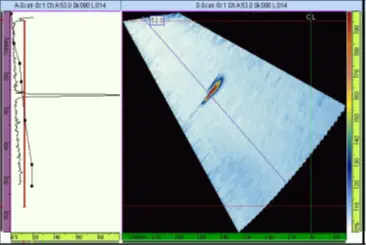
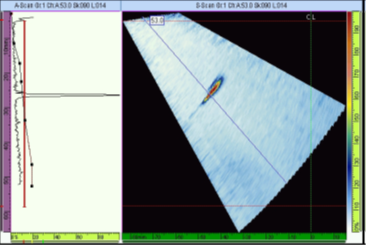
High Temperature Phased Array UT (PAUT)
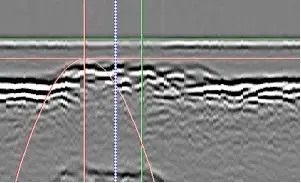
High Temperature ToFD (Time of Flight Diffraction)
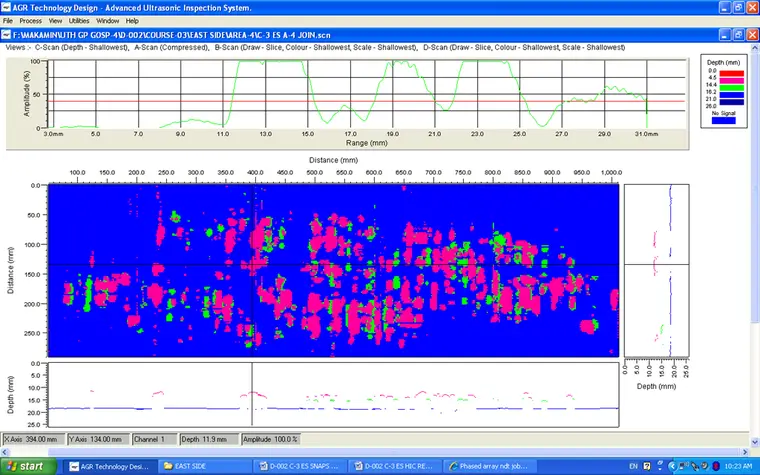
High Temperature Corrosion Mapping
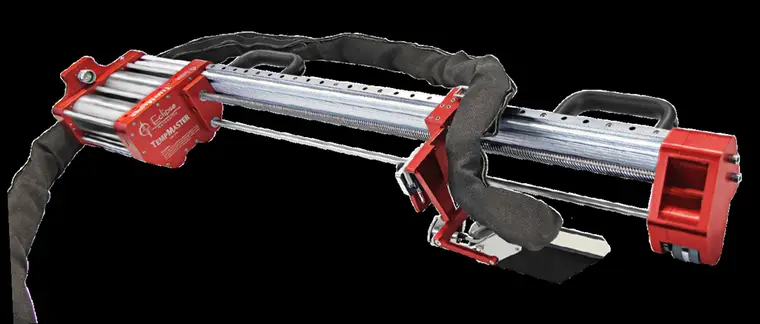
High Temperature ToFD and PAUT Ultrasonic inspection is a non-destructive testing method to inspect Plant Equipment/piping welds and parent metal while in-service for corrosion and In-service defects. The benefit of this technology is the ability to detect and monitor corrosion and In-service defects of plant piping and equipment operating at elevated temperatures up to 350 °C. The primary applications of High Temperature PAUT (HT), ToFD (HT) and Corrosion Mapping are in-service Piping, Vessels and Tanks. High temperature PAUT (HT), ToFD (HT) and ultrasonic inspection systems can also be used to locate wall thinning, determine corrosion rates and monitor defect growth rates for engineering evaluations. Determining corrosion rates and defect growth rates while equipment is on-stream can assist Engineers and Operational personnel to schedule turnaround and inspection work, equipment repairs and replacement, therefore lowering the overall risk to the facility.
TCR Arabia has an Automated High Temperature PAUT, ToFD and Corrosion mapping scanner, which is designed to operate in the demanding inspection environments up to 350 °C.
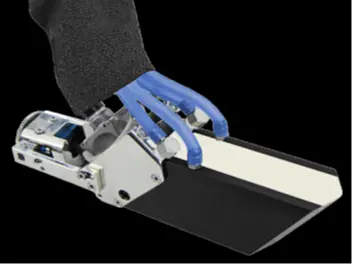
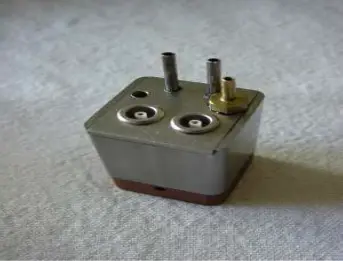
TCR Arabia has custom made probes and wedges that are able to withstand high temperature degradation and equipped with a cooling jacket around the array or cooling irrigation holes for air and water flow.
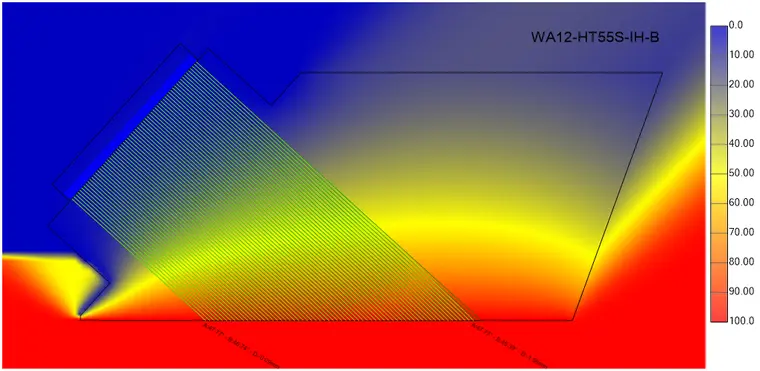
TCR Arabia plans its phased array and ToFD scans at elevated temperature with scan-planning software that corrects for the effect of temperature on the scan results, so indications are detected and positioned correctly on hot components.
What TCR Arabia's high-temperature NDT inspection gives a plant in Saudi Arabia:
- High-temperature advanced NDT detects and monitors defects and corrosion while the plant runs, as listed below.
- Maintenance planned on measured on-stream data
- Measured input to risk-based inspection, so part of the inspection scope leaves the shutdown
- Inspection of an industrial plant carried out online
- Determine corrosion rates and monitor defect growth rates for fitness-for-service evaluations
- Monitoring of cracking growth and corrosion spots during production
- Inspection of on-line repaired areas, in accordance with ASME code case
- Wall thickness mapping of the area, before making hot taps
- Corrosion monitoring and defect detection up to 350 °C at critical positions
- Inspection of weld repairs during the construction of heavy wall vessels and of "golden" welds
- Provides immediate feedback.
- Digitised inspection records for future reference and verification
- Work to your health, safety and environment (HSE) rules
FAQ
What do corrosion mapping services measure?
Corrosion mapping measures the remaining wall thickness over an area of a pipe, vessel or tank by automated ultrasonic scanning, and records it as a colour-coded map. Repeating the map at a set interval gives a measured corrosion rate. TCR Arabia in Dammam, Saudi Arabia, maps equipment in service at surface temperatures up to 350 °C.
How can PAUT and ToFD inspect equipment that is still hot?
High-temperature probes and wedges are built to withstand heat and are cooled through a jacket around the array or through irrigation holes for air and water. The scan plan corrects for the effect of temperature on the results, so indications are positioned correctly on hot components. TCR Arabia works on surfaces up to 350 °C.
What are high-temperature NDT results used for?
Wall thickness, corrosion rates and defect growth rates measured on stream feed maintenance planning, risk-based inspection and engineering evaluations, and help schedule turnaround work, repairs and replacements. Wall thickness mapping before a hot tap and the inspection of on-line repairs are common uses of TCR Arabia's inspection on operating plant in Saudi Arabia.
Who performs this inspection work in Saudi Arabia?
TCR Arabia, based in Dammam, performs high-temperature PAUT, ToFD and corrosion mapping in Saudi Arabia. TCR Arabia is a joint venture of the TCR group with GAS Arabian Services, not a branch of TCR Engineering, and it delivers and reports this inspection work under its own name.