
TCR Engineering runs NACE testing for sour service at its Mahape laboratory in Navi Mumbai, India: hydrogen induced cracking (HIC) to NACE TM0284 and sulphide stress cracking (SSC) to NACE TM0177, Methods A to D, and NACE TM0316, all on NABL certificate NABLT0726MH18640. PDO approves the laboratory for HIC and SSC testing, and OQGN approves it.
- HIC: NACE TM0284, reported as crack length, thickness and sensitivity ratios
- SSC and SCC: NACE TM0177 Methods A to D, NACE TM0316 four-point bend and ASTM G39
- Accreditation: NABL ISO/IEC 17025:2017, certificate NABLT0726MH18640
- Approvals: PDO for HIC and SSC testing, and OQGN
Look, we have seen what happens when companies skip proper NACE corrosion testing.
Costly pipelines turning into scrap metal. Production shutdowns that cost more than your annual budget. Safety incidents that no one wants to talk about.
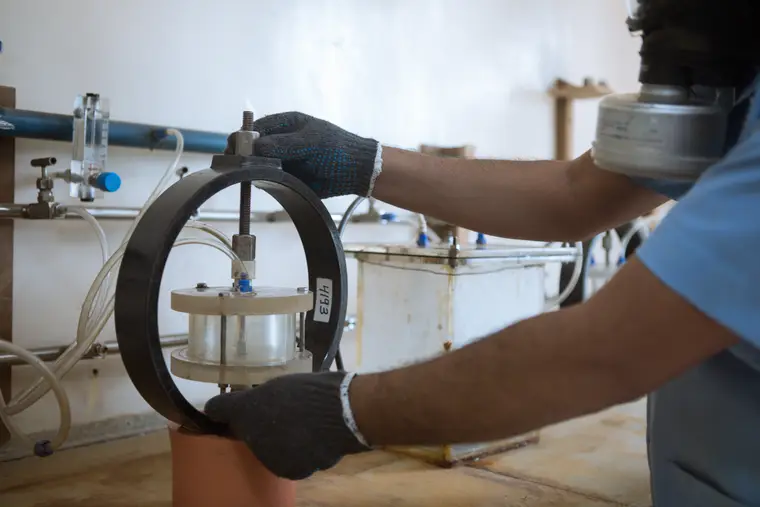
That is exactly why we built our NACE corrosion testing laboratory with full NABL accreditation at TCR Engineering.
The Real Problem Most Companies Face (And Why It Is Costing Them)
Here is what keeps happening in the industry:
You have got materials that look perfect on paper. Your suppliers swear they will handle hydrogen sulphide environments. Then reality hits, and your equipment starts cracking within months.
The issue? Most labs can't replicate real-world conditions properly. They rush through NACE TM0177 testing. Or worse - they don't understand what sulphide stress cracking actually does to your materials.
We have been fixing these problems since 1973.
What Makes Our NABL-Accredited NACE Testing Different
Two things set the work apart: test conditions are taken from the client's own service environment, and HIC and SSC tests run to NACE TM0284 and NACE TM0177 on the NABL scope.
We Actually Understand What You Are Up Against
When you are dealing with sour service environments, you need testing that mirrors your actual conditions.
Not some generic lab setup that gives you false confidence.
Our NACE corrosion testing covers:
• Hydrogen Induced Cracking (HIC) - Because trapped hydrogen will destroy your materials from the inside
• Sulphide Stress Cracking (SSC) - When stress meets H2S, bad things happen fast
• Stress Corrosion Cracking (SCC) - The silent killer of pipeline integrity
• NACE TM0177 Methods A to D - tensile, bent beam, C-ring and double cantilever beam, each reported to the standard
• SSC of CNG cylinder steel - to ISO 11439 Annex A, also on the NABL scope
Real Equipment, Real Results
We don't mess around with outdated equipment.
Our lab runs:
- Uniaxial tensile testing setups that can handle multiple specimens simultaneously
- Controlled environment chambers set to your field conditions
- Hydrogen charging systems that mirror real sour service exposure
- Advanced NDT equipment for comprehensive material evaluation
The Industries We Serve with NACE Testing
NACE testing at TCR Engineering serves three sectors where hydrogen sulphide is present: oil and gas, petrochemicals and power generation.
Oil & Gas Companies
When your pipelines carry sour crude or natural gas, failure isn't an option. We have tested materials for cross-country pipelines, offshore platforms, and refinery equipment.
Petrochemical Plants
Hydrogen sulphide doesn't care about your production schedule. Our chemical analysis combined with NACE testing gives you the full picture of material performance.
Power Generation
Whether it is geothermal or traditional power plants, corrosive environments are everywhere.
For nuclear work, NPCIL approved TCR Engineering for elevated-temperature tensile testing in February 2026.
Why NABL Accreditation Actually Matters (Beyond the Paperwork)
NABL accreditation isn't just a badge we hang on the wall.
It means:
- Our processes are audited regularly by independent assessors
- Every accredited test result is metrologically traceable
- Your insurance company receives an accredited report
- International clients recognise our data under the ILAC MRA
ISO 17025 compliance means our lab management system meets global standards.
No shortcuts. No "good enough" results.
What Happens When You Work With Us
An engagement runs in four stages, from the first conversation to the report.
Step 1: We Actually Listen
Tell us about your application, environment, and failure history. Most labs just ask for material specs. We want to know what is actually happening in your field.
Step 2: Proper Test Design
We design NACE testing protocols that match your specific conditions:
- Temperature range
- H2S concentration
- Stress levels that mirror your operation
- Duration as the NACE standard sets it
Step 3: Real-Time Updates
You get access to our online client portal and can follow your samples through testing.
Step 4: Results You Can Use
Our reports don't just say "pass" or "fail." We explain what the data means for your specific application. Plus recommendations for material selection and failure analysis if needed.
The TCR Engineering Difference: Getting It Right Since 1973
We have been testing materials since 1973.
In that time we have seen what works and what doesn't, learned how materials behave in real environments, and built relationships with companies that bring us their most critical projects.
Our track record:
- 6,500+ clients across the TCR group
- Approved by PDO for HIC and SSC testing, and by OQGN
- Clients include QatarEnergy, ONGC and PetroChina
- Full traceability on every specimen tested
Beyond Testing: Complete Material Solutions
NACE testing is just the starting point.
We also provide:
- Mechanical testing to verify material properties
- Welder qualification for sour service welding
- Pipeline inspection services for existing infrastructure
- Failure analysis when things go wrong
- Third party inspection for manufacturing oversight
Industries We Serve Across India and Globally
Domestic clients across:
- Mumbai and Maharashtra industrial belt
- Gujarat petrochemical corridor
- Odisha mining and steel sector
- Pan-India oil and gas networks
International presence:
- Saudi Arabia, through TCR Arabia, the joint venture in Dammam
- Qatar and Kuwait
- Oman, on PDO and OQGN line pipe qualification
- Samples received from 15+ countries
Getting Started Is Simple
Here is how we work:
Call us: +91 9833530200
Email: sales@tcreng.com
Visit: Our Navi Mumbai laboratory for facility tours
We will discuss your specific requirements and provide a detailed quote.
NACE corrosion testing that helps you avoid costly failures.
The Bottom Line
Your materials will either perform in sour service or they won't.
There is no middle ground when hydrogen sulphide is involved.
That is why choosing the right NACE corrosion testing laboratory with NABL accreditation isn't just about compliance - it is about protecting your investment, your people, and your reputation.
We have been helping companies get this right since 1973.
Ready to ensure your materials can handle what you are throwing at them?
Contact TCR Engineering today.
Common Questions About NACE Corrosion Testing
How long does NACE TM0177 testing actually take?
Method A (tensile): 720 hours minimum (30 days)
Method B (bent beam): 720 hours minimum.
Method C (C-ring): 720 hours minimum
Reality check: Anyone promising faster results is cutting corners. Hydrogen embrittlement and sulphide stress cracking take time to develop. We run every exposure for the full duration the NACE standard sets, because your safety depends on it.
Can you test our existing materials that are already in service?
Absolutely.
We regularly perform metallographic analysis on in-service components. The results feed a remaining life or fitness-for-service assessment, which TCR Advanced Engineering delivers and signs.
What is the difference between HIC and SSC testing?
HIC (Hydrogen Induced Cracking): Tests material's resistance to cracking from absorbed hydrogen without applied stress. SSC (Sulphide Stress Cracking): Tests material performance under combined stress and H2S exposure.
Both are critical for sour service applications. A material qualified against one mechanism can still crack by the other in service.
Do you provide fitness for service assessments?
Yes, through TCR Advanced Engineering, which delivers and signs fitness for service assessments; our Asset Integrity Management team supplies the test inputs.
TCR Advanced Engineering combines the NACE testing results with engineering analysis to determine if your equipment can continue operating safely.
Can you handle urgent testing requirements?
We understand that shutdowns and turnarounds don't wait for convenient scheduling.
Resourcing and timing for an urgent requirement are agreed in the quotation. Test durations are set by the standard and are not shortened for speed.
What documentation do you provide?
Every test comes with a test report (NABL-accredited where the test is on the scope), raw data and photographs, metallographic images where applicable, compliance statements for the relevant codes, and a recommendation on material selection or rejection.