
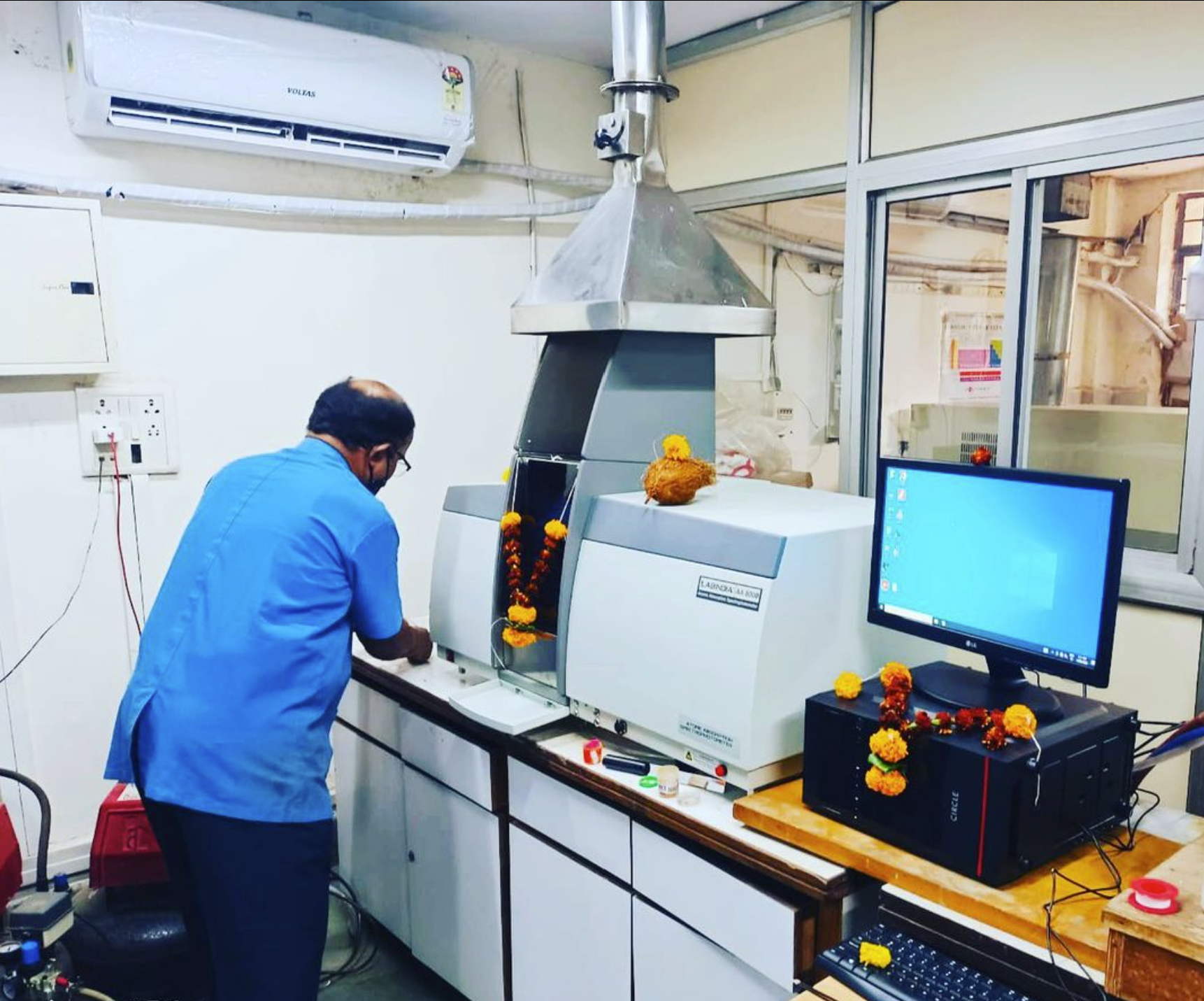
TCR Engineering installed an atomic absorption spectrometer (AAS) in the chemical laboratory at Mahape, Navi Mumbai, in March 2023. It determines trace and minor elements in metals and alloys, and the laboratory's in-house AAS methods for iron base, copper, aluminium and nickel alloys are on its NABL scope, certificate NABLT0726MH18640.
- Instrument: atomic absorption spectrometer, chemical laboratory, Mahape, Navi Mumbai
- Measures: trace and minor elements in ferrous and non-ferrous metals and alloys
- On the NABL scope: in-house AAS methods for iron base, copper, aluminium and nickel alloys, element by element
- Alongside: optical emission, ICP and combustion analysis on the same chemical analysis bench
TCR Engineering installed a new Atomic Absorption Spectrometer at its lab in Mahape, Navi Mumbai, which adds to its capability for trace-element analysis. The AAS is used to check alloy composition in metals for industries like steel manufacturing and automotive components, where elemental content affects the strength, durability and performance of the final product.
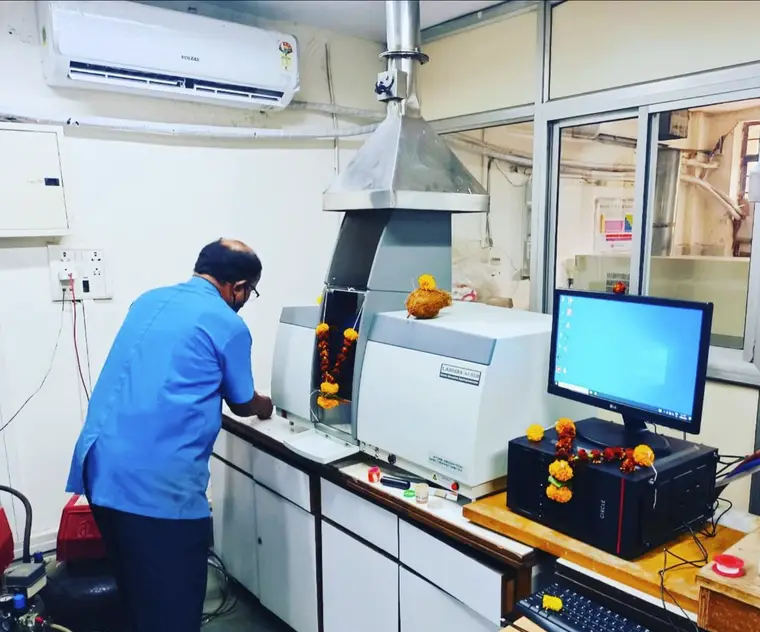
The laboratory team at Mahape completed the installation.
Atomic Absorption Spectroscopy is a highly sensitive technique used for the quantitative analysis of metals and other elements in samples. It works by measuring the absorption of light by atoms in the vaporised state, allowing for the detection and quantification of specific elements even in low concentrations. This technology is widely employed in industries that require metal composition analysis.
Advantages of the New Atomic Absorption Spectrometer
- Sensitivity: The new AAS determines trace elements at parts per million (ppm) and sub-ppm levels, which suits purity testing in metals and contamination analysis in environmental samples.
- Versatility: The AAS is versatile enough to analyse a wide range of elements, including heavy metals like lead, cadmium, mercury, arsenic, and chromium, which are critical in environmental monitoring and regulatory compliance. It can also test for essential elements such as copper, zinc, and nickel in alloys and other materials.
- Greater Capacity: With this new installation, TCR Engineering can handle a larger volume of samples. This allows the laboratory to meet the growing demand for elemental analysis, particularly from the metallurgy and environmental sectors.
Enhanced Capabilities for TCR Engineering
With the addition of the new Atomic Absorption Spectrometer, TCR Engineering's lab in Mahape is now equipped to offer an even broader range of chemical analysis services. The AAS works alongside the laboratory's other chemical analysis methods as part of TCR Engineering's materials testing work in India.
The instrument serves clients across industries, including oil and gas, construction, automotive, and environmental sectors.
Conclusion
The installation of the Atomic Absorption Spectrometer at TCR Engineering's Navi Mumbai lab adds to the laboratory's materials testing equipment. The instrument gives TCR Engineering's clients elemental analysis results on which to base decisions about material composition, regulatory compliance and safety standards. Whether for metallurgical analysis, environmental testing or quality control, the AAS adds to the testing TCR Engineering offers industries in India and abroad.
FAQ
What does an atomic absorption spectrometer measure?
An atomic absorption spectrometer measures how much light at an element's own wavelength is absorbed by atoms of that element in a flame or a graphite furnace, which gives its concentration. It is used for trace and minor elements in metals, alloys and solutions, one element at a time, at parts per million and lower levels.
Are TCR's AAS tests NABL accredited?
Yes, for the matrices on the scope. TCR Engineering's in-house AAS methods for iron base, copper, aluminium and nickel alloys are on the NABL scope of its Mahape laboratory, certificate NABLT0726MH18640, element by element. An element or matrix outside those rows is reported outside the NABL scope, and the report names the method used.
When is AAS used instead of optical emission spectrometry?
Optical emission spectrometry gives a fast bulk analysis of a solid metal sample, while AAS is used for trace elements and for samples taken into solution, such as drillings, powders and small parts. TCR Engineering's chemical laboratory at Mahape runs both, with ICP and combustion analysis, and uses the method the specification calls for.