
TCR Engineering, from its Mahape base in Navi Mumbai, provides third party inspection services for oil and gas projects in India: inspection at the manufacturer's works and pipe mill, weld, coating and materials checks on pipelines, hydrostatic test witnessing, and storage tank inspection to API 650 and API 653. It acts as an independent third party under contract.
- Source inspection: pipe mills, fittings and valves at the manufacturer's works
- Pipelines: weld, coating and materials verification, and hydrostatic test witnessing
- Storage tanks: API 650 for new construction and API 653 in service
- Inspectors: CSWIP and AWS CWI welding inspectors, API 510, 570 and 653 inspectors, and NDT technicians certified Level II to SNT-TC-1A
- For third party inspection across all sectors in India, see the guide to third party inspection services in India
When your oil and gas project is this large, you cannot rely on the contractor's word alone.
That is where third party inspection services for oil and gas become your safety net.
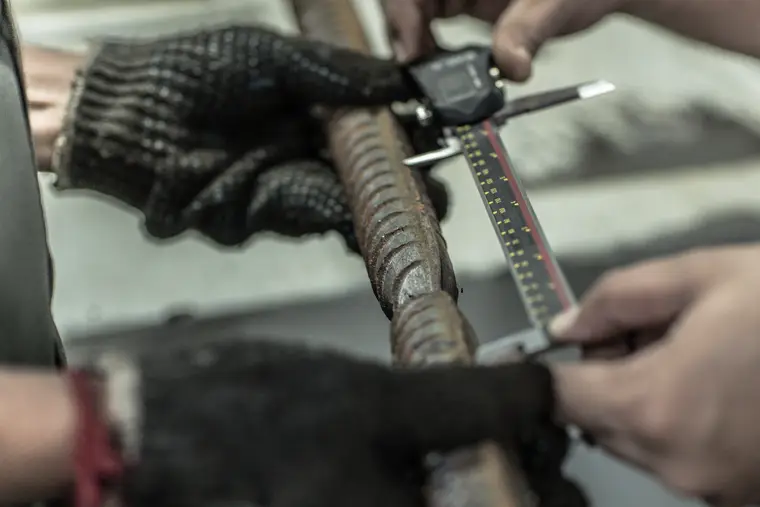
We have seen what happens when projects skip independent inspection.
Welds that look perfect but fail under pressure.
Materials that pass internal checks but crack within months.
Coating applications that seem fine until the first monsoon hits.
At TCR Engineering, we have been providing independent inspection services since 1973. Not because we don't trust people. But because trust isn't a quality control system.
The Real Problem with Internal Inspection Teams
Here is what keeps happening across the industry:
Your contractor has every incentive to say everything is perfect. Their internal inspectors report to the same people paying their salaries.
When problems arise, everyone suddenly develops selective blindness.
The result? You discover issues months after handover. When fixing them costs far more than doing it right the first time. When your insurance company starts asking uncomfortable questions.
That is exactly why smart project managers bring in third party inspection services.
What Makes TCR's Third Party Inspection Different
Three things separate it from the contractor's own QA/QC: who the inspector reports to, field experience in oil and gas, and coverage across the project.
We Don't Work for Your Contractor
This sounds obvious, but it is everything.
When we inspect your pipeline welds, we are not thinking about the contractor's schedule.
When we evaluate your materials, we are not worried about their profit margins.
When we find problems, we report them to you - not the people who created them.
Our independence means:
- Zero pressure to overlook defects
- Complete transparency in reporting
- Focus on long-term asset integrity, not short-term convenience
Real Experience in Oil and Gas Environments
We are not generalists who dabble in everything.
Our team has experience in:
- Pipeline construction - Cross country pipeline inspection from fabrication to commissioning
- Offshore platforms - Understanding the unique challenges of marine environments
- Refineries and petrochemical plants - Where a small mistake can shut down entire operations
- Gas processing facilities - From wellhead to distribution networks
Complete Inspection Coverage
TCR covers the project lifecycle, from the manufacturer's works to commissioning and in-service inspection.
Our Oil and Gas Third Party Inspection Services
The oil and gas scope falls into four groups of work: pipelines, fabrication at the source, storage tanks and terminals, and compressor stations.
Pipeline Inspection Services
During Construction:
- Weld quality verification using advanced NDT methods
- Coating application monitoring and testing
- Materials verification with PMI testing
- Hydrostatic test witnessing and documentation
- Cathodic protection system installation verification
Real example from last year: We caught a contractor using wrong electrode specifications on a gas pipeline. The welds looked perfect visually. But our metallurgical analysis showed the weld metal did not match the specified electrode.
It was corrected during construction, before commissioning.
Fabrication and Manufacturing Inspection
At the source:
- Pipe mill inspection and quality verification
- Fitting and valve manufacturing oversight
- Material testing per project specifications
- Documentation and certificate verification
- Packaging and shipping preparation
Why this matters: Once materials reach your site, problems become expensive to fix. Better to catch issues at the factory gate than the project gate.
Storage Tank and Terminal Inspection
New construction:
- Foundation and bottom plate inspection
- Shell and roof construction monitoring
- API 650 compliance verification
- Internal and external coating applications
- Instrumentation and safety system installation
Existing facilities:
- API 653 tank inspection for in-service tanks with robotics
- Floor scanning and thickness surveys
- Roof structural integrity assessment
- Foundation settlement monitoring
Compressor Station and Facility Inspection
Equipment installation:
- Compressor package installation verification
- Piping system pressure testing
- Control system commissioning oversight
- Safety system functionality testing
- Environmental compliance verification
Industries We Serve
Within oil and gas, the work runs across four segments.
Upstream Oil and Gas
Exploration and production facilities:
- Wellhead equipment installation
- Gathering system construction
- Processing facility upgrades
- Pipeline tie-ins and connections
Midstream Infrastructure
Transportation and storage:
- Long-distance pipeline projects
- Compressor station construction
- Terminal and hub facilities
- Import/export terminal development
Downstream Operations
Refining and distribution:
- Refinery turnaround inspection
- Product pipeline construction
- Distribution network upgrades
- Retail facility installations
Petrochemical Plants
Complex processing environments:
- Unit construction and modification
- High-pressure system installation
- Corrosive service applications
- Reformer tube systems
Why Companies Choose TCR for Third Party Inspection
Buyers look at three things: the record, the standards the work is done to, and the documentation that comes back.
Track Record That Speaks for Itself
Since 1973:
- 6,500+ clients served across the TCR group
- Full traceability and documentation for every inspection
Global Standards, Local Presence
We work to international standards:
- API inspection procedures
- ASME construction codes
- NACE corrosion prevention standards
- ASTM testing protocols
- ISO quality management systems
With local understanding:
- Indian regulatory requirements
- Regional environmental conditions
- Local contractor capabilities
- Cultural and communication factors
Complete Documentation and Reporting
Every inspection includes:
- Detailed photographic documentation
- Non-conformance reports with corrective actions
- Material traceability records
- Test certificates and calibration data
- Executive summary with recommendations
Do you provide inspection services for existing facilities?
Absolutely.
Our asset integrity management team specialises in:
- Fitness-for-service assessments, delivered and signed by TCR Advanced Engineering
- Remaining life evaluations
- Risk-based inspection planning
- Regulatory compliance verification
Can you handle urgent inspection requirements?
Yes, but with the right approach.
Resourcing and timing for an urgent requirement are agreed in the quotation.
For urgent requirements, the engagement can include:
- Mobilisation for critical issues, with timing agreed in the quotation
- Inspection teams for unplanned shutdowns
- Reporting planned around the project schedule
What qualifications do your inspectors have?
Our inspection team includes:
- CSWIP and AWS CWI welding inspectors
- AMPP/NACE coating inspectors
- API 510, 570 and 653 inspectors
- NDT technicians and engineers certified to SNT-TC-1A
- Chartered engineers with field experience
All continuously trained on latest inspection technologies and industry standards.
The TCR Engineering Approach to Third Party Inspection
The work runs in three phases.
Before We Start
Project planning session: We don't just show up and start inspecting. We review your specifications, understand your risks, and develop an inspection plan that focuses on what actually matters for your project's success.
During Inspection
Communication during the work: Problems are reported to you as they are found, not saved for a weekly meeting. You get photos, data, and recommendations while there is still time to act on them.
After Completion
Long-term relationship: Third party inspection isn't a one-time service. We maintain records for future reference and provide ongoing support for asset management decisions.
Getting Started with Third Party Inspection Services
Step 1: Project Assessment We review your project scope, timeline, and specific requirements. No generic proposals - everything tailored to your actual needs.
Step 2: Inspection Planning Detailed inspection and test plan covering all critical activities. Hold points, witness points, and documentation requirements clearly defined.
Step 3: Team Mobilisation Right people, right equipment, right location. We handle logistics so you can focus on project execution.
Step 4: Execution and Reporting Consistent inspection coverage, with findings reported during the work and resolution tracked to closure.
Why Independence Matters More Than Ever
The oil and gas industry is under increasing scrutiny. Environmental regulations are tighter. Safety standards are higher. The stakes are high.
You need third party inspection services because:
- Your insurance company requires independent verification
- Regulatory bodies expect unbiased assessment
- Your shareholders demand risk mitigation
- Your reputation depends on getting it right the first time
Industries Beyond Oil and Gas
While oil and gas is our core focus, our third party inspection work extends to:
- Boiler inspection services for thermal plants
- High-pressure steam systems
- Cooling water infrastructure
Chemical processing:
- Process equipment installation
- Piping system construction
- Storage and handling facilities
Infrastructure projects:
- Bridge inspection, with drone structural inspection through the Chugai Technos alliance (Japan)
- Marine terminal facilities
- Industrial plant construction
Contact TCR Engineering for Third Party Inspection
Ready to protect your investment with independent inspection?
Call us: +91 9833530200
Email: sales@tcreng.com
Visit: Our Mahape laboratory in Navi Mumbai to discuss your project requirements
We will provide a detailed proposal after reviewing the project.
The proposal sets out the inspection and test plan, the hold and witness points, and the reporting.
The Bottom Line
Your oil and gas project will either be built right or it won't.
There is no middle ground when you are dealing with high pressures, corrosive environments, and expensive materials.
Third party inspection services for oil and gas aren't about not trusting your contractor. They are about verifying that everyone is doing their job properly.
Because when something goes wrong, "the contractor said it was fine" isn't going to help you explain the failure to your board, your insurers, or the authorities.
We have carried out third party inspection since 1973.
Ready to put independent inspection on your next project?
Contact TCR Engineering today for independent third party inspection services on oil and gas projects.
Common Questions About Third Party Inspection
How does third party inspection differ from contractor QA/QC?
Contractor QA/QC: Reports to the people building the project
Third party inspection: Reports directly to you, the asset owner
The difference is accountability. Contractors have financial incentives to find fewer problems. We have professional incentives to find all problems before they become expensive.
What is the typical cost of third party inspection services in India?
The cost of third party inspection is set in the quotation, from the project scope, the inspection and test plan, and the hold and witness points it carries.
Is TCR accredited to ISO/IEC 17020 for inspection?
No. TCR Engineering is not accredited to ISO/IEC 17020; it acts as an independent third party under contract. Its Mahape laboratory in Navi Mumbai is NABL accredited to ISO/IEC 17025 for testing (certificate NABLT0726MH18640), so a test taken during inspection, such as PMI or a mechanical test, is reported against that scope where the test is on it.
Which standards does oil and gas third party inspection follow?
The project specification decides. Pipeline welding is commonly inspected to API 1104, storage tanks to API 650 for new construction and API 653 in service, and pressure equipment to the ASME codes, with sampling to ISO 2859-1. TCR inspectors work to the client's inspection and test plan, with hold and witness points agreed before work starts.
Where does TCR carry out oil and gas inspection?
Across India from its Mahape base in Navi Mumbai: at manufacturers' works and pipe mills, on pipeline spreads, and at refineries, terminals and compressor stations. TCR inspectors, based in India, also deploy to client sites abroad for short-term turnaround projects, working to the client's specification and the international codes it names.