
A half-cell potential test measures the electrical potential of steel reinforcement against a copper-copper sulphate reference electrode on the concrete surface, and maps where corrosion is likely to be active. TCR Engineering performs it on site across India to ASTM C876 and IS 516 (Part 5/Sec 2), both on its NABL site scope under certificate NABLT0726MH18640.
- Result: a potential map of each member, read in the ASTM C876 probability bands for active corrosion.
- Accredited: ASTM C876 and IS 516 (Part 5/Sec 2), site testing under NABL certificate NABLT0726MH18640.
- Limits: it gives the probability of corrosion, not section loss or corrosion rate.
- Run with: carbonation depth, a cover meter survey and ultrasonic pulse velocity in structural audits.
Concrete may appear durable from the outside, but within its depths, steel reinforcement bars (rebars) may be silently corroding. This hidden deterioration can compromise the long-term safety and performance of structures like columns, slabs, and beams. That is where the Half-Cell Potential Test comes in: a non-destructive method to detect corrosion activity in steel embedded in concrete.
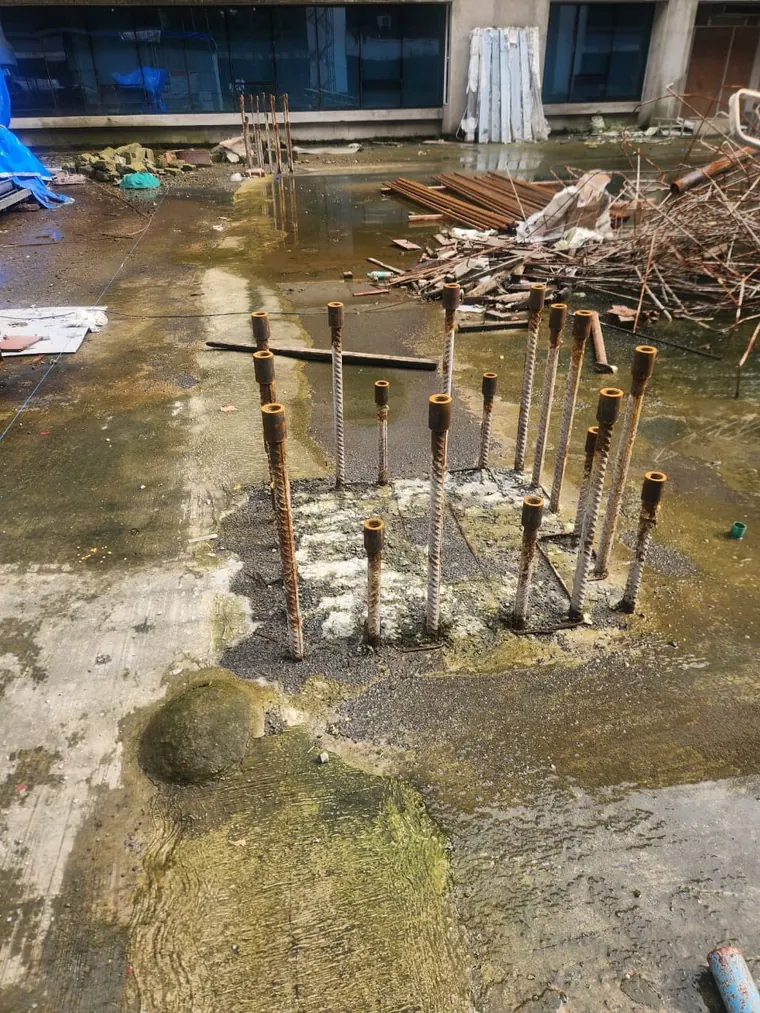
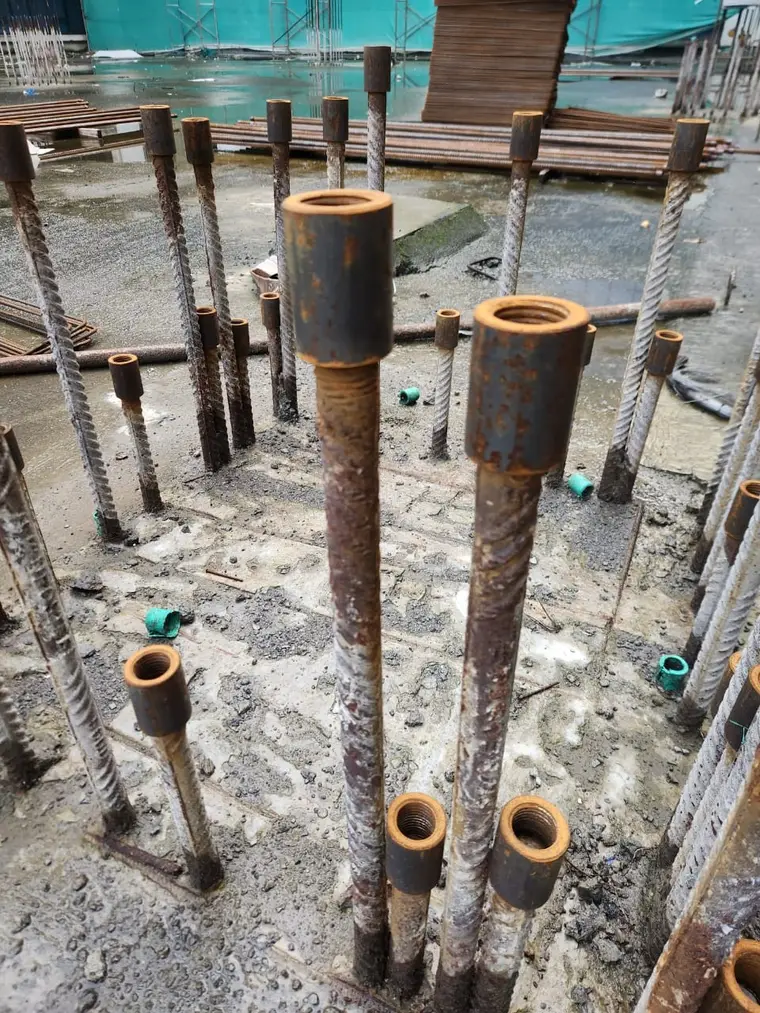
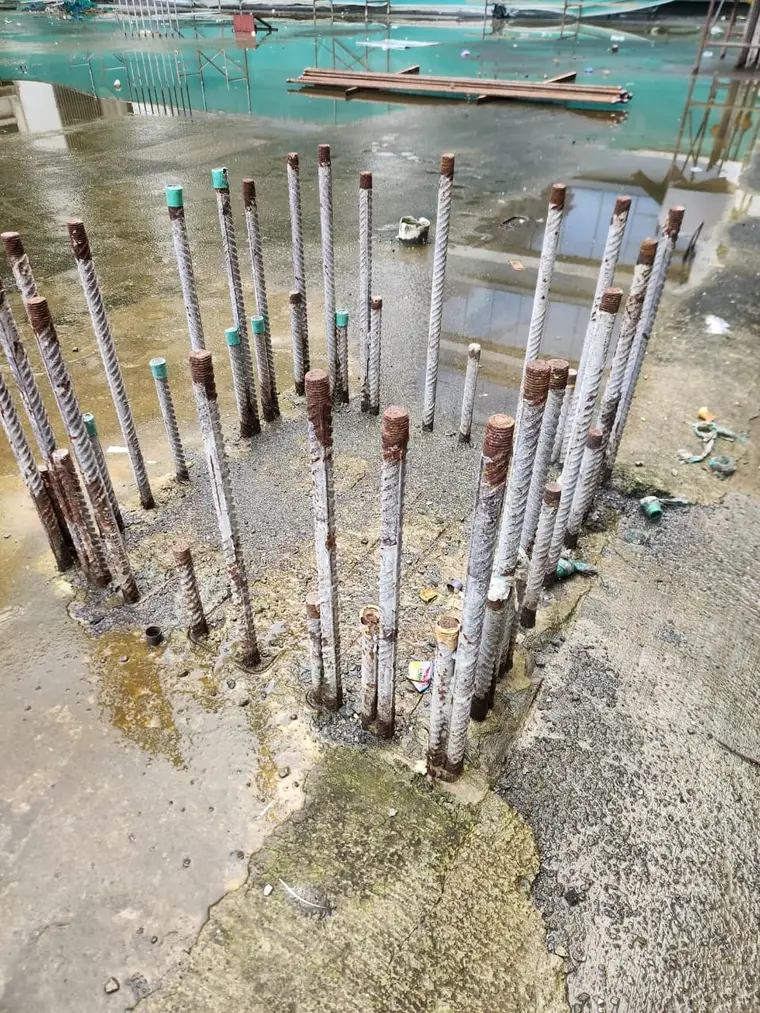
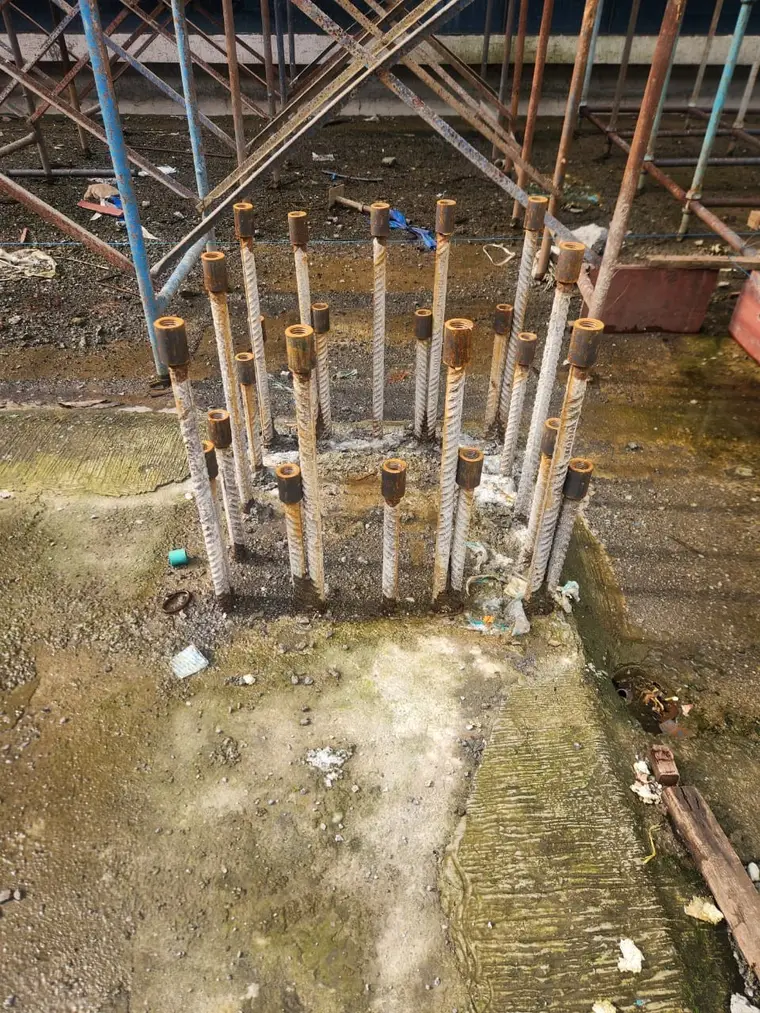
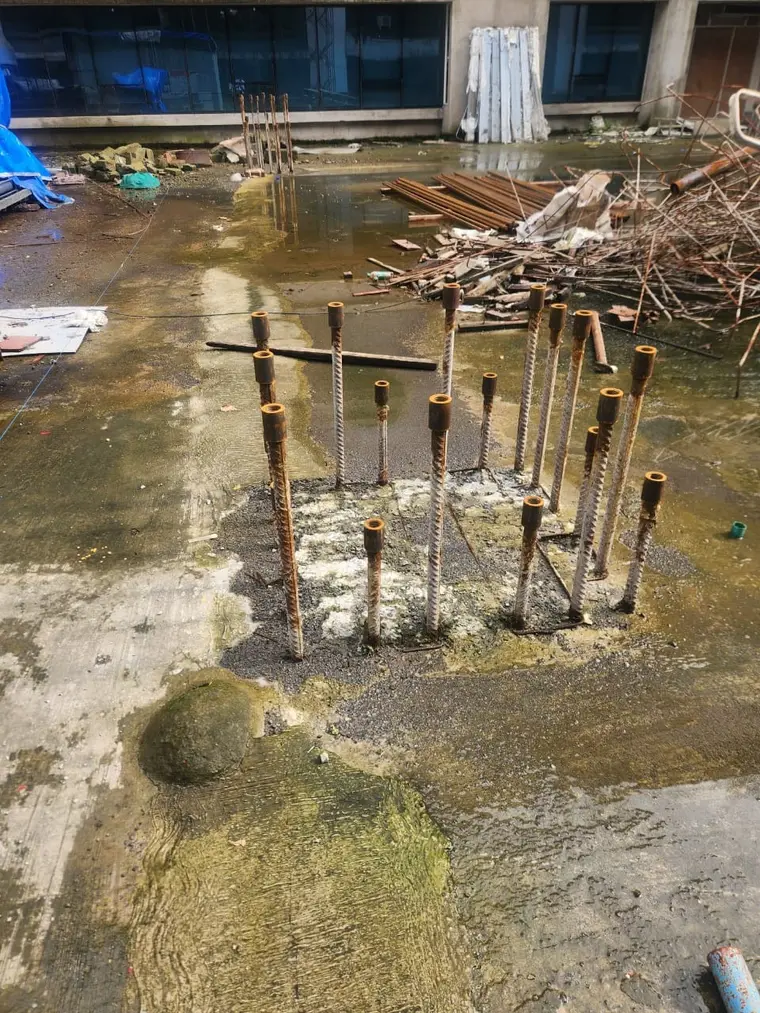
TCR Engineering conducts Half-Cell Potential Testing on steel dowels embedded in columns at the customer's site. Our qualified team will visit the location, bringing along the necessary equipment to conduct this vital evaluation. The Half-Cell Potential Test (also called the Half-Cell Potentiometer Test) is a standard electrochemical technique used to assess the likelihood of corrosion in steel reinforcement without damaging the structure.
Using a copper-copper sulphate reference electrode, measurements of electrical potential differences are taken on the surface of the concrete. These values indicate whether the embedded steel is actively corroding, and if so, how severely.
Why is this Test Important?
- Early Corrosion Detection: The test identifies areas where corrosion has likely started, even if there are no visible signs. Early detection enables timely intervention.
- Non-Destructive: Since the test doesn't harm the structure, it is safe for operational buildings and sensitive infrastructure.
- Structural Health Monitoring: It allows asset owners, engineers, and consultants to monitor and track deterioration trends over time.
- Optimised Maintenance Planning: The results guide the repair strategy. Resources can be focused on the most vulnerable zones.
- Safety and Longevity: Timely action based on the results reduces the risk of structural distress and extends the service life of the asset.
What the Survey Establishes, and What the Site Provides
A half-cell survey records potentials on an agreed grid across each member and reports the zones where active corrosion is probable, read against ASTM C876. Two items sit in the client's scope:
- Bar exposure (client scope): the reinforcement is exposed at agreed points so the instrument can be connected to it.
- Making good (client scope): the exposed concrete is refilled by the client once the survey is complete.
- The result: a potential map of each member, with the zones of probable active corrosion marked for the structural engineer.
Why Choose TCR Engineering?
- On-Site Testing: Our team is equipped to travel to your location, for seamless execution with minimal disruption.
- Trained Technicians: All tests are performed by qualified professionals in structural condition assessment.
- Advanced Equipment & Standards: We use calibrated instruments and test to ASTM C876 and IS 516 (Part 5/Sec 2), both on our NABL site scope.
- Actionable Insights: Our reports don't just show readings: they guide decision-makers with engineering interpretations and repair recommendations.
Scheduling and Coordination
Mobilisation dates for our team and equipment are confirmed in the quotation. Coordination with your site team for access, bar exposure, and concrete refilling will help keep the testing smooth and timely.
Conclusion
The Half-Cell Potential Test is a critical diagnostic tool that enables structural engineers and asset owners to take proactive steps before corrosion turns into costly damage. TCR Engineering brings this test to your site under its NABL site scope.
If you are managing ageing infrastructure or need assurance about the condition of embedded steel reinforcements, get in touch with TCR Engineering for on-site half-cell potential testing.
FAQ
What does a half-cell potential test tell you?
It tells you where the reinforcement is likely to be actively corroding. The potentials recorded on a grid are read in the probability bands of ASTM C876 and plotted as a map of each member. It does not measure section loss or corrosion rate; those need bar exposure, cores or a corrosion-rate method.
Which standards apply to half-cell potential testing in India?
ASTM C876 and IS 516 (Part 5/Sec 2), the Indian standard for half-cell potentials of reinforcement in hardened concrete. Both are on TCR Engineering's NABL scope as site testing under certificate NABLT0726MH18640, so half-cell readings taken to either standard are reported as accredited results.
What does the site provide for a half-cell survey?
Access to the members, an electrical connection to the reinforcement at agreed points, which the client exposes, and making good of the exposed concrete after the survey. The grid, the number of members and the mobilisation date are agreed in the scope of work and confirmed in the quotation.
Is half-cell potential testing done with other concrete tests?
Usually. A condition survey runs half-cell potential with carbonation depth, which shows how much of the cover is still protective, and with a cover meter survey, which locates the bars and their depth. Ultrasonic pulse velocity and rebound hammer cover the concrete itself. TCR carries out this testing behind structural audits across India.