
Hydrogen induced disbonding (HID) testing to ASTM G146 evaluates whether a stainless alloy weld overlay or cladding stays bonded to its steel substrate after refinery high-pressure, high-temperature hydrogen service. It is not a coating test and has nothing to do with buried pipelines. TCR Engineering commissioned an ASTM G146 facility at its Mahape laboratory in Navi Mumbai in April 2026.
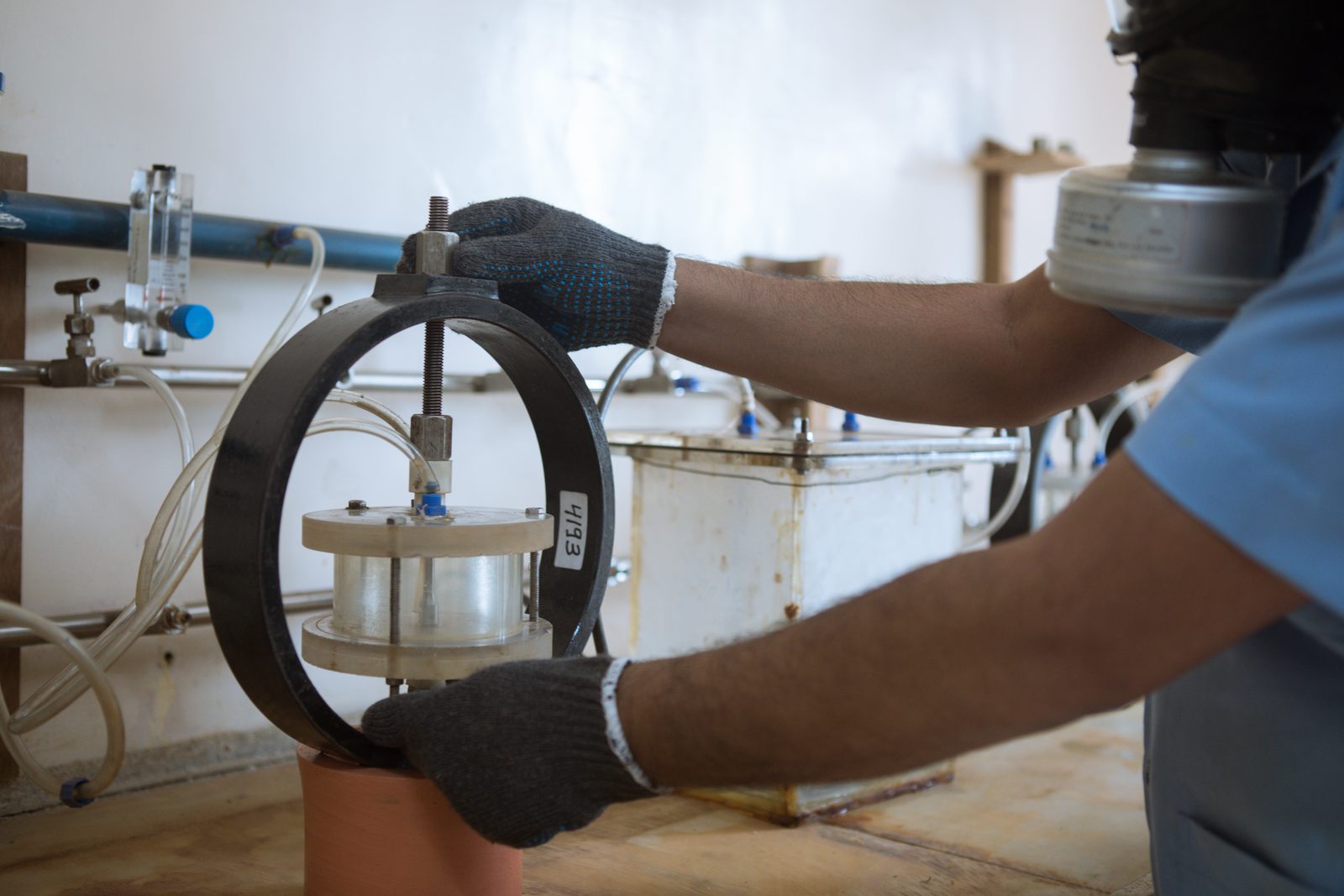
Correction, 24 September 2026. An earlier version of this article, published when the facility was commissioned, described ASTM G146 as a test of coating disbonding on pipelines and quoted an indicative test cost. Both were wrong, and the price should never have been on this site. This version replaces it. The illustration that accompanied the first version has also been replaced with a photograph of TCR's own sour-service laboratory.
- ASTM G146 covers disbonding of bimetallic stainless alloy/steel plate for refinery high-pressure, high-temperature gaseous hydrogen service. The current edition is G146-24, May 2024.
- Cathodic disbondment is a different family: ASTM G8 and ASTM G42 measure how far a pipeline coating lifts away from steel held under cathodic protection. TCR runs cathodic disbondment on the coating evaluation bench.
- The two share one word. They differ in the material, the environment, the failure mechanism, the specimen and the equipment.
- What TCR offers on each is on the hydrogen induced disbonding testing page and the coating evaluation page respectively.
Why the confusion happens
Specifications are written by people who search for a test by its name, and "disbonding" appears in the titles of standards from two unrelated committees. A procurement engineer asked to source "a disbonding test for our lined pipe" and a materials engineer asked to qualify "overlay disbonding resistance for the reactor" are asking for different things, and a laboratory that answers the first with the second, or the other way round, has produced a report nobody can use.
The fastest way to tell them apart is to ask what is bonded to the steel. If it is a paint, an epoxy, a polyethylene or any other organic coating, the question is cathodic disbondment. If it is stainless steel or a nickel alloy, applied by weld overlay, roll bonding or explosion bonding, the question is hydrogen induced disbonding.
The two tests side by side
| Hydrogen induced disbonding | Cathodic disbondment | |
|---|---|---|
| Governing standard | ASTM G146-24 | ASTM G8 (ambient) and ASTM G42 (elevated temperature) |
| What is bonded to the steel | Stainless alloy weld overlay or clad layer, metallurgically bonded | Organic pipeline coating, adhesively bonded |
| Service it models | Refinery hydroprocessing reactors and vessels in high-pressure, high-temperature hydrogen | Buried or submerged pipelines under cathodic protection |
| How hydrogen or damage gets there | Gaseous hydrogen dissolves into the vessel wall at pressure and temperature, then concentrates at the bond line when the wall cools | Cathodic polarisation at a holiday in the coating generates alkali that undercuts the coating's adhesion |
| Specimen | Clad cylinder, 73 ± 2 mm diameter by 45 ± 2 mm, 6 ± 1 mm qualification cladding, side cladding | Coated pipe or panel with an intentional holiday |
| How the result is read | Ultrasonic examination of the bond line against a 3 mm flat-bottom-hole reference, before and after exposure | Radius of coating disbonded from the holiday after the test period |
| Equipment | High-pressure hydrogen autoclave with controlled cooling | Electrolyte cell with a sacrificial or impressed-current anode |
Everything in that table is a difference in kind, not in degree. A laboratory can hold one capability and not the other, and a report on one is no evidence for the other.
What ASTM G146 is actually for
The reactors that hydrotreat and hydrocrack a refinery's heavier streams are thick chromium-molybdenum steel shells with an austenitic stainless weld overlay on the inside. In service both are charged with hydrogen. When the unit is shut down and the wall cools, hydrogen leaving the shell piles up at the interface with the overlay, where it moves more slowly. Published measurements place the resulting cracks in the transition zone within about 100 µm of the fusion boundary. The full mechanism, with its sources, is set out in our September 2026 article on ASTM G146 at Mahape.
ASTM G146 puts that sequence into an autoclave: hydrogen at pressure and temperature, a hold, a controlled cool, and an ultrasonic look at the bond line before and after. The standard deliberately covers a broad range of pressures, temperatures and cooling rates, so the purchaser sets the exposure from the service. Clause 1.2 names weld overlay as the primary product and admits hot roll bonded and explosion bonded plate by the same procedure.
That makes it a qualification test for three kinds of buyer:
- Refiners and licensors specifying a new reactor or a replacement shell, who want the overlay procedure proven at the unit's own hydrogen partial pressure and shutdown rate.
- Vessel fabricators and overlay contractors, whose welding process and post-weld heat treatment are the variables the test ranks.
- Clad plate producers, supplying roll or explosion bonded plate into hydrogen service.
None of those is a pipeline operator, and none of them is buying a coating.
What cathodic disbondment is for
A buried pipeline is protected twice: by its coating, and by cathodic protection wherever the coating has a defect. The two can work against each other. At a holiday, the cathodic reaction produces an alkaline environment that attacks the coating's adhesion from the edge of the defect outward, and a coating that lifts can shield the steel beneath it from the very protection it was meant to work with.
Cathodic disbondment testing measures that. A coated specimen with a deliberate holiday is held under cathodic polarisation in an electrolyte, and at the end of the test the disbonded radius around the holiday is measured. ASTM G8 is the ambient-temperature method; ASTM G42 is the elevated-temperature one, for lines that run hot. TCR runs cathodic disbondment to ASTM G8 as part of its coating evaluation work, alongside adhesion, holiday detection and salt spray.
Where both sit at Mahape
The two capabilities live on different benches in the same building, and the sour-service laboratory is where HID belongs. That bench already runs sulphide stress cracking per NACE TM0177, hydrogen induced cracking per NACE TM0284, stress-oriented HIC per NACE TM0103 and four-point bend per NACE TM0316, and it manufactures its own HIC reference and control specimens. It is approved by Petroleum Development Oman and OQ Gas Networks and holds the NACE International award for Excellent Laboratory in the Private Sector. The broader corrosion and sour service page carries the full list.
ASTM G146 is not yet on NABL certificate NABLT0726MH18640, and HID results are issued in a separate report outside the accredited scope.
"An enquiry for disbonding testing often needs a second question before it needs a quote: what is bonded to the steel? If the answer is a coating, it goes to the coatings bench. If the answer is stainless overlay on a reactor shell, it comes to the hydrogen autoclave, and the first thing we ask for is the cooling rate."
Avinash Tambewagh leads the advanced testing department at Mahape; his work spans fracture toughness, fatigue and NACE sour-service testing.
What to put in the enquiry
For hydrogen induced disbonding, send the purchase specification, or at minimum the hydrogen pressure, the test temperature and hold time, the cooling rate and the temperature it is controlled down to, the number of cycles, and the base metal, overlay, bonding process and post-weld heat treatment details. Specimens can be supplied machined to TCR's drawing, or TCR can machine them from the clad plate.
For cathodic disbondment, send the coating system, the test standard and its temperature, the test duration and the polarisation potential the specification calls for.
If the specification says only "disbonding test", send it anyway. Telling the two apart is the first thing the laboratory does with it.
Continue reading
Frequently asked questions
Is ASTM G146 a coating test?
No. ASTM G146 evaluates disbonding of a metallurgically bonded stainless alloy layer, a weld overlay or a roll or explosion bonded cladding, from its steel substrate after high-pressure, high-temperature hydrogen exposure. Organic coatings on pipelines are tested for cathodic disbondment under ASTM G8 or ASTM G42 instead.
What is the difference between hydrogen induced disbonding and cathodic disbondment?
Hydrogen induced disbonding separates stainless overlay from a reactor shell when hydrogen concentrates at the bond line during cooling. Cathodic disbondment is the loss of adhesion of a pipeline coating around a holiday under cathodic protection. Different materials, environments, specimens and equipment.
Which equipment is tested to ASTM G146?
Refinery hydroprocessing reactors and other pressure vessels in high-pressure, high-temperature hydrogen service that carry a stainless weld overlay or clad lining, and the clad plate and overlay procedures that go into them. The test qualifies the bond before the vessel is built.
Does TCR test both?
Yes, on two different benches at Mahape. Hydrogen induced disbonding per ASTM G146 runs in the sour-service laboratory, outside the NABL scope today. Cathodic disbondment per ASTM G8 runs on the coating evaluation bench with adhesion, holiday detection and salt spray testing.
Why was this article rewritten?
The first version, published in April 2026 when the ASTM G146 facility was commissioned, described the test as a pipeline coating test and quoted an indicative price. Both were wrong. The article was corrected on 24 September 2026 and its illustration replaced with a photograph of TCR's own laboratory.