
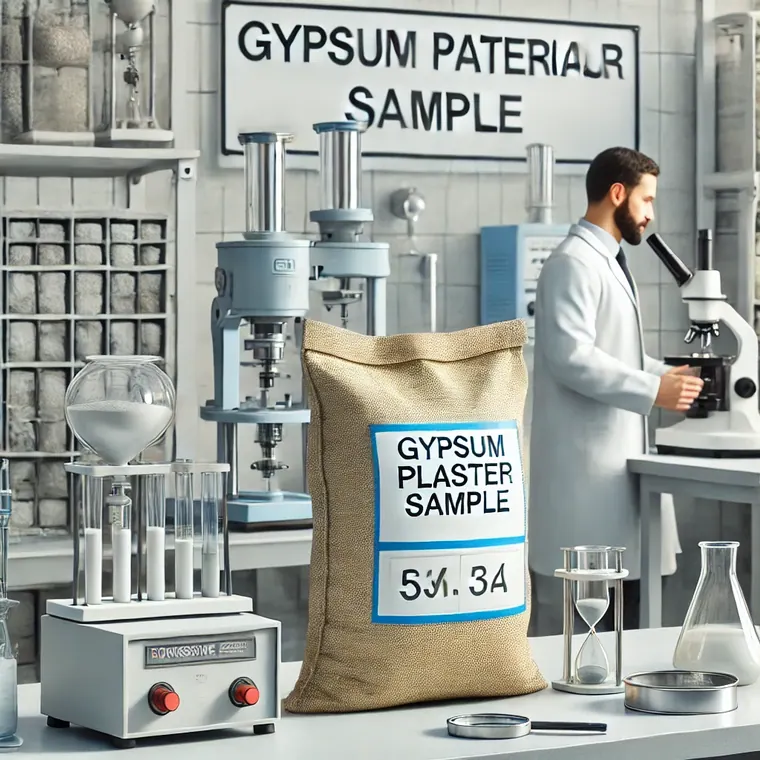
IS 2547 Part 1 is the Indian Standard specification for gypsum building plaster, and testing shows whether a plaster has the chemistry, setting and strength its grade requires. TCR Engineering tests gypsum plaster at Mahape, Navi Mumbai: chemical analysis to IS 1288 and IS 2547 Part 1, and listed physical tests to IS 2542 (Part 1), on NABL certificate NABLT0726MH18640.
- Chemical, IS 1288: sulphur trioxide, calcium oxide, magnesium oxide, combined water, iron and aluminium oxides, silica and acid-insoluble matter
- Chemical, IS 2547 Part 1: free-lime content (Appendix C) and loss on ignition (Appendix B)
- Physical, IS 2542 (Part 1): normal consistency, setting time, compressive strength, dry bulk density, soundness and dry sieving on the 150 micron sieve
- Reported outside the NABL scope: sodium oxide, flexural (transverse) strength, residue on the 90 micron sieve and loose bulk density
At TCR Engineering, we are proud to extend our civil testing to include physical and chemical analysis of Gypsum plaster in accordance with Indian Standard IS 2547 Part 1. The tests run in-house at the Mahape materials testing laboratory, and each result is reported against the requirement of the standard.
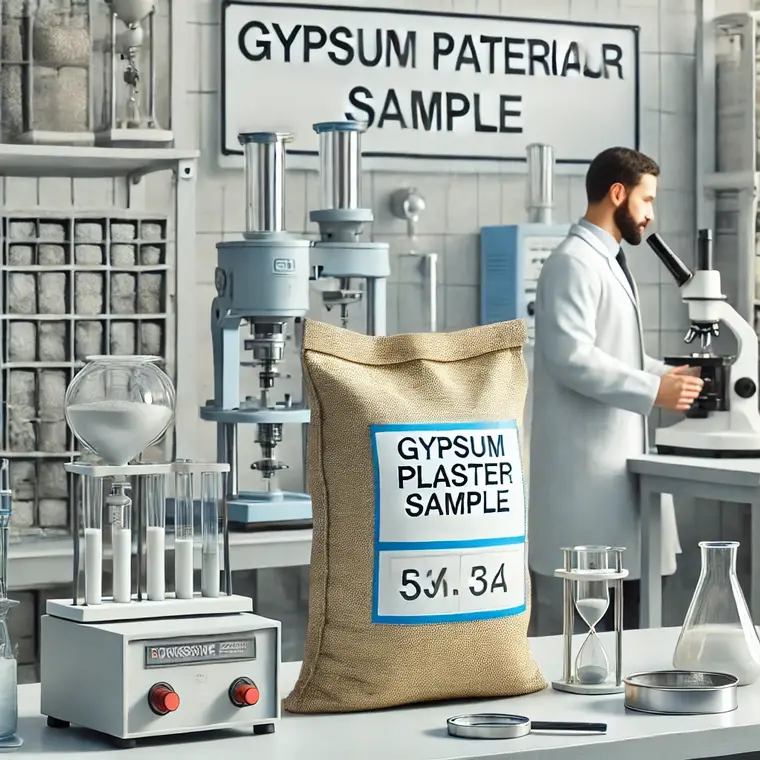
Our Gypsum Testing Capabilities
We conduct a wide range of tests on gypsum plaster to assess both its chemical composition and physical properties, so that clients can show their material meets its specification and performance criteria.
Chemical Testing
We analyse critical components such as:
- Sulphur Trioxide (SO₃)
- Calcium Oxide (CaO)
- Magnesium Oxide (MgO)
- Sodium Oxide (Na₂O)
- Free Lime
These tests help determine the suitability of the plaster for construction purposes and adherence to IS 2547. Sulphur trioxide, calcium oxide, magnesium oxide and free-lime content are on NABL certificate NABLT0726MH18640; sodium oxide is reported outside the NABL scope.
Physical Properties Testing
Our physical testing suite includes:
- Setting Time: To measure how quickly the plaster sets under specific conditions.
- Flexural/Transverse Strength: To assess the material's resistance to bending forces.
- Residue on 90 Micron Sieve: To evaluate the fineness of the plaster.
- Normal Consistency: To determine the water requirement for workable consistency.
- Compressive Strength: Tested at both 1-day and 7-day intervals to gauge the plaster's strength over time.
- Loose Bulk Density: To measure the weight of the material per unit volume in its loose state.
Sample Requirements
Send one sealed bag of gypsum plaster from the batch, in the quantity the laboratory confirms for the tests requested.
Results for Better Construction
Each test follows the current edition of its standard, and the report states each result against the requirement of IS 2547 Part 1, so a client can accept or reject a batch on the evidence.
Contact us to learn more about our gypsum plaster testing services or to schedule your next test. Send the grade of plaster and the tests required, and the laboratory confirms the test plan in the quotation.
FAQ
What does IS 2547 Part 1 cover?
IS 2547 Part 1 is the Indian Standard for gypsum building plaster. It sets the chemical and physical requirements a plaster must meet, while the test methods sit in IS 2542 (Part 1) for the physical tests and IS 1288 for the chemical analysis, with free-lime content and loss on ignition in the appendices of IS 2547 Part 1 itself.
Is gypsum plaster testing at TCR NABL accredited?
Yes, for the listed tests. Certificate NABLT0726MH18640 carries chemical analysis to IS 1288 and IS 2547 Part 1 and setting time, normal consistency, compressive strength, soundness, dry bulk density and dry sieving on the 150 micron sieve to IS 2542 (Part 1). Sodium oxide, flexural strength, residue on the 90 micron sieve and loose bulk density are reported outside it.
Which properties decide whether gypsum plaster is fit for use?
Its chemistry, chiefly the sulphur trioxide content and the free-lime content, and its working and hardened properties: normal consistency, setting time, compressive strength and soundness. The report states each result against the limit IS 2547 Part 1 sets for the grade, so a batch can be accepted or rejected on the evidence.
How much gypsum plaster does a full test need?
Enough for every test requested, drawn from one sealed batch and sent in its original bag. The quantity depends on the chemical and physical tests the specification calls for, and the laboratory confirms it, with the schedule, in the quotation.